A prime lens and the only grey card with a tolerance
Where it turns up
Prime lenses and grey cards, at 11 € and 89 €.
Seventeen point eight per cent, not eighteen
Eighteen per cent is the nominal value every grey card claims. This one publishes 17.8 with a density of 0.74, a maximum deviation of 2 per cent and a maximum metering error of one eighth of a stop — which is what a figure looks like when it comes from an instrument rather than a standard.
An eighth of a stop, in context
About nine per cent of light: less than the variation between two lenses at the same marked aperture, and invisible in a photograph. Published as a maximum, it says the card is not the weak link in the chain.
Thirty by thirty centimetres, folded into a case
An area nearly sevenfold that of a pocket card. A large target fills more of the frame from further away, so the meter reads the card and not the wall behind it — and a sprung frame still fits in a bag.
The spelling
The brand writes itself with a capital L in the frontmatter of both entries here. Where a listing renders it in lower case, this site does not follow.
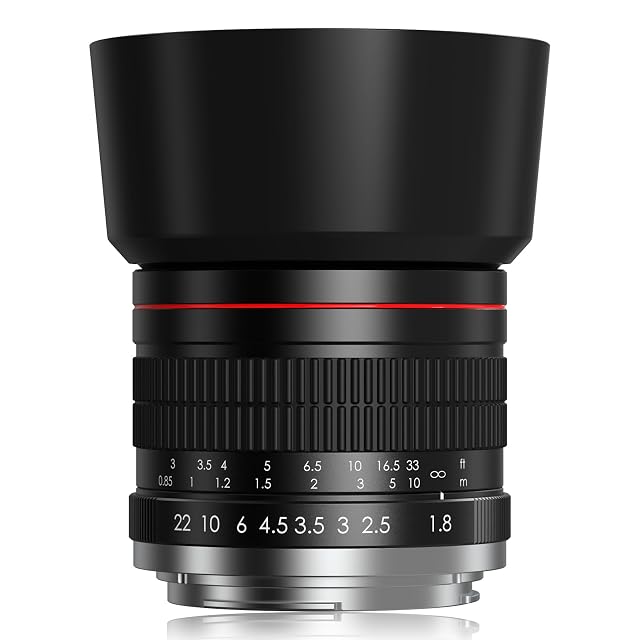
Canon EF and EF-S · full frame and APS-C · 85mm · F1.8 · manual focus, no autofocus motor · metal housing with a hood · no blade count published · no minimum focus published · no filter thread published · no sealing claimed · no weight published
An 85mm portrait prime at F1.8 for 141 €, focusing entirely by hand, with a metal body and a hood — and a page that publishes the focal length, the aperture and no other measurement.
Best for: Portraits and video on a Canon EF body for someone who focuses by hand deliberately, where 85mm at F1.8 is worth more than convenience.
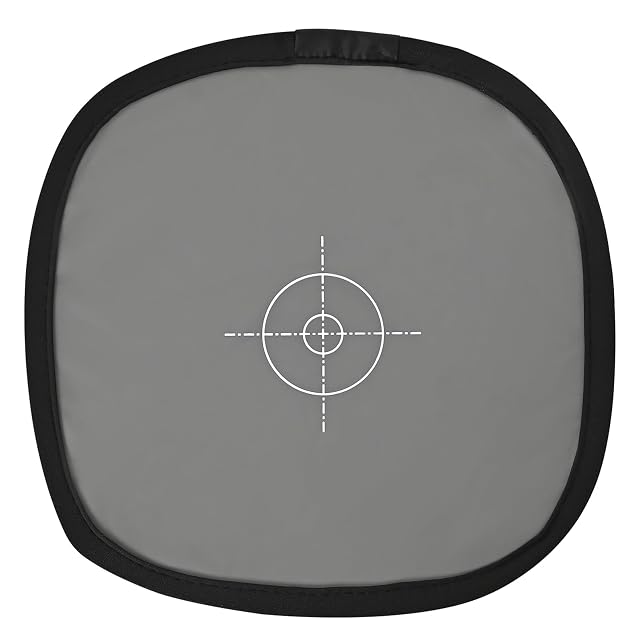
Eleven euros for a 30 by 30 cm pop-up card that publishes 17.8 per cent, a density of 0.74, a 2 per cent tolerance and an eighth of a stop of error — the only measured card here.
Reference type
A DOUBLE-SIDED POP-UP card — grey on one face, white on the other, in the fourth bullet, which says it simplifies the technical questions of exposure and colour correction under varying light and names weddings and fashion shows as where that matters. It springs open like a reflector rather than being a rigid card
Stated reflectance
17.8 PER CENT, in the first bullet — and the honesty of that figure is the point. "Eighteen per cent" is the nominal standard; 17.8 is what this surface actually measures, published alongside a DENSITY OF 0.74. Density is the logarithmic form of the same property, and giving both is how a manufacturer shows the figure came from an instrument rather than a catalogue
Patch count and published values
Two faces, no patches. What it publishes instead is unique on this shelf: a MAXIMUM DEVIATION OF 2 PER CENT in the second bullet, and a MAXIMUM METERING ERROR OF ONE EIGHTH OF A STOP in the third. A tolerance is what turns a claim into a specification
Surface finish
Not described — the one gap on an otherwise measured page. The 11 € JJC here publishes non-reflective, and on a 30 cm surface a sheen matters more rather than less
Size
30 by 30 cm, in the title — NEARLY SEVEN TIMES the area of the 130 by 100 mm cards on this shelf, and FOLDING, with a carry case supplied. A large target can be metered from further away and photographed in the frame for later correction; a folding one still fits in a bag
Supplied case
YES — a carry case, in the title and the fourth bullet, which is what a sprung folding card needs. The fifth bullet adds a 90-day return and replacement guarantee for quality-related problems
Amazon reference
B00HT9MA1W (same reference on 6 Amazon marketplaces)
EAN
0616983848487
Seventeen point eight per cent and a density of 0.74, both published
A 2 per cent deviation and an eighth of a stop of metering error — the only tolerances here
The surface finish is never described, on the largest card here
Best for: Metering from a distance at a wedding or a show, where the card has to be large, fold away and be trusted to a fraction of a stop.
Each amount in a write-up is what the listing showed when that page was written. The figure next to the product is pulled in as you read, and it is the one that counts.