Skip to content

The best mirrorless cameras for 2026

A mirrorless body is the least permanent part of a system and the part people compare hardest. The decision that actually lasts is the mount, because the lenses bought against it will outlive two or three bodies, and the sensor format behind it — full frame, APS-C, Micro Four Thirds — which settles how much of each lens' image circle is used and therefore how a focal length frames. Resolution in megapixels is the number printed largest and the one that changes least in ordinary use; it decides how far a frame can be cropped and how large it can be printed, not whether it is sharp. Stabilisation is quoted in stops and measured under a named protocol in a laboratory, with a focal length stated; where the protocol is not named, the figure is a claim rather than a measurement. The viewfinder is an electronic panel here rather than a mirror and prism, so its resolution and refresh rate are published specifications. Card slots matter to anyone who cannot reshoot the day: one slot or two, and the formats each one accepts. Then autofocus described by its published subject modes, the video resolutions and frame rates listed with any recording limits, and whether the body is sealed and to what claim. We compare sensor format and resolution, mount, stabilisation claims and protocol, viewfinder specification, card slots, autofocus modes published, video modes and sealing.
The bodies and lenses we compare here

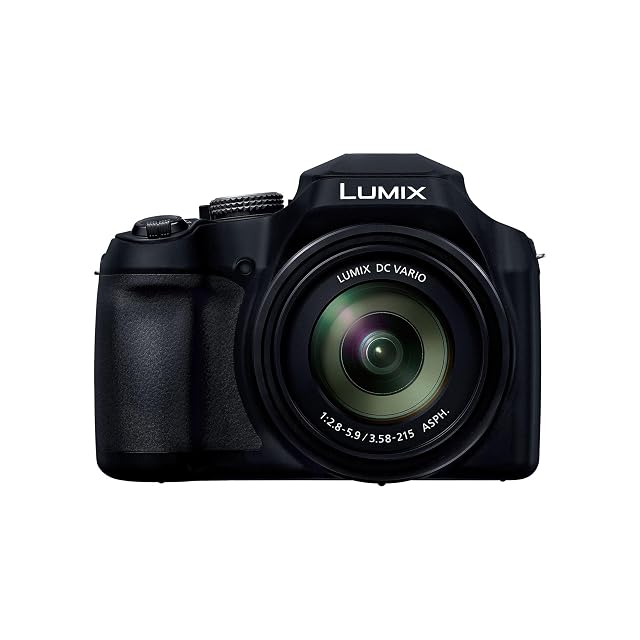
  1. Panasonic Lumix FZ82D, fixed 20-1200 mm f/2.8-5.9, 18.1 MP

    Fixed lens, no interchangeable mount · 20-1200 mm stated · f/2.8-5.9 · 18.1 MP MOS · 4K 30p · 2.36 MP OLED viewfinder · 1.84 MP touch screen · USB-C charging · sensor format, card slots and sealing not published

    The one body on this shelf whose lens does not come off: a 20-1200 mm f/2.8-5.9 built in, quoted as a sixty-times range, with an OLED viewfinder that publishes its resolution when dearer cameras here do not.

    Best for: One-camera travel where the reach from 20 mm to 1200 mm matters more than the ability to change glass later.

    ≈ £379 / 419 €

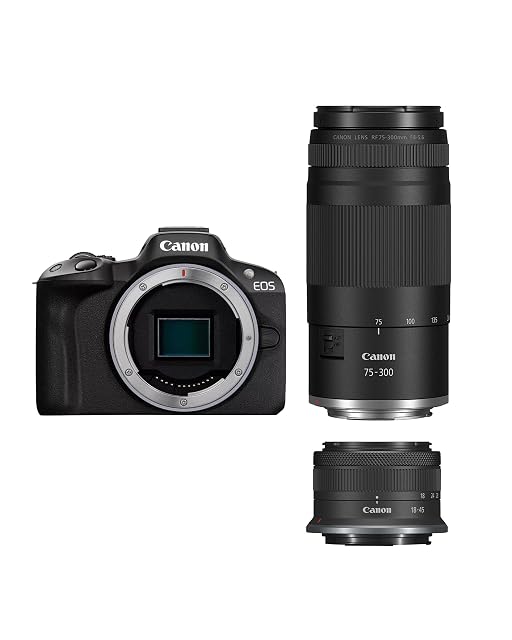
  2. Canon EOS R50 double zoom kit, RF-S 18-45 mm and RF 75-300 mm, 24.2 MP APS-C

    24.2 MP APS-C · two lenses supplied, RF-S 18-45mm f/4.5-7.1 IS STM and RF 75-300mm · 4K 30p oversampled from 6K · deep-learning subject detection · viewfinder, card slots and sealing not published

    The only body here that arrives with two lenses, covering 18 to 300 mm between them, and states its sensor format outright while leaving its viewfinder and card provision unwritten.

    Best for: A first interchangeable-lens purchase where the two-lens span from wide to 300 mm matters more than the finder or the card count.

    ≈ 985 €

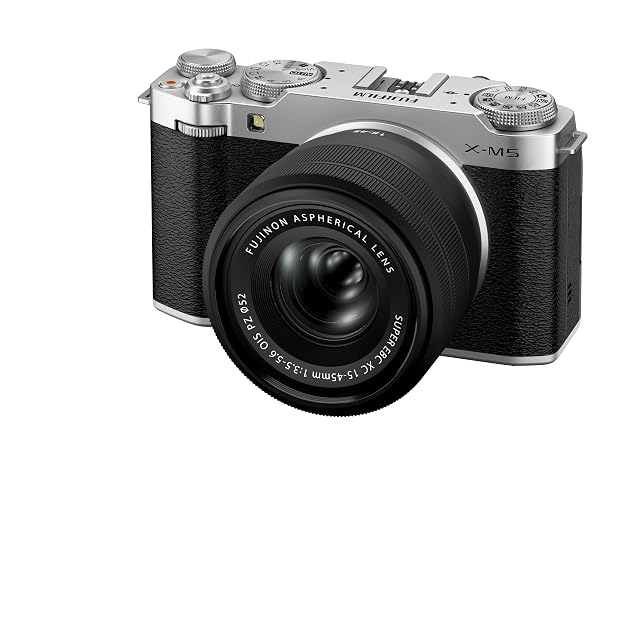
  3. Fujifilm X-M5 with XC15-45mm f/3.5-5.6 OIS PZ kit lens, 26.1 MP

    26.1 MP X-Trans · X-Processor 5 · 355 g body stated · kit XC15-45mm f/3.5-5.6 OIS PZ · 6.2K video · 9:16 mode · 20 film simulations · flip screen, no viewfinder named · sensor format, mount name and card slots not published

    A 355 g body sold on its twenty film simulations and a 6.2K video figure, with a flip screen in place of any viewfinder and a kit zoom whose stabilisation is named only by the letters OIS.

    Best for: Someone buying into film simulations and short vertical video, who composes on a screen and counts every gram.

    ≈ $1021 / £849 / 899 €

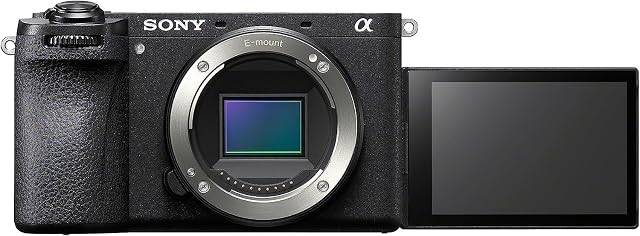
  4. Sony Alpha 6700 body, 26 MP APS-C Exmor R, five-axis stabilisation

    26 MP Exmor R APS-C · BIONZ XR · five-axis in-body stabilisation stated · 4K up to 120p · 4K 30p 10-bit 4:2:2 from 6K · 11 fps burst · S-Cinetone and S-Log3 · dust and moisture resistant magnesium alloy · card slots not published

    The only body on this shelf that claims stabilisation in the camera rather than in the lens, and the only one that makes a sealing claim at all — sold as a body alone at the top of this family’s price range.

    Best for: Video work that needs log profiles and in-body stabilisation, on a body expected to go out in weather with lenses already owned.

    ≈ £1329 / 1471 €

Each amount in a write-up is what the listing showed when that page was written. The figure next to the product is pulled in as you read, and it is the one that counts.