One shadowless look, and the diameter is what changes it
The best ring lights for 2026
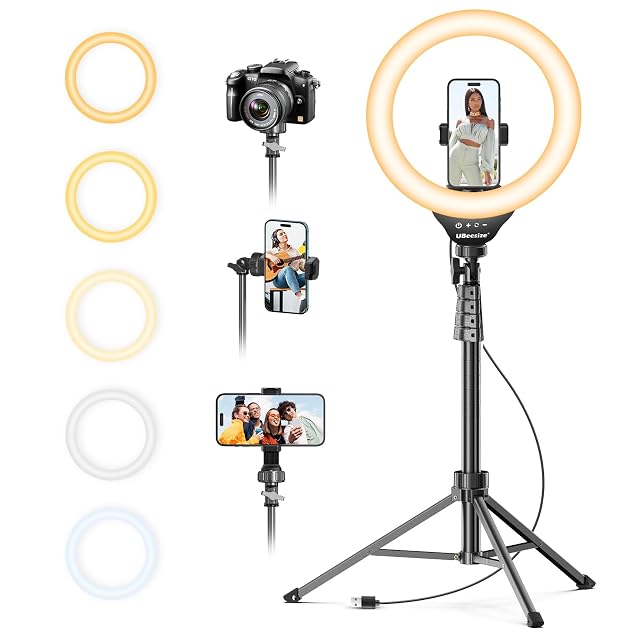
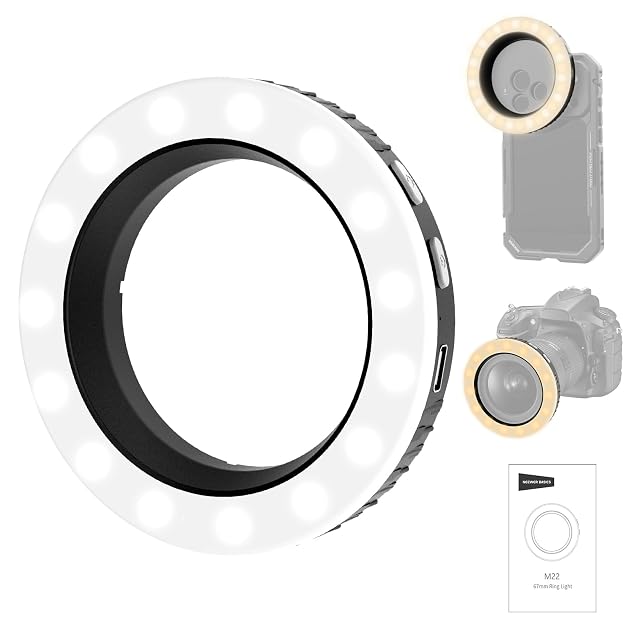
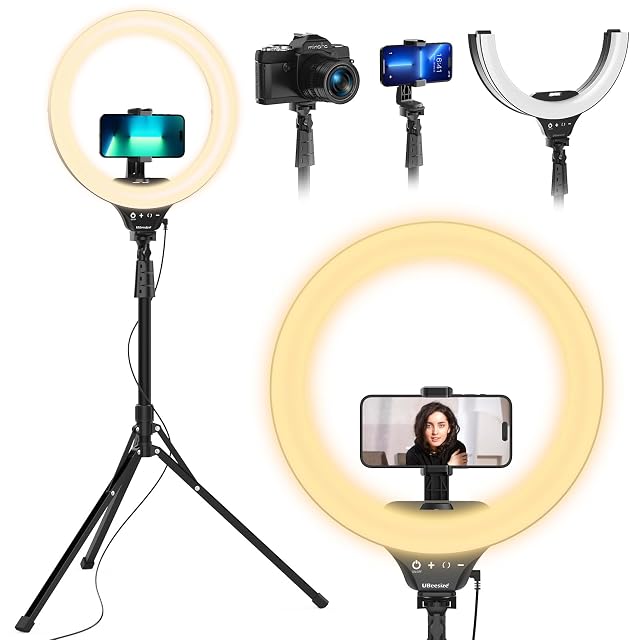
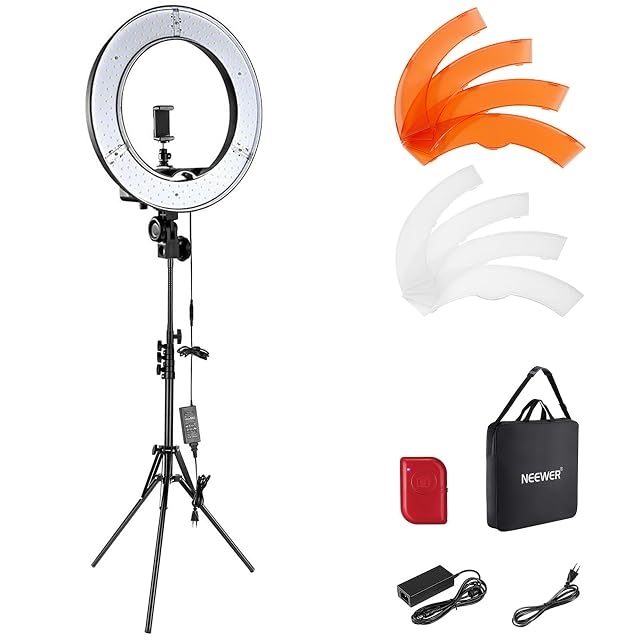
A ring light puts the source around the lens rather than beside it, which removes most of the shadow from a face and leaves the circular catchlight that identifies the look immediately. Diameter is the first specification and it does two things: a larger ring is a larger and therefore softer source, and it also sets how far the light can be from the subject before it stops behaving like a ring at all. Small rings mounted on a camera are effectively a soft on-camera flash; large ones on a stand are a portrait light. Color temperature is fixed or adjustable across a stated range, and as on any bi-color fixture the maximum output usually sits in the middle of that range. Color accuracy is published as an index by the makers who care about it and omitted by those who do not, and its absence on a listing is itself informative. Mounting divides the shelf between camera-mounted rings that clamp around a lens by adapter, and stand-mounted rings sold with a stand whose height and stability are worth reading separately. Power is mains, USB or an internal cell with a stated runtime at full brightness. Then the holder: a phone clamp, a camera thread, or both, and whether the ring can tilt once mounted. We compare diameter, color temperature range, color accuracy, mounting method, stand supplied, power and holder provision.
By Jean-Benoit Buisson