Skip to content

The best film scanners for 2026

A film scanner turns negatives and slides into files, and the number on the box is frequently not the number that matters. Optical resolution is what the sensor and lens actually resolve, quoted in dots per inch; any larger figure quoted alongside it is interpolated, which means calculated between real samples and adding no detail. Reading the smaller of the two numbers is the whole trick on this shelf. Film formats accepted come next: 35 mm strips and mounted slides on nearly everything, medium format on fewer machines, and the holders supplied decide this as much as the mechanism — a scanner that accepts a format but ships no holder for it is a scanner that does not. Bit depth describes how finely each channel is recorded and matters most in the shadows of a dense negative. Dust and scratch removal is worth distinguishing: hardware systems using an infrared channel detect physical defects and are genuinely effective on colour film, while software-only cleaning is a filter applied afterwards, and neither works properly on traditional black-and-white emulsions. Output should include a raw or uncorrected file rather than only a processed image, because inverting a colour negative well is a decision best made later. Then speed, quoted per frame at a stated resolution. We compare optical resolution, formats accepted, holders supplied, bit depth, dust removal method, output formats and scan speed.

The bodies and lenses we compare here

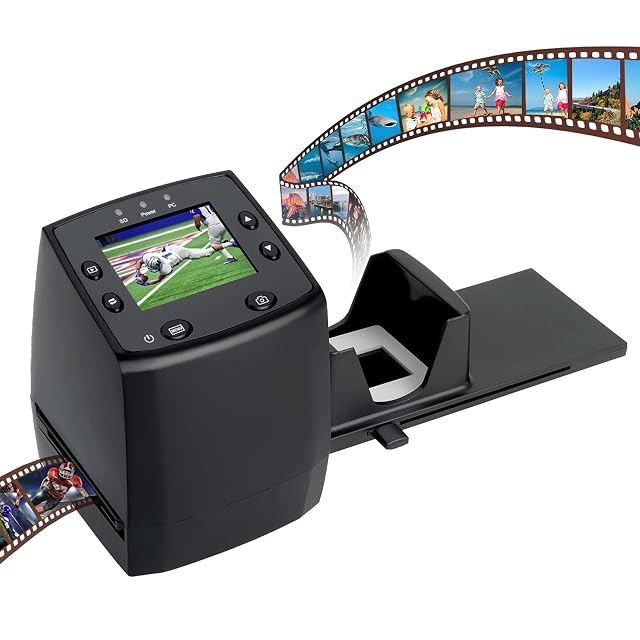
  1. DIGITNOW M125, 1800 dpi, 5/10 MP, standalone

    OPTICAL RESOLUTION 1800 dpi, published · 35 mm and 135 negatives and slides ONLY · an adjustable quick slide feeder supplied, no other holder described · bit depth NOT published · NO dust removal of any kind · JPEG to an SD card up to 8 GB SDHC, card not included, or to a computer over USB 2.0 · scan speed NOT published · no computer required · a video output switchable NTSC or PAL, for a television · Windows XP, Vista, 7, 8 and Mac OS listed

    Fifty-two euros for a standalone 1800 dpi scanner that writes JPEGs to its own SD card — and can show them on a television through an NTSC or PAL output.

    Best for: A box of mounted 35 mm slides to be got through quickly and viewed on a television, where a print larger than A4 is not the goal.

    ≈ 52 €
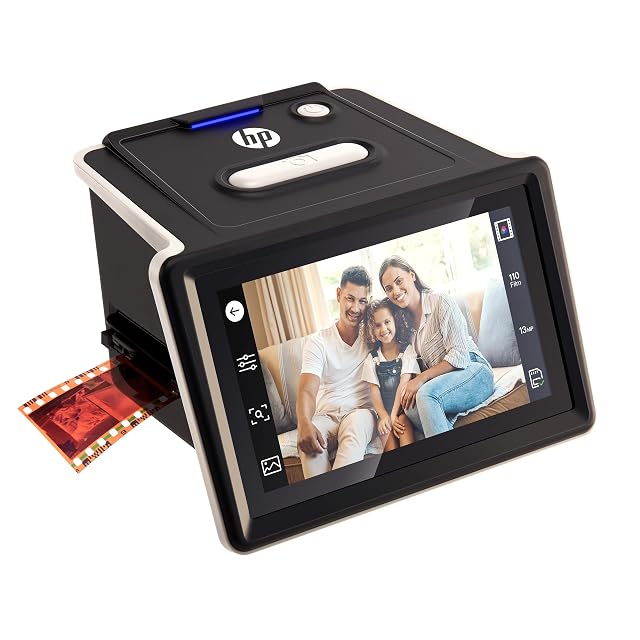
  2. HP FilmScan, 22 MP, 135, 110 and 126, touchscreen

    RESOLUTION AS A SENSOR: 22 MP JPEG output, no dpi figure published · 135 — 35 mm — plus 110 AND 126 film, colour and black-and-white negatives and positive slides, all INCLUDED rather than optional · SLIDE FRAMES AND FILM ADAPTERS SUPPLIED, plus a CLEANING BRUSH · bit depth NOT published · dust removal by the SUPPLIED BRUSH — mechanical, not infrared · JPEG · scan speed NOT published · a 5-inch LCD TOUCHSCREEN with gallery view, usable as a digital picture frame · a quick-loading tray for continuous import · automatic cropping with manual correction · slides must be in standard 50 mm mounts

    Twenty-two megapixels, a 5-inch touchscreen, three film formats included and a cleaning brush in the box — the most completely equipped scanner here at 195 €.

    Best for: A household box holding several film formats at once, digitised by someone who wants the whole kit — adapters, brush and screen — in one purchase.

    ≈ $220 / £175 / 195 €

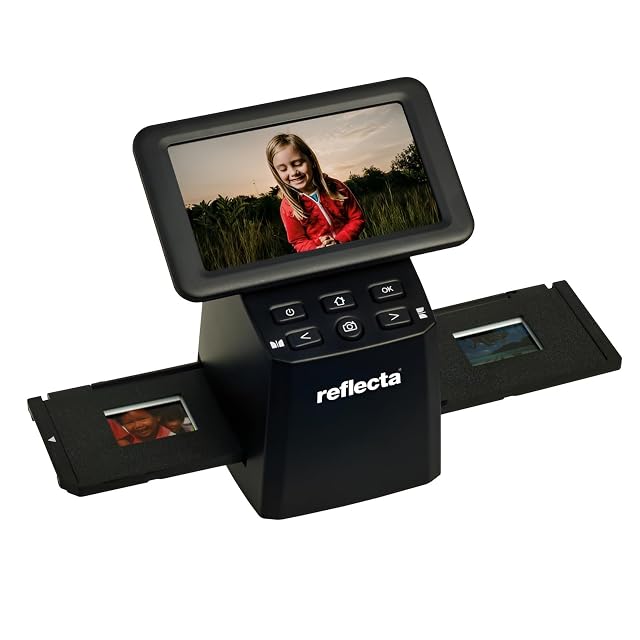
  3. Reflecta x33-Scan, 15.3 MP CMOS, under 2 seconds, 365 g

    RESOLUTION AS A SENSOR: 15.3 MP CMOS, no dpi figure published · 135 film, slides and black-and-white, with 110 and 126 OPTIONAL · holders not itemised, the optional formats implying extra ones · bit depth NOT published · dust removal NOT described; IET technology is named for automatic COLOUR and CONTRAST correction, which is a different job · JPEG to SD or SDHC up to 128 GB · SCAN SPEED PUBLISHED: under two seconds a frame, the only figure on this shelf · a 5-inch IPS screen · standalone, no PC required · 365 g

    Under two seconds a frame — the only scan speed published here — from a 15.3 MP standalone scanner with a 5-inch screen, at 365 g.

    Best for: A large box of 35 mm slides and negatives that has to be got through in one sitting, on the table, with no computer.

    ≈ 130 €

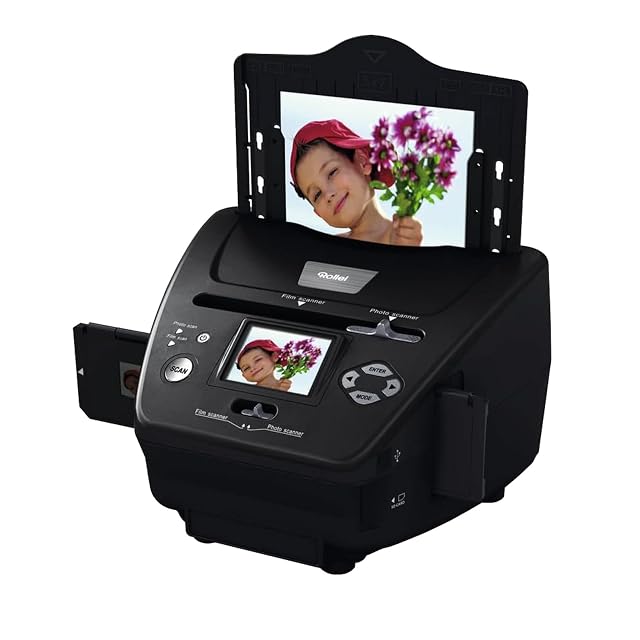
  4. Rollei PDF-S 240 SE, 1800 dpi to 2400 interpolated

    OPTICAL RESOLUTION 1800 dpi, INTERPOLATED to 2400 — and the page distinguishes the two · photos, negatives, slides AND business cards · holders not itemised · bit depth NOT published · NO dust removal described · JPEG to SD, SDHC or MMC, or over USB to a PC or Mac · scan speed described as "seconds" without a figure · a 2.4-inch TFT colour screen on the body · automatic exposure with manual adjustment, plus automatic colour correction

    The only scanner here that separates its optical resolution from its interpolated one — 1800 dpi against 2400 — with a screen on the body and card slots for three formats.

    Best for: A mixed box — loose prints, slides and negative strips — digitised on the kitchen table without a computer.

    ≈ 103 €

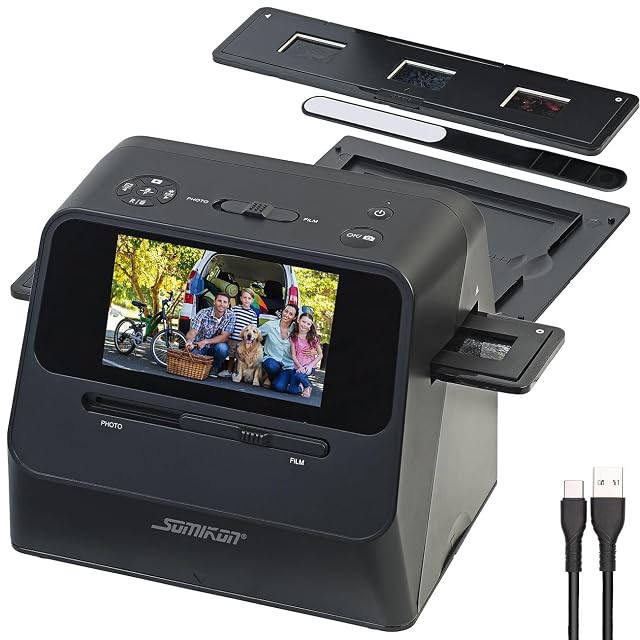
  5. Somikon SD-1700, 3200 dpi film, 700 dpi photo, 1.1 kg

    TWO OPTICAL FIGURES PUBLISHED: 3200 dpi for film, 700 dpi for prints · 135 negatives, slides mounted and unmounted at 5 by 5 cm, AND loose photographs at 9 by 13 and 10 by 15 cm; 110 and 126 need holders SOLD SEPARATELY · THREE HOLDERS SUPPLIED — slide, negative, and a base plate with a photo holder · 14 MP CMOS sensor, INTERPOLATED to 22 MP, with the distinction stated · bit depth NOT published · NO dust removal; a cleaning brush is supplied · JPEG to an SD or SDHC card up to 32 GB, card not included · SCAN SPEED PUBLISHED: about 15 frames a minute, with a 0.5-second preview · 3 white LEDs for negatives, 24 for prints · a 5-inch IPS screen, an HDMI OUTPUT to a television, a battery · 20.9 by 18.2 by 16.2 cm, 1.1 kg with battery

    The only scanner here that publishes a dpi figure for film and another for prints — 3200 and 700 — with three holders, an HDMI output and a battery.

    Best for: A mixed archive — negatives, loose prints, album pages and cuttings — where the album cannot be taken apart.

    ≈ 242 €

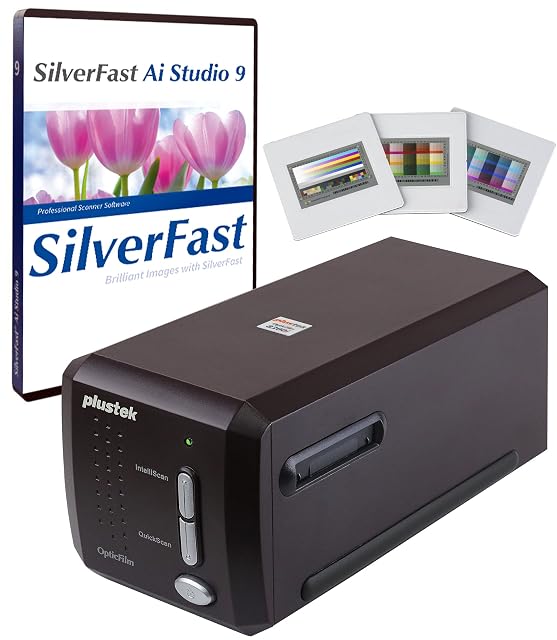
  6. Plustek OpticFilm 8300i Ai, 7200 dpi, infrared dust removal

    OPTICAL RESOLUTION 7200 dpi — four times the next figure on this shelf · 35 mm film and slides · holders not itemised · bit depth not published as a number, but SilverFast 9 is credited with a 16-BIT HISTOGRAM · DUST REMOVAL BY INFRARED: iSRD, the only true infrared channel on this shelf · output formats not listed; SilverFast 9 Ai Studio and Plustek QuickScan Plus supplied · scan speed described as 38 PER CENT FASTER than the previous model, with no absolute figure · REQUIRES A COMPUTER: Windows 7 to 11, Mac OS 10.13 to 12.x · an ADVANCED IT8 COLOUR TARGET on 3 slides, ISO 12641-2 compliant, valued at 99 dollars on the page · multi-exposure, HDRi and NegaFix named

    Seven thousand two hundred dpi with a true infrared dust channel, SilverFast 9 Ai Studio and an ISO-compliant IT8 calibration target — the only scanner here built for archival work.

    Best for: An archive of 35 mm negatives that has to be digitised once, properly, with colour that can be trusted and dust that does not have to be painted out.

    ≈ $539 / 559 €

Each amount in a write-up is what the listing showed when that page was written. The figure next to the product is pulled in as you read, and it is the one that counts.