Skip to content

The best studio flash units for 2026

A studio flash is rated in watt-seconds, and the figure describes the energy stored in its capacitor before the tube fires — not the light that reaches a subject, which depends on the modifier fitted, the distance and the room. Two heads of the same rating with different reflectors put very different light on a face, which is why this number ranks a shelf rather than predicting a result. What matters as much is the power range, expressed in stops below full: a head adjustable over a wide range is usable in a small room, while one that only comes down a little is a head that will be too bright at close quarters. Recycle time is stated at full power and shortens as the power drops. The modelling lamp is a continuous light used to see where the shadows will fall, and its type and whether it tracks the flash power are published. The mount is the ecosystem decision: Bowens-style and Profoto-style fittings each have their own catalogue of softboxes and reflectors, and the mount ties every modifier bought afterwards. Triggering is by sync cable, optical slave or a named radio system, and the radio system decides which remote controls work. Then power: mains-only, or a battery pack that makes the head portable. We compare energy in watt-seconds, power range in stops, recycle time, modelling lamp, mount type, triggering systems and power source.

The bodies and lenses we compare here

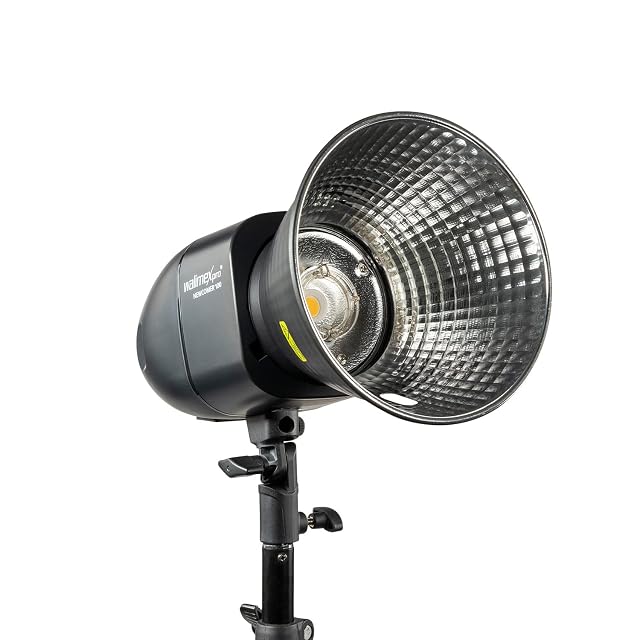
  1. Walimex pro Newcomer 100 II, 100 W, Bowens mount

    100 W published — watts, not watt-seconds · stepless from 1/1 to 1/32, five stops · no recycle time published · 5 W LED modelling lamp · Bowens and Walimex pro bayonet · built-in receiver, 16 channels and 4 groups, plus photocell and sync cable · under 1 kg, stated as a ceiling · passive cooling with overheat protection

    The cheapest studio head here at 132 €, with a receiver already inside it and a Bowens mount that opens the whole modifier catalogue — and an output figure published in watts, which is not the unit this shelf compares.

    Best for: A first studio light in a small room, where the Bowens mount matters more than the headline figure and the receiver being built in saves a purchase.

    ≈ 132 €
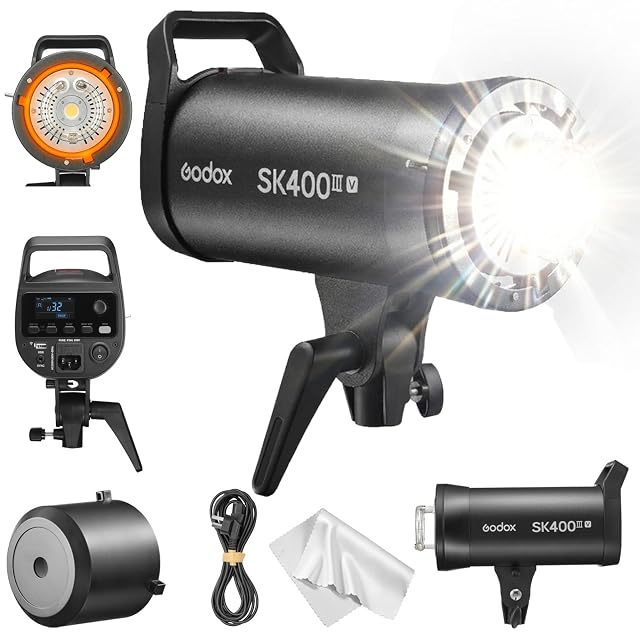
  2. Godox SK400III-V, 400Ws, GN65 at ISO 100

    400Ws · guide number 65 at ISO 100 · 1/32 to 1/1 in 50 steps, five stops · recycle 0.1 to 1.5 s · 10 W LED modelling lamp dimmable from 5 to 100 per cent · standard Bowens bayonet · Godox 2.4G X system built in · colour temperature 5600K plus or minus 200K

    The one head on this shelf that publishes everything the shelf is compared on: 400 watt-seconds, a guide number with its sensitivity, a recycle time of 0.1 to 1.5 seconds and fifty steps of adjustment, for 199 €.

    Best for: A studio head bought to be built on, where the X system and the Bowens mount decide every purchase that follows and the published figures make it comparable.

    ≈ $179 / £169 / 199 €

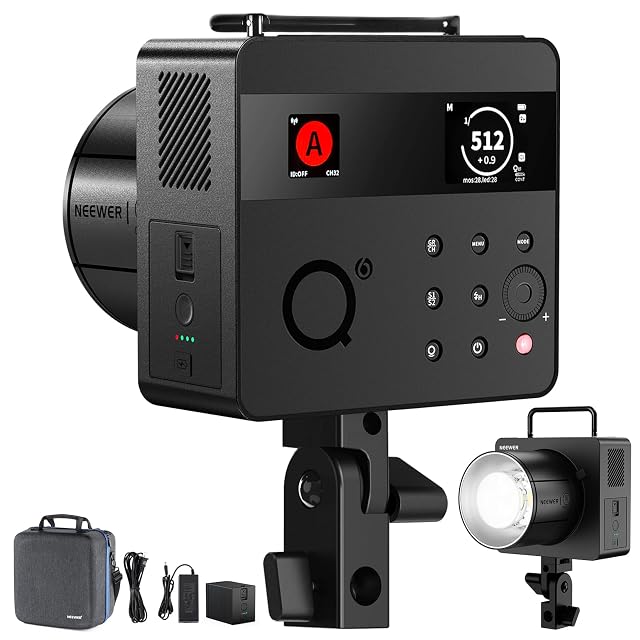
  3. NEEWER Q6, 600Ws, nine stops of adjustment

    600Ws · 1/1 to 1/512 in 0.1-stop increments, nine stops · no recycle time published · 30 W bi-colour LED modelling lamp, 2700K to 6500K, CRI 95+ · colour temperature 5700K plus or minus 100K across the whole power range · TTL, manual and multi modes · HSS to 1/8000 s · NEEWER 2.4G Q system, 5 groups, 32 channels, 99 IDs, 100 m · Bluetooth app control · two TFT displays · quartz tube rated about 300,000 flashes

    Nine stops of adjustment in tenth-stop increments, a 30 W bi-colour modelling lamp with a published colour index, and a tube rated for 300,000 flashes — at 449 €, with no recycle time anywhere on the page.

    Best for: Portrait work away from a studio where nine stops and stable colour matter, for someone already inside the NEEWER Q system or willing to enter it.

    ≈ 449 €

Each amount in a write-up is what the listing showed when that page was written. The figure next to the product is pulled in as you read, and it is the one that counts.