Sensor format decides the lenses, and the lenses outlast the body · review
Canon EOS R50 double zoom kit, RF-S 18-45 mm and RF 75-300 mm, 24.2 MP APS-C review
The only body here that arrives with two lenses, covering 18 to 300 mm between them, and states its sensor format outright while leaving its viewfinder and card provision unwritten.
The bottom line The most lens for the money on this shelf, and a body that says what its sensor is. Against that, no finder is named and no card is in the box at 999 €, so the real cost is a little above the sticker for anyone who needs both.
On the listing
A 24.2 MP sensor in APS-C format, with 4K 30p UHD video stated as oversampled from 6K sensor data; a deep-learning algorithm that recognises people, animals and vehicles and follows them as they move; a creative shooting assistant that selects settings, with panorama and pan assists named alongside it; a light design and comfortable grip; and a box containing the body, an RF-S 18-45mm f/4.5-7.1 IS STM, a strap, an LC-E17E charger, a battery and a mains cable. The title adds a second lens, an RF 75-300mm, and names the kit a double zoom.
Two lenses, and the span they cover
Eighteen to three hundred millimetres arrives in one box. No other body of the four here does that: the others ship with one lens or none. The span is the reason to consider this kit, and the gap in the middle — nothing between 45 and 75 mm — is the reason to know what is in the bag before leaving the house.
Both lenses carry IS in their designations. The body does not claim stabilisation of its own, which means steadiness travels with the glass rather than with the camera.
What a first-time buyer will find missing
Two things, and both are ordinary on this shelf without being unimportant. There is no viewfinder named anywhere on the page, so composition is on the screen unless something not listed is present. And the kit contents run to a charger, a battery, a strap and a cable with no memory card, which is a small purchase on top of a 999 € one but a necessary one.
Against the other three bodies here
Cheaper than the Fujifilm and the Sony, dearer than the fixed-lens Panasonic, and the only listing of the four that both names its sensor format and supplies two lenses. The detection list — people, animals, vehicles — is the same trio the Sony claims, described in the same terms, and neither page publishes a focus point count to set against it.
Availability
Between 985 € and 1052 € on the German, French, Italian and Spanish Amazon stores when this page was last checked.
Nothing came back from the American and British Amazon stores at all, so the button for those countries runs a search instead of opening an entry that is not there.
Everything in this section is the figure Keepa carried on the day of the last update to this page. Availability and prices shift without notice.
Prices quoted in this text were read on 13 September 2026. The live price is at the top of the page.
What it does well, and what it gives up
Strengths
Two lenses in the box cover 18 to 300 mm, which is the widest span any single purchase on this shelf provides
Names its sensor format outright as APS-C, where two of the four bodies in this family name only a sensor technology
States that its 4K comes from oversampled 6K data rather than quoting a bare resolution
Compromises
No viewfinder is named anywhere, on a body sold partly for reportage and events
The kit contents list a charger, a battery, a strap and a cable, and no memory card
Both lenses are stabilised by their own designations while the body claims nothing, so stabilised framing depends entirely on which lens is fitted
Specifications
Sensor format
APS-C — stated plainly in the first bullet, one of three listings of the four here to name a format rather than a sensor technology
Resolution
24.2 MP — stated in the first bullet, with 4K 30p UHD video given as oversampled from 6K sensor data
Mount
Not published as a designation — the page names the lenses rather than the bayonet: RF-S 18-45mm f/4.5-7.1 IS STM in the kit contents and RF 75-300mm in the title. The two prefixes are the only indication of what the body accepts
Stabilisation claims and protocol
IS, in the kit lens designation only — the fifth bullet lists an RF-S 18-45mm IS STM, and no bullet claims stabilisation in the body or names a protocol or a stop count for either
Viewfinder specification
Not published on the listing — five bullets cover resolution, subject detection, the shooting assistant, handling and box contents, and none names a finder of any kind
Card slots
Not published on the listing — the kit contents bullet lists a strap, a charger, a battery and a mains cable, and no card or slot appears among them
Autofocus modes published
A deep-learning algorithm that detects people, animals and vehicles, stated in the second bullet, with eye detection named in the title and continuous tracking claimed as subjects move. No focus point count is published
Video modes
4K 30p UHD, stated in the first bullet as oversampled from 6K sensor data — the only video figure on the page, with no other frame rate or codec given
Sealing
Not published on the listing — the fourth bullet describes a light design and a comfortable grip, and makes no weather or dust claim
Amazon reference
B0G26J6912 (same reference on 4 Amazon marketplaces)
EAN
8714574697024
What people ask before they commit
What does oversampled from 6K actually describe?
The sensor is read at a higher pixel count than the file needs, and the extra data is used to build each 4K frame. The maker states the practice in its first bullet, which is more than a bare 4K badge would tell you, and it is a claim about how the frame is produced rather than a measured result. What the listing does not give is the frame rate ceiling in any other mode, or the recording format.
Do the two kit lenses overlap or leave a gap?
They leave a gap. One covers 18 to 45 mm and the other 75 to 300 mm, so nothing between 45 and 75 mm is reached by either, and changing lenses is the only way across that span. It is a common arrangement in double-zoom kits and worth knowing before a first outing, because portrait distances often sit inside exactly that gap.
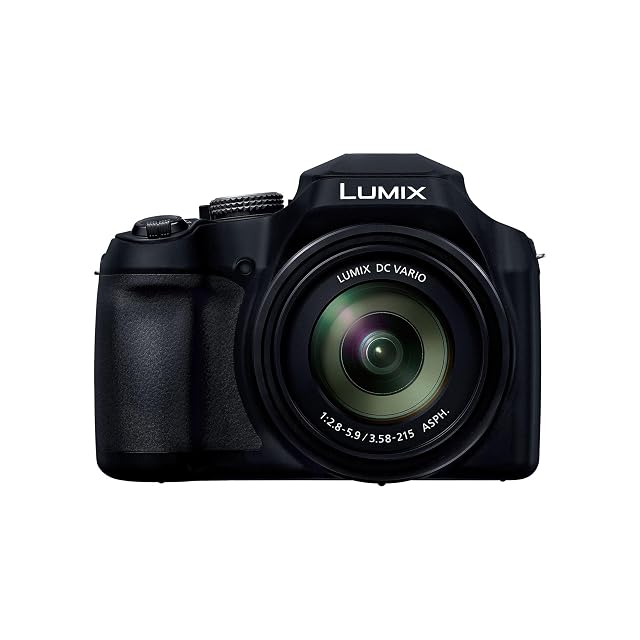
Fixed lens, no interchangeable mount · 20-1200 mm stated · f/2.8-5.9 · 18.1 MP MOS · 4K 30p · 2.36 MP OLED viewfinder · 1.84 MP touch screen · USB-C charging · sensor format, card slots and sealing not published
The one body on this shelf whose lens does not come off: a 20-1200 mm f/2.8-5.9 built in, quoted as a sixty-times range, with an OLED viewfinder that publishes its resolution when dearer cameras here do not.
Best for: One-camera travel where the reach from 20 mm to 1200 mm matters more than the ability to change glass later.
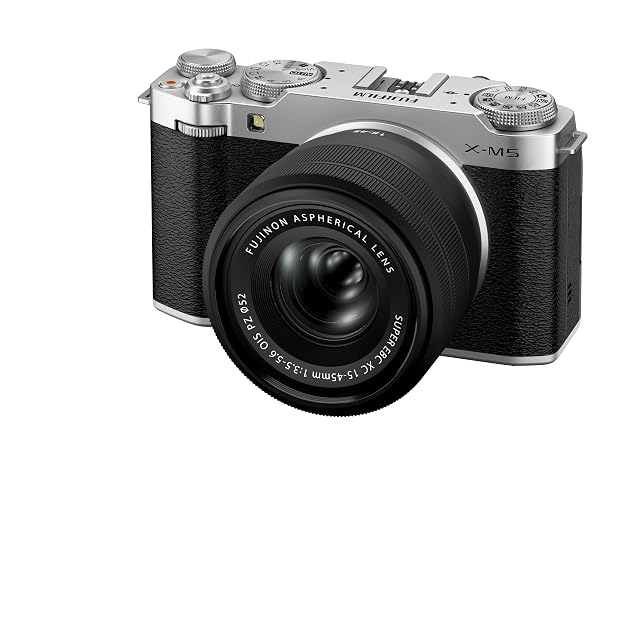
26.1 MP X-Trans · X-Processor 5 · 355 g body stated · kit XC15-45mm f/3.5-5.6 OIS PZ · 6.2K video · 9:16 mode · 20 film simulations · flip screen, no viewfinder named · sensor format, mount name and card slots not published
A 355 g body sold on its twenty film simulations and a 6.2K video figure, with a flip screen in place of any viewfinder and a kit zoom whose stabilisation is named only by the letters OIS.
Best for: Someone buying into film simulations and short vertical video, who composes on a screen and counts every gram.
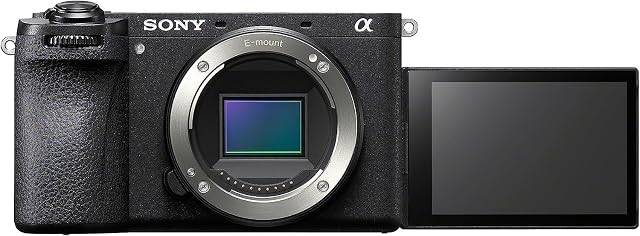
26 MP Exmor R APS-C · BIONZ XR · five-axis in-body stabilisation stated · 4K up to 120p · 4K 30p 10-bit 4:2:2 from 6K · 11 fps burst · S-Cinetone and S-Log3 · dust and moisture resistant magnesium alloy · card slots not published
The only body on this shelf that claims stabilisation in the camera rather than in the lens, and the only one that makes a sealing claim at all — sold as a body alone at the top of this family’s price range.
Best for: Video work that needs log profiles and in-body stabilisation, on a body expected to go out in weather with lenses already owned.