Skip to content

The best flash triggers for 2026

A trigger fires a light that is not on the camera, and almost every buying mistake here comes from treating them as generic. Each one belongs to a radio system named on the box, and a transmitter talks only to receivers and lights that speak the same one — a fact that decides which flashes can ever join the set afterwards. The camera mount is the second gate: the shoe is physically similar across makers and the contacts behind the centre pin are not, so a transmitter is sold per camera system and a mismatch either does nothing or passes only the plain fire signal. Then what the transmitter can actually do from the hand: fire on several channels and split lights into groups, adjust power remotely so a light on a stand need not be touched, and in some systems pass through-the-lens metering or high-speed sync. Sync claims deserve care — a system that offers a shutter speed above the camera body's own sync figure is doing so by changing how the flash fires, and the maker names the mode. Finally the ordinary things: what powers the units, whether the transmitter has a screen or a row of switches, and whether a receiver is a separate box or already inside the light. We compare radio system named, camera mounts supported, channel and group counts, remote power control, metering and sync modes claimed, and power source.

The accessories that earn their place in the bag

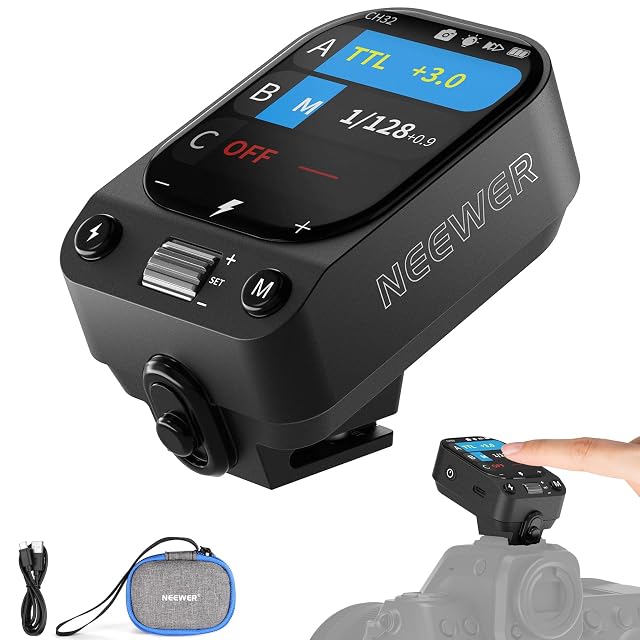
  1. NEEWER QZ-N flash trigger with a touchscreen display on a camera hot shoe

    NEEWER QZ-N, 2.4G Q system, touchscreen, 1/8000 s

    The dearest trigger here at 93 €, with a touchscreen, five groups, thirty-two channels, remote power from 1/256 to 1/1 and high-speed sync to 1/8000 — and it fires Godox lights as well as its own.

    Radio system named
    The NEEWER 2.4G Q system, with its own lights listed — Z3R-N, Z2PRO-N, Z2-N, Z1-N, Z880-N, NW760-N, S101-400W Pro, S102-400W Pro, Q4, Q4PRO, Q6, Q300, Q200 and Q120 — and then the unusual part: Godox iT32, V1 and V100 flashguns and the AD200 Pro II and AD100 Pro II outdoor heads are supported too, with current firmware. A named system that also reaches into a rival’s is rare, and the Q6 head in this catalogue is among the lights it drives
    Camera mounts supported
    Nikon, listed at length in the closing bullet — Z9, Z8, Zfc, Z50, Z30, Z5, Z6, Z7, Z6 II, Z7II and reflex bodies from the D4 and D5 to the D7500 — with one explicit exclusion: not compatible with the D810. An exclusion stated plainly is worth more than a list that implies everything works
    Channel and group counts
    5 groups, 32 channels and IDs from 01 to 99, with channel search, over a range given as 328 feet — about 100 m. It is the most granular addressing on this shelf: groups to control lights separately, channels to avoid others, and IDs to separate two photographers using the same channel
    Remote power control
    Yes, in full: flash power from 1/256 to 1/1, plus or minus 3 EV of exposure compensation, modelling light control and group control, all from the touchscreen. The second bullet adds automatic or manual zoom from 20 to 200 mm, which sets the beam of a compatible flash from the transmitter
    Metering and sync modes claimed
    TTL, manual and strobe, with 1/8000 s high-speed sync and S1 and S2 optical modes, in the first two bullets. The first carries a working note: the single-contact mode must be disabled for TTL and strobe to function. It is the only trigger on this shelf claiming metering and high-speed sync at all
    Power source
    A 1000 mAh lithium cell, fully charged in 2.5 hours, with a real-time battery display and firmware upgrades, in the fourth bullet. The same bullet gives the forced shutdown gesture — hold the power and test buttons together — which is the kind of detail that only appears after people have needed it
    Amazon reference
    B0G4QVWJTX (same reference on 6 Amazon marketplaces)
    EAN
    0191073129207
    • Five groups, 32 channels and 99 IDs, the most complete addressing on this shelf
    • Remote power from 1/256 to 1/1, exposure compensation, modelling light and zoom from 20 to 200 mm
    • Ninety-three euros, more than four times the 17 € Andoer

    Best for: A Nikon body running several NEEWER Q or compatible Godox lights, where power, zoom and modelling light are set from a touchscreen rather than at each head.

    ≈ $84 / £80 / 93 €
    Check price on Amazon
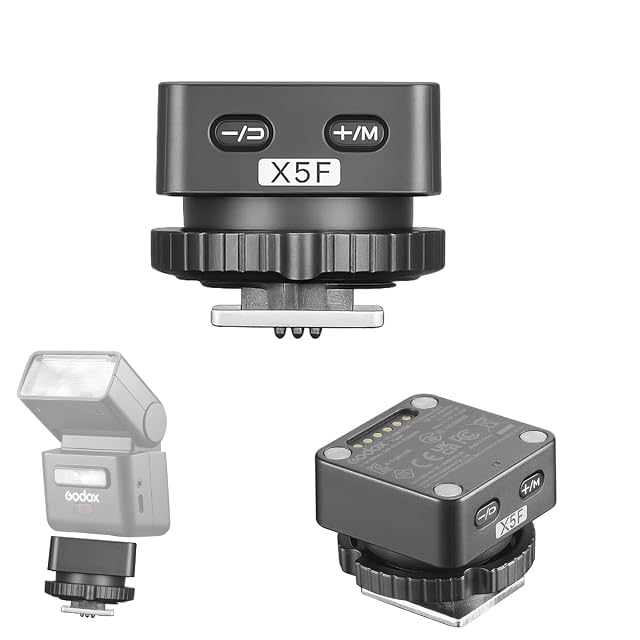
  2. Godox X5F flash trigger in black, a small hot shoe unit with a locking ring

    Godox X5F for Fujifilm, Godox 2.4G X system

    A 20 € transmitter that belongs to a named system — Godox 2.4G X — fires the maker’s studio heads by name, and has no power switch and no channel count.

    Radio system named
    The Godox 2.4G X system, named in the title and the third bullet, which then lists what it reaches: the AD100Pro II, AD200Pro II, AD600Pro II, AD600BM II, iT30Pro, V100, V480 and the Lux Master models. This is exactly what the hub above asks for — a system named on the box, with the lights that speak it enumerated, so the consequences of the purchase are visible before it is made
    Camera mounts supported
    Fujifilm, named in the title and listed body by body in the second bullet: X-Pro2, X-T20, X-T2, X-T1, GFX50s, GFX50R, X-T30, X-T4, X-T3, X-S20, X-T5, X-Pro1, X-T10, X-E1, X-A3, X100F and X100T. One camera system, named explicitly — which is the gate the hub above describes, since the contacts behind the centre pin differ between makers
    Channel and group counts
    Not published. Five bullets name the system, the cameras, the compatible lights, the mounting and the battery, and no channel or group figures appear. The cheapest trigger on this shelf publishes 16 channels; this one publishes none, which is the odd gap on an otherwise precise page
    Remote power control
    Yes, but narrowly, and the third bullet is careful about it: used off-camera the X5F can adjust the power of the iT32 only. It will fire other Godox X-system lights and cannot change their power levels. That is a real limitation stated plainly rather than left to be discovered
    Metering and sync modes claimed
    High-speed sync support, named in the first bullet, and TTL in the product description. No sync ceiling in fractions of a second is published here — the flash it partners quotes 1/8000 s — and no metering protocol is named beyond TTL for Fujifilm
    Power source
    A built-in 3.8 V 100 mAh lithium cell that charges only when the unit is attached to the iT32, about 3 hours to fill, giving up to 16 hours of standby. The closing bullet also states there is no physical power switch: status is shown by coloured LEDs, and the charge level appears in the flash’s own menu
    Amazon reference
    B0G25HKMXQ (same reference on 6 Amazon marketplaces)
    EAN
    0767637542913
    • A named system with its compatible lights listed by model, from the AD100Pro II to the V480
    • Fujifilm bodies named individually rather than described as universal
    • No channel or group counts published anywhere

    Best for: A Fujifilm body already inside the Godox X system, where the named light list is the reason to buy and the iT32 is the flash it drives.

    ≈ $20 / £18 / 20 €
    Check price on Amazon
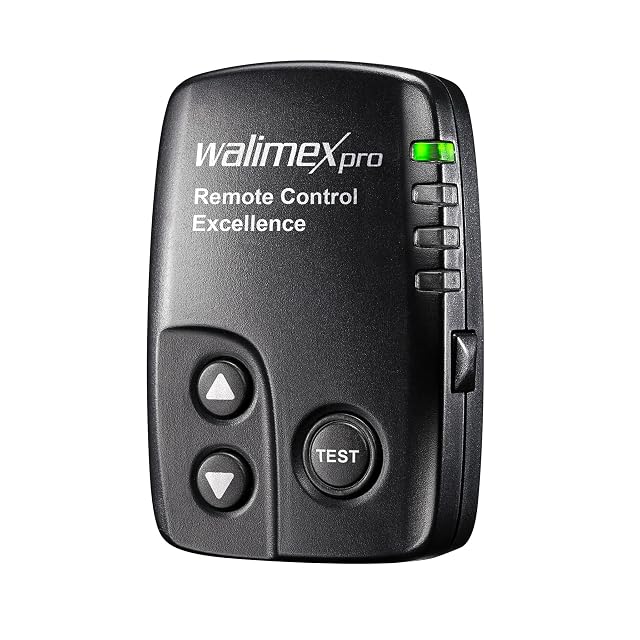
  3. Walimex pro flash trigger, a small black transmitter for a camera hot shoe

    Walimex pro Walimex pro trigger, 16 channels, 4 groups, 25 g

    The one trigger here that controls its lights as well as firing them — modelling light and flash power from the camera, across 16 channels and 4 groups, for 34 €.

    Radio system named
    Named by the lights rather than by a protocol: the second bullet says it is for the Walimex pro VE, VC and Newcomer series and connects directly to the receivers built into those heads, so no separate receivers or cables are needed. The first bullet gives a stable 2.4 GHz link. That is a closed and clearly stated system — narrower than the Godox or NEEWER ecosystems, and unambiguous about what it drives
    Camera mounts supported
    Any shoe with a centre contact, per the fourth bullet, which names the centre contact as the means of firing. No camera system is named and none is excluded, which follows from the fact that nothing but the fire signal needs to pass — the control it offers goes to the lights, not through the camera
    Channel and group counts
    16 channels and 4 groups, in the third bullet, which explains what they are for: organising several heads into groups and using channels to keep multiple systems apart in a larger studio. Both numbers, and the reason for each — the only page on this shelf to do that
    Remote power control
    Yes, and it is the fifth bullet’s whole subject: the trigger fires the flashes and also controls functions such as the modelling light and the flash power, which the bullet says suits ceiling rail systems and heads that are hard to reach. This is the capability the hub above names as the reason to want a transmitter rather than a fire button
    Metering and sync modes claimed
    Sync to 1/160 second, in the fourth bullet. No metering and no high-speed sync is claimed. It is the lowest sync ceiling on this shelf — the two cheap sets claim 1/250 s — and it is stated plainly alongside a claim that it suits movement
    Power source
    Not published on the listing. The fourth bullet gives a weight of 25 grams and describes the unit as compact on the camera shoe, and no cell type appears anywhere
    Amazon reference
    B00I48K7D0 (same reference on 6 Amazon marketplaces)
    EAN
    4250234598996
    • Remote control of flash power and the modelling light, not just firing — the only trigger here that does both
    • 16 channels and 4 groups, with the purpose of each explained
    • Sync at 1/160 s, the lowest ceiling on this shelf

    Best for: A studio already built on Walimex pro heads, especially on ceiling rails, where reaching a light to change its power is the daily nuisance this solves.

    ≈ 30 €
    Check price on Amazon
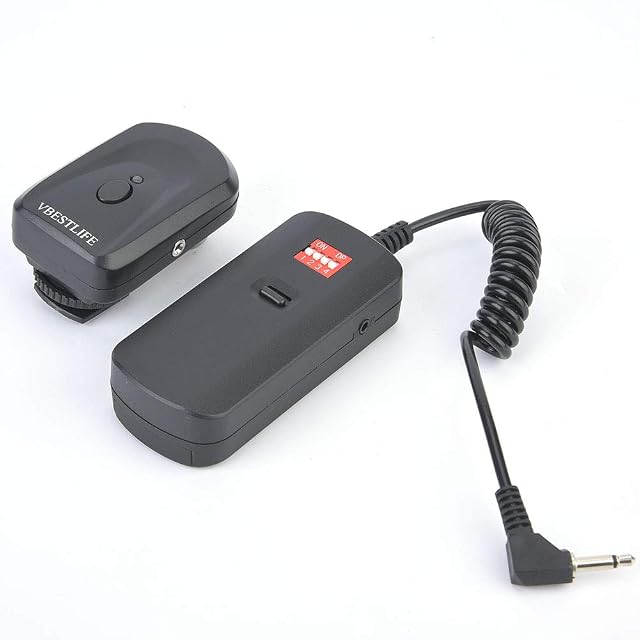
  4. VBESTLIFE flash trigger transmitter and receiver pair in black with a sync adapter

    VBESTLIFE 16 channels on 433 MHz, transmitter and receiver

    A transmitter and receiver set at 20 € offering 16 channels, a 1/250 s sync claim and a jack adapter — and naming a radio frequency where every other trigger here names a system.

    Radio system named
    None — the third bullet gives a working frequency of 433 MHz, which is not the same thing. The hub above says each trigger belongs to a system named on the box, and that the system decides which flashes can ever join the set. A frequency says which band the radio uses; it does not say who can talk to whom. Nothing on this page names a protocol, so compatibility begins and ends with the receiver in the box
    Camera mounts supported
    Pentax is named in the second bullet, which credits the transmitter with a unique contact design suited to Pentax and other cameras. The fourth bullet adds a 3.5 mm to 6.35 mm adapter for studio flashes, and the shoe carries the fire signal only — so on any camera it will trigger, and it will pass nothing else
    Channel and group counts
    16 channels, in the title and the first bullet, credited with strong interference resistance. No groups are published, which is the distinction the hub above draws: channels keep two photographers out of each other’s way, groups let one photographer control lights separately. This set offers the first and not the second
    Remote power control
    None. Nothing on the page describes adjusting a flash from the transmitter, so every light in the set is set by hand at the light — which is what the hub above calls the difference between a trigger and a controller
    Metering and sync modes claimed
    A highest sync speed of 1/250 s, in the third bullet. No through-the-lens metering and no high-speed sync is claimed, and no mode is named — so the claim is for ordinary sync at a stated ceiling, which is an honest position for a 20 € set
    Power source
    The receiver takes two AAA cells, not supplied, named in the fifth bullet with low consumption and long life. The transmitter’s power is not stated
    Amazon reference
    B07THWWJWS (same reference on 5 Amazon marketplaces)
    EAN
    0715990757208
    • Sixteen channels and a claimed 30 m range for 20 €
    • A 3.5 mm to 6.35 mm adapter in the box, so it reaches studio heads with either socket
    • A frequency named instead of a system, so nothing can be said about what else will ever join the set

    Best for: Firing one or two manual studio heads on a budget, where the set that arrives in the box is the whole system and will stay that way.

    ≈ £21 / 20 €
    Check price on Amazon
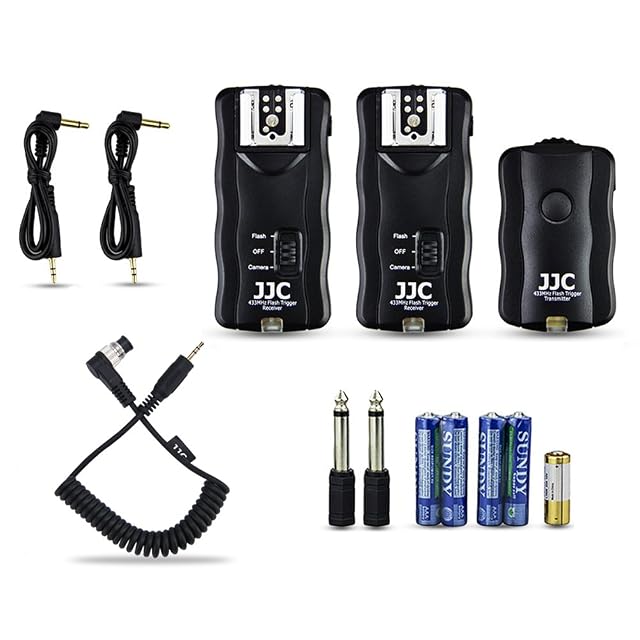
  5. JJC trigger set laid out with one transmitter, two receivers and its cables

    JJC One transmitter, two receivers, Nikon release cable

    A 36 € set that fires flashes and releases the shutter, with two receivers, both cables and the batteries in the box — and a compatibility list that reaches back to the F5.

    Radio system named
    None. Five bullets describe the contents, the compatible cameras, the compatible flashes, the dual function and the specifications, and no radio system or frequency appears. What the page does instead is name the hardware it works with on both sides, which is a different kind of assurance — concrete about the present, silent about what could be added later
    Camera mounts supported
    Nikon, named exhaustively in the second bullet — Z9, D500, D4S, D5, D810, D850, D800, D700, D300s, D300, D200, D100, D4, D3S, D3, D3X, D2H, D1H, D2Xs, D2x, D1X, D1, F100, F90x, F90, F6, F5 — plus Fujifilm FinePix S3 Pro and S5 Pro and the Kodak DCS-14n. A list that includes film bodies is unusual and tells you what the release cable fits
    Channel and group counts
    16 adjustable radio channels, in the fifth bullet, with no groups published. The same position as most of this shelf: enough channels to stay clear of interference, no means of controlling lights separately
    Remote power control
    None. The set fires flashes and releases shutters, and nothing on the page describes changing a flash’s power from the transmitter
    Metering and sync modes claimed
    Sync to 1/250 s, in the fifth bullet, and no metering or high-speed sync. The fourth bullet claims something else worth having: it can fire speedlights and studio flashes at once, and supports several flashes firing together
    Power source
    Supplied — a 23A cell and an AAA alkaline cell are in the box list, which is the only page on this shelf to include batteries at all. It does not say which unit takes which, and the counts for a three-piece set are not broken down
    Amazon reference
    B0793NCKJ5 (same reference on 5 Amazon marketplaces)
    EAN
    6971448872662
    • Two receivers in the box, so two lights are covered by one purchase
    • It doubles as a camera remote release, with the Nikon shutter cable supplied
    • No system and no frequency named anywhere

    Best for: A Nikon photographer lighting a still life or a portrait with two manual heads, who also wants a wireless shutter release from the same box.

    ≈ £30 / 36 €
    Check price on Amazon
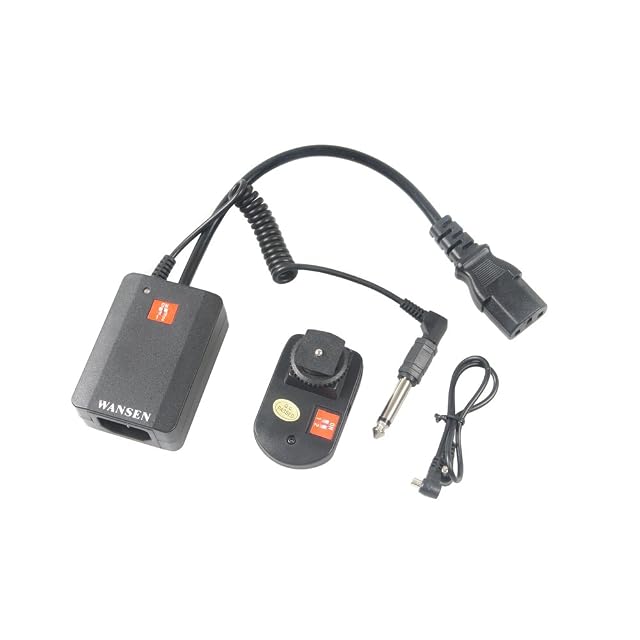
  6. Andoer WanSen AC-04 flash trigger set with transmitter, receiver and sync cable

    Andoer WanSen AC-04, 4 channels, 30 m

    The cheapest trigger here at 17 €, with four channels, a 1/250 s sync claim and a cable for cameras with no hot shoe — and no system, no groups and no stated power source.

    Radio system named
    None. Five bullets describe a set, a sync speed, a fit, a cable and a range, and no radio system and no frequency appears — less even than the 433 MHz stated by the trigger above it. What arrives in the box works together, and the page gives no basis for saying what else ever will
    Camera mounts supported
    Canon, Nikon and Sony reflex bodies with a single-point hot shoe, in the third bullet. Single-point means the central firing contact only, so nothing is passed but the signal to fire — and the fourth bullet adds a connecting cable for cameras and transmitters, so a body without a usable shoe can still trigger the set
    Channel and group counts
    Four channels, in the first bullet, and no groups. It is the smallest channel count on this shelf — the trigger beside it offers sixteen — and four is enough to avoid a clash in a quiet room and not in a busy hall
    Remote power control
    None. Nothing on the page describes adjusting a light from the transmitter
    Metering and sync modes claimed
    A highest sync speed of 1/250 second, in the second bullet, and nothing else: no metering, no high-speed sync, no named modes. For a manual studio set that is the honest minimum, and the figure is above the sync speed of many bodies
    Power source
    Not published on the listing. Neither the transmitter nor the receiver has a cell type or count named, which on a two-piece radio set is a real omission — the trigger above it at least states two AAA cells for its receiver
    Amazon reference
    B00NTXUQ4U (same reference on 5 Amazon marketplaces)
    EAN
    0702411269198
    • Seventeen euros, the cheapest way to get a manual flash off the camera on this shelf
    • A connecting cable supplied, so a camera without a usable hot shoe can still fire the set
    • No system and not even a frequency named, so nothing can be said about future compatibility

    Best for: Getting one manual studio head off the camera for the least money, on a reflex body with an ordinary hot shoe.

    ≈ 17 €
    Check price on Amazon
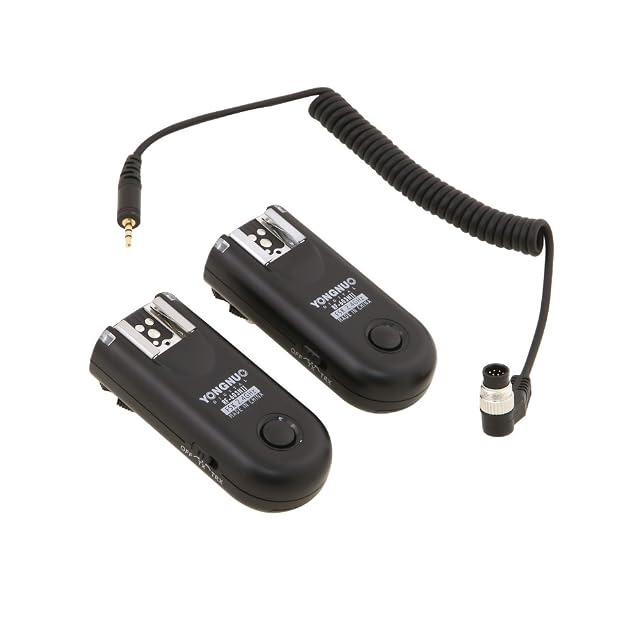
  7. Yongnuo RF-603NII transceiver pair in black with metal shoes and locking wheels

    YONGNUO RF-603NII transceivers, 100 m, identical and interchangeable

    Transceivers rather than a transmitter and receiver — every unit does both jobs and any two work together — with a 100 m range, the longest on this shelf, for 46 €.

    Radio system named
    Only as a product line: the RF-603NII, stated in the first bullet to be backwards compatible with the earlier RF-603. No protocol and no frequency is named. What is named instead is a design principle — the units are transceivers, identical and interchangeable, so any unit can transmit or receive. Extra units are sold separately, which is how the set grows
    Camera mounts supported
    Nikon, named in the title across the D1 to D800 range. The fourth bullet describes the release cable supplied for connecting a transceiver to the camera, and the first mentions a shoe with a screw clamp so the unit cannot slide sideways off the camera
    Channel and group counts
    Not published. Five long bullets describe the transceiver principle, the two firing arrangements, the camera release function and the multi-flash use, and no channel or group figure appears at all — the only page on this shelf to publish neither
    Remote power control
    None. The set fires flashes and cameras, and nothing describes adjusting a light’s power remotely
    Metering and sync modes claimed
    None claimed, and no sync ceiling is published either — unusual on this shelf, where 1/250 s and 1/160 s figures appear elsewhere. The fourth bullet does describe a two-stage release button, half press to focus and full press to fire, and says long exposures, continuous frames and video start and stop are all possible with the right camera setting
    Power source
    Not published. The first bullet mentions a side-mounted on-off switch as an improvement over the previous model, and no cell type or count appears anywhere
    Amazon reference
    B00HRT2XWK (same reference on 5 Amazon marketplaces)
    EAN
    0095225138676
    • A 100 m range, more than three times the 30 m claimed by everything else here
    • Transceivers: identical units, any one transmitting or receiving, interchangeable and expandable
    • No channel or group counts published at all

    Best for: Firing a flash or a camera from a distance on a Nikon body, where the 100 m range and the ability to add identical units matter more than channels.

    ≈ £42 / 46 €
    Check price on Amazon

Each amount in a write-up is what the listing showed when that page was written. The figure next to the product is pulled in as you read, and it is the one that counts.