Skip to content

Reflecta x33-Scan, 15.3 MP CMOS, under 2 seconds, 365 g vs Plustek OpticFilm 8300i Ai, 7200 dpi, infrared dust removal

Which film scanner: the Reflecta x33-Scan or the Plustek OpticFilm 8300i Ai?

These two answer opposite questions. One is a standalone box with a 5-inch screen that empties a shoebox of slides in an afternoon; the other needs a computer, takes 35 mm only, and resolves more detail than the film itself holds while subtracting every speck of dust by infrared. The gap is 429 € and it buys time at one end and fidelity at the other.

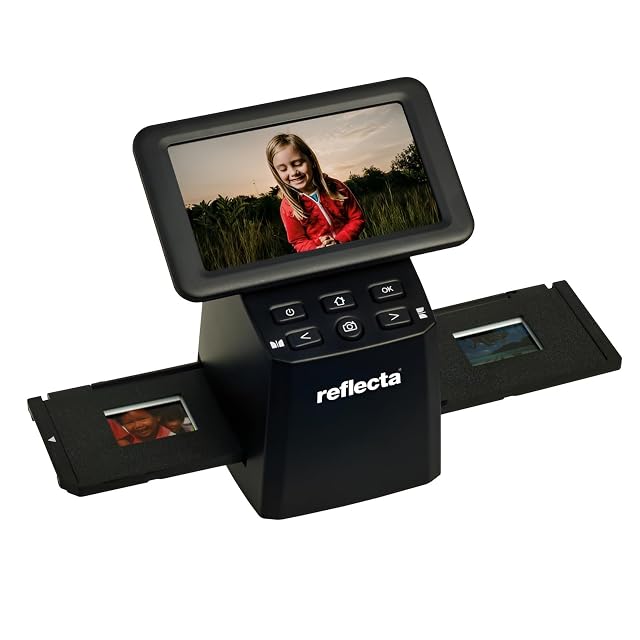
Reflecta x33-Scan with its five-inch IPS screen previewing a colour negative

Reflecta x33-Scan, 15.3 MP CMOS, under 2 seconds, 365 g

Wins 2 of 7

Check price

≈ 130 €

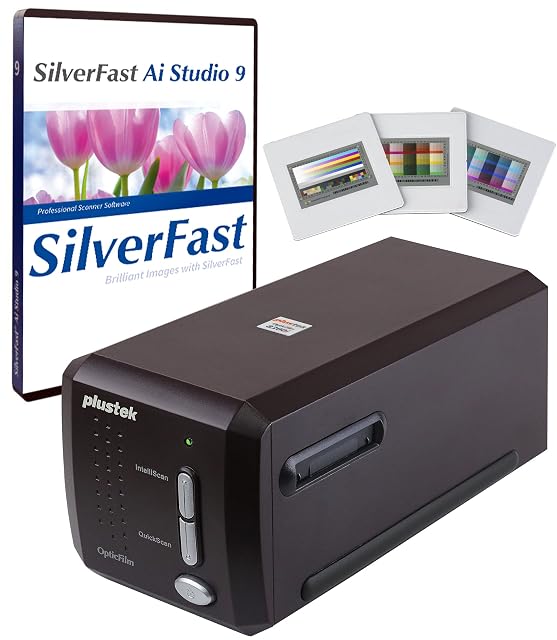
Plustek OpticFilm 8300i Ai with a film holder inserted, beside its IT8 target slides

Plustek OpticFilm 8300i Ai, 7200 dpi, infrared dust removal

Wins 4 of 7

Check price

≈ $539 / 559 €

Line by line

Compared on x33-Scan, 15.3 MP CMOS, under 2 seconds, 365 g OpticFilm 8300i Ai, 7200 dpi, infrared dust removal
Optical resolution NOT GIVEN IN DPI. The first bullet publishes a 15.3 MP CMOS sensor instead, and the two scales cannot be converted into one another: dpi says what the optics resolve across the film, megapixels say how many pixels the file contains. Three scanners on this shelf publish dpi and three publish megapixels, and the hub above asks for the first 7200 dpi, in the first bullet, from a new chip generation — fourfold the 1800 dpi of the 52 € DIGITNOW and the 103 € Rollei. At 7200 dpi a 35 mm frame yields roughly 10,000 pixels across, which is more than 35 mm film itself holds: the figure is there so that nothing the negative contains is left behind
Formats accepted 135 film, slides and black-and-white negatives, with 110 and 126 listed as OPTIONAL in the seventh bullet — so the two older formats need something bought separately, which the page does not name or price 35 mm film and slides only. No 110, no 126, no prints — the opposite trade from the 242 € Somikon here, which scans five things adequately. This machine does one thing at a resolution nothing else here approaches
Holders supplied Not itemised. That the 110 and 126 formats are optional implies holders are what they require, and the page never lists what arrives in the box Not itemised on the page, which is an odd omission at 559 € — the holder is what keeps a negative flat, and flatness at 7200 dpi is the difference between resolution and blur
Bit depth Not published Not published as a number, but the fourth bullet credits SilverFast 9 with a 16-BIT HISTOGRAM, multi-exposure and HDRi. Sixteen bits per channel is 65,536 levels against the 256 of an 8-bit file, and it is what lets a dense shadow in a negative be opened up afterwards without banding
Dust removal method NOT DESCRIBED — and the page invites the confusion. Its eighth bullet names IET technology for automatic colour and contrast correction, which is image processing and not dust removal. Only the 559 € Plustek on this shelf has an infrared channel for dust INFRARED — iSRD, named in the fourth bullet, and the only true infrared dust removal on this shelf. An infrared pass sees dust and scratches as opaque while film dye is transparent to it, so the defects are mapped and subtracted from the colour scan. Five scanners here offer a brush or nothing; this is the one that does the work for you
Output formats JPEG, in the ninth bullet, described as compatible with all digital playback devices, saved to SD or SDHC cards up to 128 GB — sixteen times the 8 GB ceiling of the 52 € DIGITNOW here Not listed. Two pieces of software are: SilverFast 9 Ai Studio and Plustek QuickScan Plus, in the second bullet — and SilverFast writes the formats archival work needs
Scan speed PUBLISHED: a frame in under two seconds, in the third bullet, and it is the only speed figure on this shelf. On a box of five hundred slides that is the difference between an afternoon and a weekend — the specification that decides whether the project finishes RELATIVE ONLY: 38 per cent faster than the previous model, in the first bullet, with no absolute figure. A percentage against an unnamed baseline is not a measurement — and at 7200 dpi with multi-exposure, a frame takes minutes rather than seconds either way

A tick means one listing published something the other did not, or published a better figure. It does not mean the product is better, and the column is not a score out of anything: a maker who says less loses lines here without losing a comparison. The two verdicts below are where the page is settled.

Which one, for whom

Buy the Reflecta x33-Scan, 15.3 MP CMOS, under 2 seconds, 365 g

The Reflecta wins the two lines that decide whether a shoebox gets digitised at all: it accepts more formats, and it scans a frame in under two seconds — the only absolute speed figure on the shelf. It publishes no dpi, removes no dust, and writes JPEG only, so what it produces is a record rather than an archive.

Buy the Plustek OpticFilm 8300i Ai, 7200 dpi, infrared dust removal

The Plustek takes resolution, bit depth, dust removal and output formats, and it is the only scanner here that treats film as something to be preserved: 7200 dpi, a 16-bit histogram, an infrared channel that maps every speck, and an ISO-compliant IT8 target so the colour is true rather than plausible. It needs a computer, takes 35 mm only, and states its speed as a percentage of a model it never names.

What people ask before they commit

Is 7200 dpi more than 35 mm film can hold?

For most film, yes — and that is the intention. Fine-grained slide film resolves somewhere below that figure, so scanning above it guarantees the scanner is not the limit. The cost is time and file size: at 7200 dpi with multi-exposure a single frame takes minutes, which is why this is a machine for an archive and the Reflecta is a machine for a shoebox.

What does infrared dust removal actually save?

A week of retouching. Film dye is transparent to infrared while dust and scratches are not, so an infrared pass produces a map of every defect that the software then subtracts from the colour scan. On a thousand negatives that is the difference between hours of cloning and none. The Reflecta offers no dust handling at all — and its IET technology, despite the placement, is colour and contrast correction.

Can megapixels be compared with dpi?

Not directly, and that is the problem with this shelf. Eighteen hundred dpi across a 36 mm frame is about 2550 pixels wide, roughly 4 MP. A 15.3 MP sensor could correspond to some 3600 dpi if every pixel resolved real detail on the film — and sensor pixels are not the same thing as resolved optical detail. The honest reading is that the Reflecta out-resolves the cheap scanners by an amount its own page does not let you calculate, and the Plustek out-resolves everything.

The full reviews

  • Reflecta x33-Scan, 15.3 MP CMOS, under 2 seconds, 365 g

    RESOLUTION AS A SENSOR: 15.3 MP CMOS, no dpi figure published · 135 film, slides and black-and-white, with 110 and 126 OPTIONAL · holders not itemised, the optional formats implying extra ones · bit depth NOT published · dust removal NOT described; IET technology is named for automatic COLOUR and CONTRAST correction, which is a different job · JPEG to SD or SDHC up to 128 GB · SCAN SPEED PUBLISHED: under two seconds a frame, the only figure on this shelf · a 5-inch IPS screen · standalone, no PC required · 365 g

    Under two seconds a frame — the only scan speed published here — from a 15.3 MP standalone scanner with a 5-inch screen, at 365 g.

    Best for: A large box of 35 mm slides and negatives that has to be got through in one sitting, on the table, with no computer.

    ≈ 130 €

  • Plustek OpticFilm 8300i Ai, 7200 dpi, infrared dust removal

    OPTICAL RESOLUTION 7200 dpi — four times the next figure on this shelf · 35 mm film and slides · holders not itemised · bit depth not published as a number, but SilverFast 9 is credited with a 16-BIT HISTOGRAM · DUST REMOVAL BY INFRARED: iSRD, the only true infrared channel on this shelf · output formats not listed; SilverFast 9 Ai Studio and Plustek QuickScan Plus supplied · scan speed described as 38 PER CENT FASTER than the previous model, with no absolute figure · REQUIRES A COMPUTER: Windows 7 to 11, Mac OS 10.13 to 12.x · an ADVANCED IT8 COLOUR TARGET on 3 slides, ISO 12641-2 compliant, valued at 99 dollars on the page · multi-exposure, HDRi and NegaFix named

    Seven thousand two hundred dpi with a true infrared dust channel, SilverFast 9 Ai Studio and an ISO-compliant IT8 calibration target — the only scanner here built for archival work.

    Best for: An archive of 35 mm negatives that has to be digitised once, properly, with colour that can be trusted and dust that does not have to be painted out.

    ≈ $539 / 559 €

Each amount in a write-up is what the listing showed when that page was written. The figure next to the product is pulled in as you read, and it is the one that counts.