An optical finder and a mature lens catalogue, both sold used · review
Canon EOS 2000D with EF-S 18-55mm f/3.5-5.6 IS II and two LP-E10 batteries review
A reflex sold as a kit with two batteries and a stabilised standard zoom, whose listing names its sensor, its processor and its wireless features while leaving every figure about the optical finder unwritten.
The bottom line Honest about its sensor, its processor and its box contents, and silent about its finder — which is the part a reflex exists for. At 599 € with two batteries and a stabilised zoom it is a working kit, and the specification to weigh is the lens range rather than anything published about the camera.
On the listing
A 24.1 MP APS-C CMOS sensor with a DIGIC 4+ processor, a 7.5 cm LCD, Full HD video, WLAN and NFC; a first bullet about image quality and background blur; a second about connecting, shooting and sharing on the move; a third inviting the buyer to explore the possibilities of a DSLR and interchangeable lenses; a fourth about guides that help with creativity; and a fifth listing the box: an EOS 2000D body, an EF-S 18-55mm f/3.5-5.6 IS II, an EF eyecup, an R-F-3 body cap, an EW-400D strap, two LP-E10 batteries, an LC-E10E charger, a mains cable, an E-58 II lens cap, a rear lens cap and a getting-started guide.
The box is the specification
Five bullets, and the longest of them is a parts list. That is a fair description of what this kit is: a body, a stabilised standard zoom, and two batteries with a charger, which is the reason the word Battery Kit is in the name. For a first camera the second cell is worth more than most figures a listing could print.
What a reflex should publish, and this page does not
Nothing about the viewfinder appears anywhere. Coverage, magnification, whether the finder uses a pentaprism or a pentamirror — none of it is written, in the title or in any bullet. A mirrorless body would have a screen figure or a finder resolution in its place; here the defining component of the design goes unmentioned.
The autofocus is treated the same way: no point count, no sensor type, no mention at all. The third bullet talks about exploring the possibilities of a DSLR, which is marketing rather than specification.
What the money covers, and what it does not
The 599 € covers two batteries, a charger and a stabilised 18-55mm zoom alongside the body, and it buys into a mount with two decades of second-hand glass behind it. Video is the visible compromise at Full HD only. The hub above warns to check whether the lenses wanted are still made before committing, and on this mount that question has a comfortable answer.
Availability
Between 495 € and 599 € on the German, French, Italian and Spanish Amazon stores when this page was last checked.
Listed in the American and British Amazon catalogues with nothing on sale against the entry: the camera has a page there and no seller behind it.
Everything in this section is the figure Keepa carried on the day of the last update to this page. Availability and prices shift without notice.
Prices quoted in this text were read on 13 September 2026. The live price is at the top of the page.
What it does well, and what it gives up
Strengths
Two LP-E10 batteries and a charger are in the box, which is the practical difference this kit is named for
The supplied zoom is stabilised and its range is written at both ends, 18-55mm at f/3.5-5.6
Names its sensor format and its processor generation, so the body can be placed within the maker’s own line
Compromises
Nothing about the optical viewfinder is published, which is the one thing a reflex offers that the hybrids on this site do not
No autofocus point count anywhere on the page
Video stops at Full HD, with no 4K mode published at all
Specifications
Sensor format
APS-C CMOS — stated in the title, which is the only place on the page where the format appears; the bullets speak of image quality without repeating it
Resolution
24.1 MP — stated in the title and again in the first bullet, next to a claim about background blur in Full HD
Mount
Not published as a designation — the title names the supplied lens as EF-S 18-55mm IS II and the fifth bullet repeats it in the box contents, so the prefix is the only statement of what the body takes. The third bullet speaks of exploring the possibilities of a DSLR and interchangeable lenses without naming a bayonet
Viewfinder coverage and magnification
Not published on the listing — no coverage percentage, no magnification and no finder type appear anywhere in the title or the five bullets, on a camera whose defining feature is an optical finder
Autofocus points and types
Not published on the listing — no point count and no sensor type are given, and autofocus is not mentioned in any of the five bullets
Card slots
Not published on the listing — the box contents list the body, the lens, an eyecup, a body cap, a strap, two batteries, a charger, a mains cable and two lens caps, and no card among them
Stabilisation location
In the lens — the supplied EF-S 18-55mm carries IS in its designation, stated twice on the page. No stabilisation is claimed for the body, and no stop figure is published for the lens
Video modes
Full HD — stated in the first bullet alongside the resolution claim. No frame rate, no 4K option and no recording limit appear
Amazon reference
B07C8FX8JF (same reference on 6 Amazon marketplaces)
EAN
8714574692401
What people ask before they commit
What does a reflex give that a mirrorless body does not?
An optical path: the finder shows the scene through the lens by way of a mirror, with no screen in between. That is the whole argument for the design, which is why it is worth noting that this listing publishes nothing about the finder at all — not its coverage, not its magnification, not whether it uses a prism or a mirror. The feature is the reason to buy and the page leaves it undescribed.
Is DIGIC 4+ a limitation in 2026?
It is an older processor generation, and the page states it plainly rather than hiding it. What follows from it on this listing is visible in one figure: video stops at Full HD while the rest of this catalogue records 4K. For stills at 24.1 MP the processor matters less than the lens in front of it, and the supplied zoom is the same one this maker has shipped with entry kits for years.
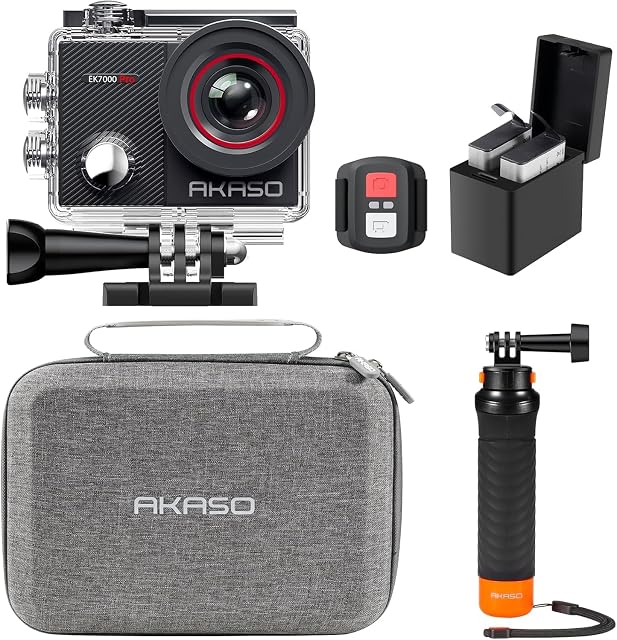
40 m waterproof housing · 4K 30, 2.7K 30, 1080p 60 · 20 MP stills · EIS stated · four selectable view angles: super wide, wide, medium, narrow · 2 inch IPS touchscreen · floating hand grip and bag supplied · no field of view in degrees
An established name at ninety-three euros, selling a touchscreen, three video modes and four selectable view angles — described by name rather than in degrees — with a floating grip in the box.
Best for: Water use where the floating grip and the touchscreen earn their keep, by someone who will buy a spare battery blind.
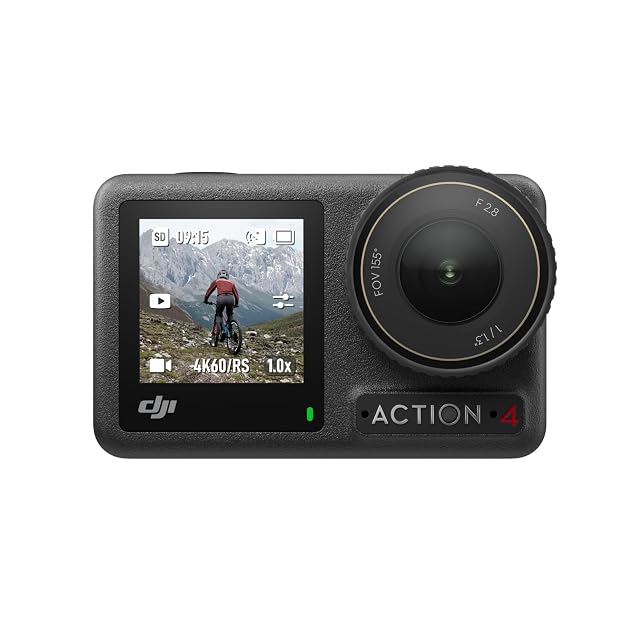
1/1.3 inch sensor, the only one published on this shelf · 4K at 120 fps · 155 degree ultra wide · 10-bit and D-Log M · 360 degree HorizonSteady, three stabilisation modes · cold resistance to -20 °C · magnetic quick release · one battery supplied · no waterproof depth published
The only action camera here to publish a sensor size, and the only one with a magnetic mount and a stated cold rating — while never printing the waterproof depth that eight of its nine rivals lead with.
Best for: Footage that will be graded afterwards, in cold or poor light, by someone who already owns mounts or will buy the magnetic ones.
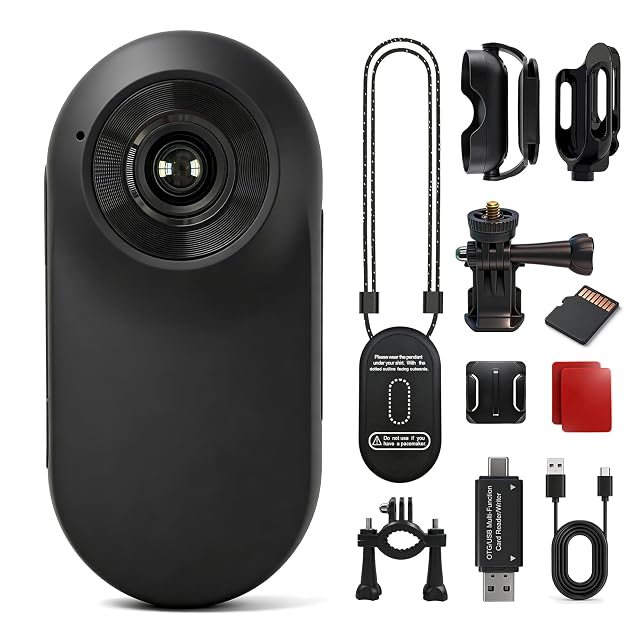
No waterproof claim · 1080p · 1 inch display · magnetic mount with 180 degree adjustment · 26 g · 350 mAh built-in battery, 120 to 180 minutes stated · 16 GB card supplied · loop recording · no app or WiFi needed
A 26 g body camera rather than a sports camera: magnetic, screenless in all but name, with a built-in battery the maker rates at 120 to 180 minutes and no waterproof claim at all.
Best for: Wearing on a jacket or a helmet for a commute or a shift, where the magnet and the weight matter more than depth ratings.