Skip to content

A first camera under $300: four routes, four compromises

Under $300, every camera gives something up, so the question is which compromise suits you. These four come from our reviews, with prices read on Amazon.com on November 2, 2026: a simple zoom compact, two action cameras at very different levels, and an instant camera that prints on the spot.

Four routes, four compromises

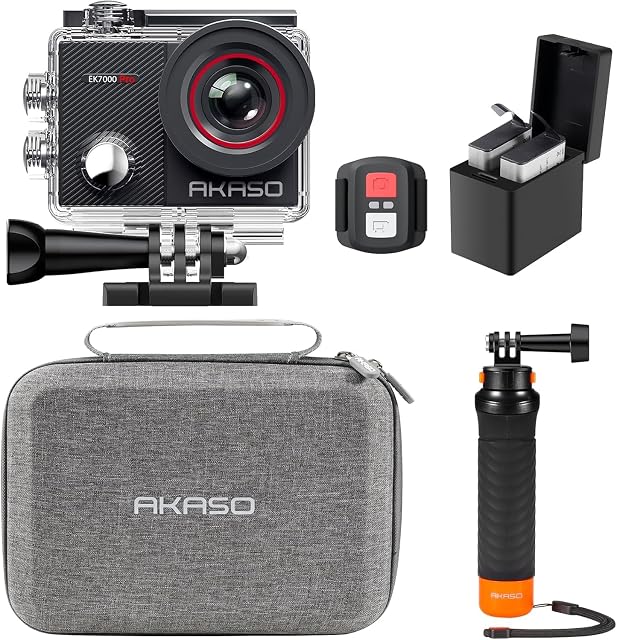
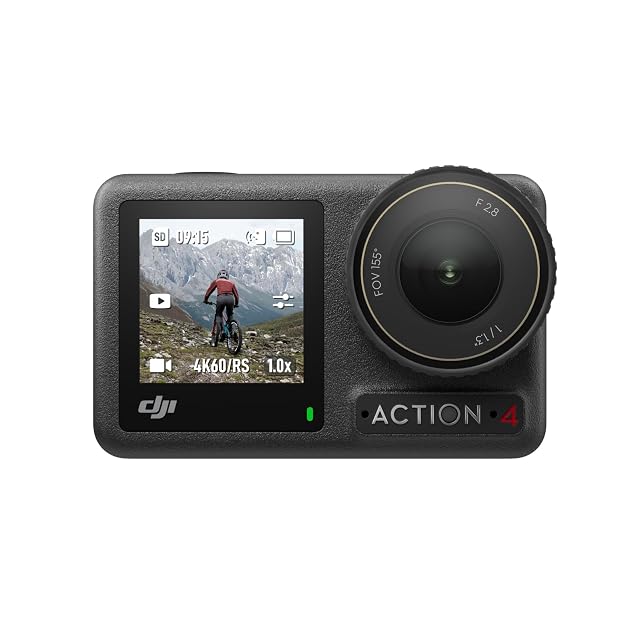
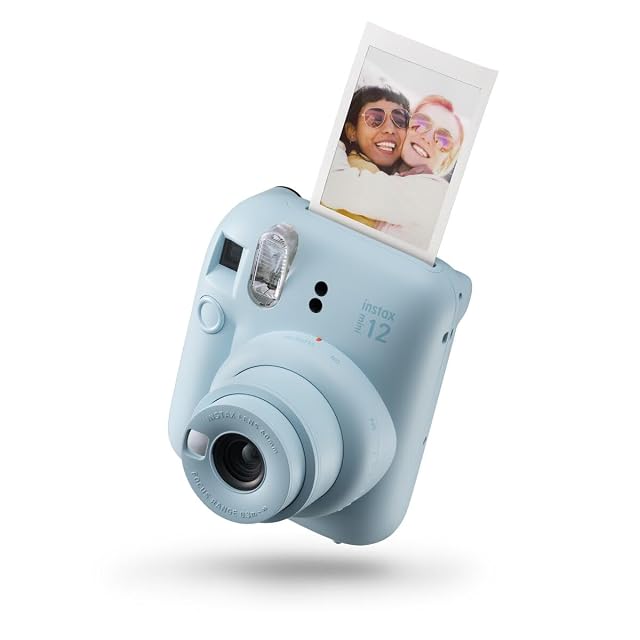
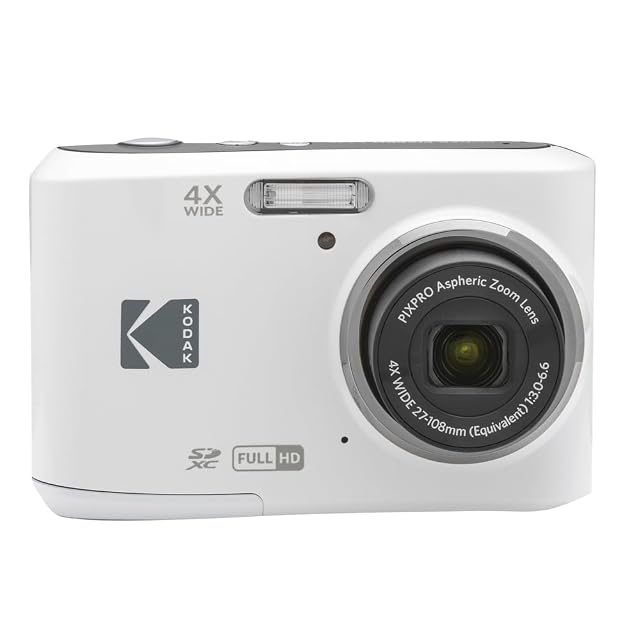
The KODAK PIXPRO FZ45, about $110, gives a 4× optical zoom and runs on AA batteries, but its small sensor struggles indoors. The AKASO EK7000 Pro, about $85, records 4K30 with a touch screen and two batteries, sealed to 131 ft in its housing. The DJI Osmo Action 4, about $239, has a much larger 1/1.3-inch sensor and is waterproof to 59 ft without a case. The instax mini 12, about $93, prints credit-card-size photos in seconds.

The figure that decides low light

Sensor size. A larger sensor gathers more light at the same exposure, which separates a clean indoor photo from a noisy one. That is why the DJI costs three times the AKASO: its sensor is far larger.

Running costs

The FZ45 runs on AA cells, so batteries are cheap and everywhere. The action cameras need microSD cards. The instax mini 12 costs money on every shot, because each print uses a sheet of instax mini film.

How we chose

Each pick is a product we review, available on Amazon.com when we read the listing. Our method explains how prices are read and how the score is calculated.

After the first year

The second purchase is rarely another camera. It is usually a support, a light or a lens; the other guides here cover those.

Which one belongs in your bag?

You are coming from a phone
It is the interchangeable lens that changes everything, not the sensor.
You mostly shoot outdoors
A well-chosen second-hand body beats a new entry-level one.
You want to film too
Stated video modes sort the bodies ahead of any other criterion.
The camera has to fit a pocket
The compact family becomes relevant again despite the phone.

Picking by what you shoot

Holidays and family

Little technical demand, a great deal of demand on weight and battery life.

Learning the basics

A body with reachable dials beats a larger but locked-down sensor.

Reselling later

A widespread mount holds its value; an orphan system does not.

What matters once you are shooting

The stated mount
It commits every later purchase. It is the most lasting choice on the page.
The published resolution
It describes what the sensor records, not the quality of what comes out.
The stabilization location
Body or lens: what is stated changes what has to be bought next.

Which figure for which picture

What you think you buyWhat you really buyWhat gets paid for later
A bodyA mountThe lenses
MegapixelsA published resolutionStorage
A full kitA kit lensA second lens
Battery lifeOne batteryA second battery

Where photographers go wrong

Comparing resolutions across families
Published resolution says nothing about sensor size nor about what comes out of the file.
Forgetting the kit is a start
The supplied lens covers the commonest ground and nothing else. The real budget includes the second one.
Choosing a mount with no future
A thinly supported system limits the lenses available and the resale.

By the photographer you are

The complete beginner
Gains from a widespread body: accessories, tutorials and used stock follow.
The traveler
Looks at the weight of body plus lens, never of the body alone.
The one who films
Reads the stated video modes first; they vary enormously at this price.

Shutter life, care and how long it holds value

An entry-level camera suffers above all from dust and contacts. A dirty mount produces communication errors wrongly blamed on the electronics, and a dusty sensor shows on every sky.

  • Change lenses with the camera off and the opening facing down.
  • Clean the mount contacts dry, as the maker states.
  • Store the camera without leaving the battery at full charge for months.
  • Back the cards up: a card is a consumable, not a strongbox.

Safety

This site publishes stated specifications and describes no internal maintenance procedure.

  • Sensor cleaning comes under the maker’s manual or a professional.
  • Lithium batteries have their own transport and storage rules.
  • Stated weather sealing describes test conditions, not your weather.
  • Never look at the sun through an optical viewfinder.

Prices quoted in this text were read on November 2, 2026. The live price is at the top of the page.

What goes in the bag, and why

  1. KODAK PIXPRO FZ45

    16 MP 1/2.3-inch CMOS · 4× optical zoom from 27 mm · 1080p video · 2.7-inch screen · two AA batteries · SD cards up to 512 GB

    A simple point-and-shoot that runs on AA batteries, with a 4× optical zoom and 1080p video, sold by Amazon.com for about $110.

    Best for: Families, children and travelers who want a camera that runs on store-bought batteries.

    7.3/10

    ≈ $110

  2. AKASO EK7000 Pro

    4K at 30 fps, 1080p at 60 fps · 20 MP stills · 2-inch touch screen · EIS · housing rated to 131 ft (40 m) · two 1350 mAh batteries

    A budget 4K action camera with a 2-inch touch screen, electronic stabilization, a dive housing rated to 131 feet and two batteries in the box, sold by AKASO for about $85.

    Best for: A first action camera for bikes, beaches and snorkeling, bought by someone who wants everything in one box.

    8.0/10

    ≈ $85

  3. DJI Osmo Action 4

    1/1.3-inch sensor · 4K at 120 fps · 155° field of view · 10-bit and D-Log M · waterproof to 18 m (59 ft) · 1770 mAh battery · magnetic mounts

    A 1/1.3-inch sensor makes the Osmo Action 4 the low-light pick of this shelf, with 4K at 120 fps, 10-bit color, waterproofing to 59 feet without a case and magnetic quick-release mounts.

    Best for: Anyone who films at dawn, dusk, indoors or under water and wants footage that holds up when it is edited.

    8.3/10

    ≈ $239

  4. Fujifilm instax mini 12

    instax mini film, 54 × 86 mm prints · automatic exposure and flash · selfie mirror and close-up lens · 5-second print · two AA batteries included

    The simplest instant camera on this shelf: automatic exposure and flash, a selfie mirror and credit-card-size prints on instax mini film, for about $93.

    Best for: Parties, weddings and children: anyone who wants an instant print with no settings to learn.

    8.3/10

    ≈ $93

What people ask before they commit

Is a phone not better than any of these?

For photos in good light viewed on a screen, often yes. These cameras earn their place for something a phone does not do as well: an optical zoom, a waterproof body that can be mounted on a helmet, or a print in your hand.

Why is there no interchangeable-lens camera here?

The cheapest kit we review, the Canon EOS Rebel T7 with its 18-55mm lens, costs about $499 on Amazon.com. That is the step up when the budget allows.

Which one for a child?

The KODAK PIXPRO FZ45 runs on AA batteries and has a simple 4× zoom. The instax mini 12 is fully automatic and prints instantly.

Each body, and the pictures it was chosen for

AKASO EK7000 Pro · $85

For shooting: A first action camera for bikes, beaches and snorkeling, bought by someone who wants everything in one box.

Strongest feature: Two batteries and a full mount kit for about $85

Weakest feature: A 1/3-inch sensor is small, so dim scenes get noisy fast

Read the full review: AKASO EK7000 Pro →

What each band of spending frames

The one-frame answer

How this list was put in order

The bodies and lenses above come from the catalog of this site. Specifications come from the maker and from the Amazon listing; prices are what Keepa reported on the date below, and both move. The order uses declared specifications, the balance of stated strengths and stated limits, and price. Nothing here has been shot with by us, and the page does not pretend otherwise.

Last checked on