The film format is the running cost, and it is chosen at the till · review
Polaroid Now Generation 3 bundle with a double film pack, 16 photos review
A bundle that arrives with sixteen photos and a two-lens autofocus system, sold on the largest print in this family and on a tripod thread that no other instant camera here provides.
The bottom line The dearest instant camera here at 133 €, and the one with the most to do: two film types, a self-timer, double exposures and a thread to mount it on. The gap in the specification is the flash, which is never described on a camera that needs light more than a digital body does.
On the listing
A bundle of camera plus a double film pack, sixteen photos in total, described as the classic analogue instant camera optimised for sharper pictures in more light conditions; improvements listed as a better light meter position, an improved distance sensor, an improved two-lens autofocus system, an integrated tripod mount, filter compatibility, a self-timer and a double exposure mode; an iconic design in six colours, made with 40 per cent recycled materials and a USB-C rechargeable battery; a self-timer pressed once for a group shot and twice for a double exposure; and compatibility with i-Type and 600 film, with a note that film is sold separately and not included unless otherwise stated.
A camera with controls, which is unusual here
Two exposures on one sheet, and a thread to hold the camera still. Those two facts, three lines apart in the same bullet, are what separate this from the other instant camera in this family. One is a creative mode and the other is the only way to use it properly, and the listing supplies both without ever saying they belong together.
The self-timer does double duty: one press for a group photograph, two for the double exposure. It is a neat piece of design and the page explains it clearly.
The silence worth noticing
There is no flash anywhere on this page. Not a guide number, not a range, not a mention. For an instant camera that is a real gap, because the film is the least sensitive medium this site covers and indoor light is where instant photography usually happens. The first bullet claims sharper pictures in more light conditions, which describes an improvement without naming the part responsible.
The bundle, and the small print under it
Sixteen photos arrive with the camera, which means it works on the first evening. The last bullet then states that film is sold separately and not included unless otherwise stated — boilerplate from the maker’s range, sitting under a listing whose whole title is a bundle. Read the title, not the fifth bullet, and then price a pack before the first one runs out.
Availability
Between 133 € and 150 € on the German, French, Italian and Spanish Amazon stores when this page was last checked.
The American and British Amazon stores carry it too, priced in local currency. Those amounts are deliberately absent from the range above, which reads euro stores only.
Everything in this section is the figure Keepa carried on the day of the last update to this page. Availability and prices shift without notice.
Prices quoted in this text were read on 13 September 2026. The live price is at the top of the page.
What it does well, and what it gives up
Strengths
The bundle includes sixteen photos, so the camera can be used the day it arrives without a second purchase
A tripod thread is named in the second bullet, which no other instant camera in this family publishes
Compatible with two film types, i-Type and 600, which widens where film can be bought
Compromises
No flash is described anywhere, on a camera whose film needs light
The improvements are listed as better than an earlier generation rather than as figures, so nothing here can be compared against another maker
The last bullet warns that film is sold separately and not included unless otherwise stated, which sits awkwardly beside a bundle sold on its 16 photos
Specifications
Film format
Polaroid i-Type and 600 film — stated in the fifth bullet as a compatibility of this generation, with the bundle supplying a double colour film pack of 16 photos in total
Print size
Not published in millimetres — the fifth bullet calls the results vollformatigen Polaroid-Bildern, full-format Polaroid pictures, which names the format by its own tradition rather than by a dimension
Exposure control
A repositioned light meter and a double exposure mode, both stated in the second and fourth bullets; the self-timer is named twice, once for group shots and once as the control that triggers a double exposure. No manual aperture or shutter setting is published
Flash behaviour
Not published on the listing — the first bullet claims optimisation for sharper pictures in more light conditions, and no flash is named, described or given a range in any of the five bullets
Close-focus mode
Not published on the listing — the second bullet names an improved distance sensor and an improved autofocus system with two lenses, which is a focusing mechanism rather than a close-range mode, and no minimum distance is given
Viewfinder
Not published on the listing — five bullets cover the bundle, the improvements, the design, the creative modes and film compatibility, and none describes a finder or a framing aid
Digital printing path
None — the camera is described as the classic analogue instant camera in its first bullet. USB-C appears in the third bullet as the way the battery charges, not as a path for images
Amazon reference
B0DTTMYBRH (same reference on 6 Amazon marketplaces)
EAN
9120134282385
What people ask before they commit
What is the difference between i-Type and 600 film?
The listing states that this generation takes both and does not explain how they differ. What can be read from the page is the practical consequence, which is the useful part: two film lines are available to this camera rather than one, so a shop that has stocked out of the first may still have the second. Anything about speed or battery content in the pack is not published here.
Does a double exposure mode need a tripod?
The page names both features in the same bullet and does not connect them. In practice two exposures on one sheet line up only if the camera does not move between them, and the tripod thread mentioned two lines earlier is what makes that possible. The listing supplies both parts and leaves the reader to put them together.
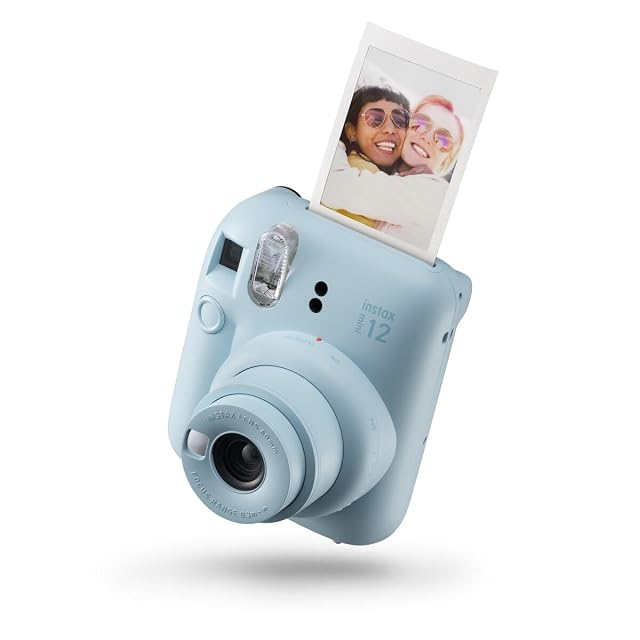
instax mini film · credit-card print format stated · automatic exposure and flash · close-up mode with parallax correction · selfie mirror · up to 100 prints per set of batteries · no digital printing path · print size in millimetres not published
An instant camera that removes every setting on purpose: exposure and flash are automatic, a mirror handles framing for selfies, and the only figure published anywhere is one hundred prints per set of batteries.
Best for: Parties, trips and gifts, where handing someone a physical print immediately is the whole point and nothing needs adjusting.
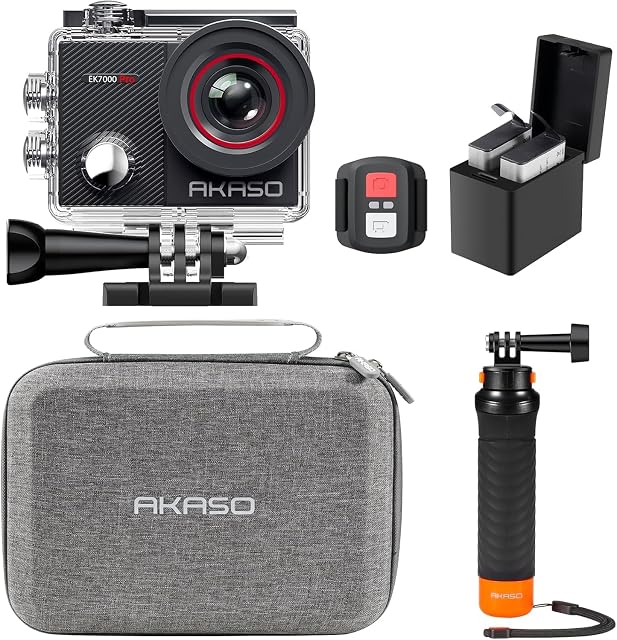
40 m waterproof housing · 4K 30, 2.7K 30, 1080p 60 · 20 MP stills · EIS stated · four selectable view angles: super wide, wide, medium, narrow · 2 inch IPS touchscreen · floating hand grip and bag supplied · no field of view in degrees
An established name at ninety-three euros, selling a touchscreen, three video modes and four selectable view angles — described by name rather than in degrees — with a floating grip in the box.
Best for: Water use where the floating grip and the touchscreen earn their keep, by someone who will buy a spare battery blind.
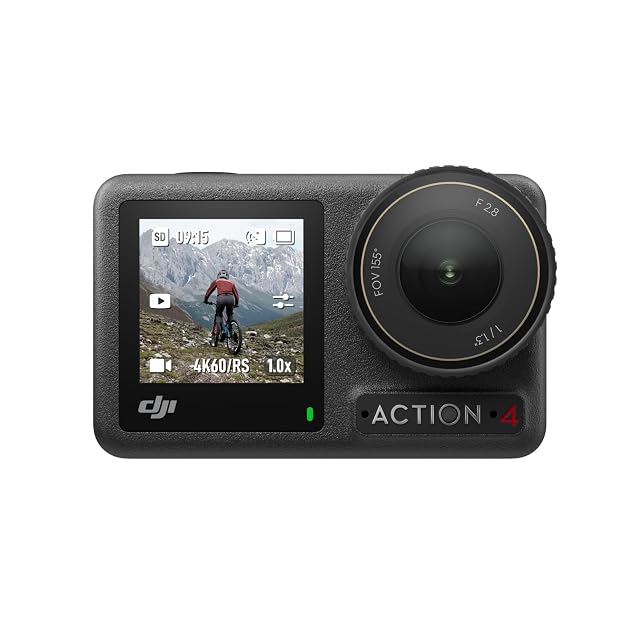
1/1.3 inch sensor, the only one published on this shelf · 4K at 120 fps · 155 degree ultra wide · 10-bit and D-Log M · 360 degree HorizonSteady, three stabilisation modes · cold resistance to -20 °C · magnetic quick release · one battery supplied · no waterproof depth published
The only action camera here to publish a sensor size, and the only one with a magnetic mount and a stated cold rating — while never printing the waterproof depth that eight of its nine rivals lead with.
Best for: Footage that will be graded afterwards, in cold or poor light, by someone who already owns mounts or will buy the magnetic ones.