The film format is the running cost, and it is chosen at the till · review
Fujifilm instax mini 12 in Pastel Blue, instax mini film, automatic exposure review
An instant camera that removes every setting on purpose: exposure and flash are automatic, a mirror handles framing for selfies, and the only figure published anywhere is one hundred prints per set of batteries.
The bottom line The listing sells the absence of settings as the feature, and for this camera that is an honest pitch rather than an evasion. The one figure it publishes, a hundred prints per set of batteries, is also the one worth knowing; at 72 € the ongoing cost of film matters far more than anything specified here.
On the listing
Colour prints in an analogue credit-card format, delivered immediately after the shot; a built-in automatic that sets light and flash on its own, presented as photography without manual settings; a selfie mirror and a close-up mode with parallax correction to line up shots more precisely; a small body sold as an uncomplicated companion for travel and celebrations; and five colour variants, with energy for up to 100 instant pictures per set of batteries.
Everything automatic, and that is the design
There is no setting to get wrong. The second bullet does not apologise for the absence of manual control, it advertises it, and on a camera meant to be handed round a table that is the right decision. Exposure and flash move together and neither is exposed to the user.
What follows is the limitation in the same sentence: a scene the automatic misreads cannot be rescued, and each mistake costs a sheet of film rather than a deleted file.
The one number on the page
One hundred prints per set of batteries. That is the whole of the quantitative content of this listing, and it happens to be the figure that matters for packing, because film is sold in packs of ten and a set of cells therefore outlasts ten of them.
Everything else is described rather than measured. The print is a credit-card format, not a dimension. The close-up mode corrects parallax, without stating from what distance. The mirror helps with framing, without a finder specification beside it.
What the film costs is the real specification
Nothing on this page says what a pack of film costs, and that is the figure which decides whether this camera gets used or shelved. The buying tip on the hub above says to price a ten-pack before choosing a body, and it is the correct order: the camera is bought once, the film is bought forever.
Availability
Between 72 € and 79 € on the German, French, Italian and Spanish Amazon stores when this page was last checked.
The American and British Amazon stores carry it too, priced in local currency. Those amounts are deliberately absent from the range above, which reads euro stores only.
Everything in this section is the figure Keepa carried on the day of the last update to this page. Availability and prices shift without notice.
Prices quoted in this text were read on 13 September 2026. The live price is at the top of the page.
What it does well, and what it gives up
Strengths
Publishes a usable battery figure, up to 100 prints per set, which is the number that decides what to pack
The close-up mode names parallax correction as its purpose, which is the specific problem a mirror-and-window camera has at short range
Sold in five colours with the automatic doing all the work, which is exactly the brief for a camera handed around at a party
Compromises
No manual control of any kind, so a backlit or dim scene is left to the automatic
The print size is described as credit-card format and never given in millimetres
No digital path at all, so a favourite frame cannot be reprinted
Specifications
Film format
instax mini — named in the title and used throughout the bullets, which describe colour prints in an analogue format delivered immediately after the shot
Print size
Not published in millimetres — the first bullet calls the print an analoges Kreditkartenformat, a credit-card format, which names a size by comparison rather than by dimension. No figure appears on the page
Exposure control
Automatic only. One point on the source before the figures: the listing names FUJIFILM in its own title while the brand field returned for it reads INSTAX, which are one maker under two spellings rather than two makers, and this page uses the first. The second bullet states that the built-in automatic adjusts light and flash by itself and presents the absence of manual settings as the feature, in the words ganz ohne manuelle Einstellungen
Flash behaviour
Automatic, adjusted together with exposure — stated in the second bullet. No guide number, no range and no way to switch it off are published
Close-focus mode
A close-up mode with parallax correction, stated in the third bullet beside the selfie mirror as helping to line up instant shots more precisely. No minimum distance is given
Viewfinder
Not published as a specification — the third bullet names a built-in selfie mirror on the front of the lens barrel, which is a framing aid rather than a finder, and no eye-level finder is described
Digital printing path
None — every bullet describes the camera as analogue, giving prints directly after the shot. No app, no Bluetooth and no reprinting from a phone appear anywhere on the page
Amazon reference
B0BV37WZJL (same reference on 6 Amazon marketplaces)
EAN
4547410489064
What people ask before they commit
How many prints does one set of batteries give?
The fifth bullet states energy for up to 100 instant pictures per set of batteries, which works out at ten packs of film. That is the only quantitative figure on the entire listing, and it is the useful one: film is bought in tens, so a set of cells outlasts a substantial amount of film rather than running out mid-trip.
Can the same shot be printed twice?
Not on this camera. Every bullet describes an analogue path — expose the film, the print comes out, that is the only copy. Nothing on the page offers an app, a wireless link or a memory of the frame, which is a limitation and also the reason the print feels like an object rather than a file.
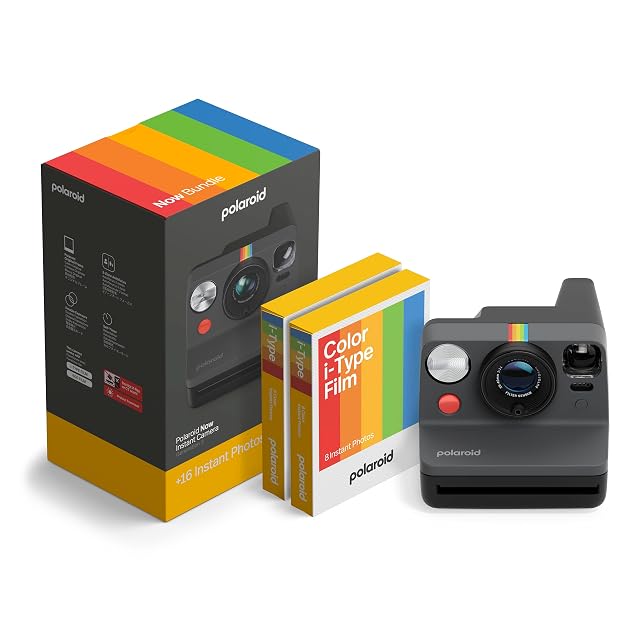
Polaroid i-Type and 600 film compatible · full-format prints · bundle with double film pack, 16 photos · two-lens autofocus · self-timer and double exposure · tripod thread · USB-C rechargeable · 40 per cent recycled materials · print size in millimetres not published
A bundle that arrives with sixteen photos and a two-lens autofocus system, sold on the largest print in this family and on a tripod thread that no other instant camera here provides.
Best for: Someone who wants the large square print and will use the self-timer, the double exposure and the tripod thread rather than only pointing and shooting.
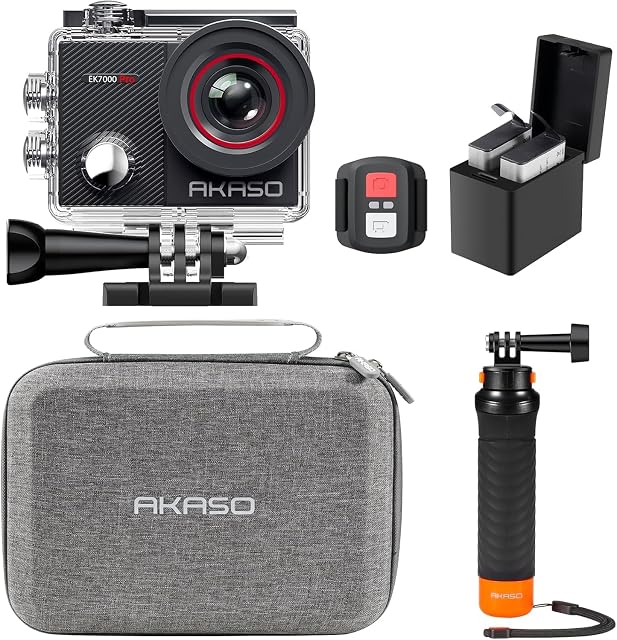
40 m waterproof housing · 4K 30, 2.7K 30, 1080p 60 · 20 MP stills · EIS stated · four selectable view angles: super wide, wide, medium, narrow · 2 inch IPS touchscreen · floating hand grip and bag supplied · no field of view in degrees
An established name at ninety-three euros, selling a touchscreen, three video modes and four selectable view angles — described by name rather than in degrees — with a floating grip in the box.
Best for: Water use where the floating grip and the touchscreen earn their keep, by someone who will buy a spare battery blind.
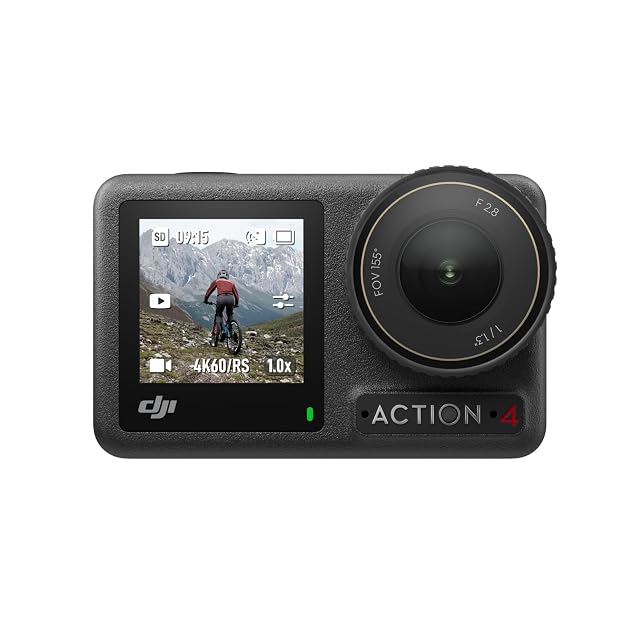
1/1.3 inch sensor, the only one published on this shelf · 4K at 120 fps · 155 degree ultra wide · 10-bit and D-Log M · 360 degree HorizonSteady, three stabilisation modes · cold resistance to -20 °C · magnetic quick release · one battery supplied · no waterproof depth published
The only action camera here to publish a sensor size, and the only one with a magnetic mount and a stated cold rating — while never printing the waterproof depth that eight of its nine rivals lead with.
Best for: Footage that will be graded afterwards, in cold or poor light, by someone who already owns mounts or will buy the magnetic ones.