Bodies, lenses and printers — and three-word accessory pages
Where it turns up
Compact cameras, reflex and mirrorless bodies, camcorders, macro and telephoto lenses, the RF 1.4× extender, the EF-EOS R mount adapter, the SELPHY CP1500 printer, and the small parts — lens caps, hoods, batteries, remote releases.
Two kinds of page, from one maker
The camera and lens listings are detailed: the RF 100-400 mm publishes 635 g, 164.7 mm, five and a half stops of stabilisation and its UD glass. The accessory listings are three bullets long and say “durable, flexible design, quality” — the identical three words on the ES-68 hood, the E-58II cap and the LP-E17 battery.
What the part number carries
Everything the page does not. ES-68, E-58II, LP-E17, RF14X: each is unambiguous to someone who already knows what they need, and useless to someone choosing. A Canon accessory is bought by matching the code on the item being replaced.
Why an original still wins sometimes
A battery that reports its charge percentage and its health to the body, and that a firmware update will not refuse. A hood cut to the lens it was designed for, bayoneting in one orientation. Those are real arguments, and none of them is printed on the pages that should make them.
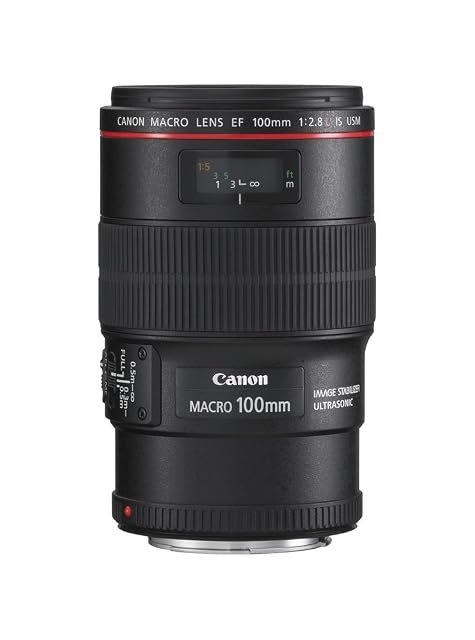
Canon EF mount · 100mm · F2.8 · Hybrid IS, no stop figure published · focus limiter · 9-blade aperture · UD element · L-series sealing against dust and splashes · 67mm filter thread · hood ET-73 and pouch LP1219 supplied · no magnification ratio published · no working distance published · no internal focus stated · no weight published
A sealed L-series macro with a focus limiter, Hybrid stabilisation and a 67mm thread for 762 € — and a listing that never once states the magnification ratio this shelf is built around.
Best for: Field macro work in unreliable weather on an EF body, where the limiter, the sealing and the hybrid stabilisation are what separate it from cheaper glass.
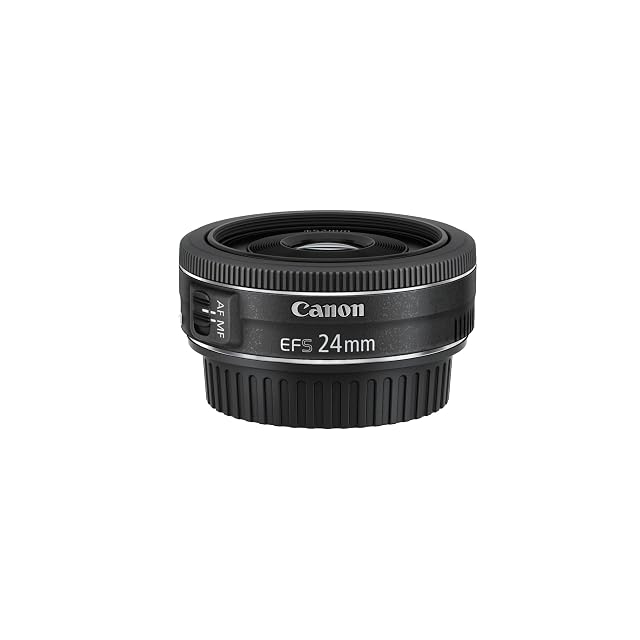
EF-S mount · APS-C · 24mm · F2.8 · 52mm filter thread · angles of view 59°10 by 50°35 by 34°55 · minimum focus about 0.16 m · STM focusing, not compatible with an extender · no distortion type stated · no sealing claimed · no weight published
A 149 € pancake that publishes the two things this shelf most often leaves out — a 52mm filter thread and a minimum focus of about 0.16 m — and carries two catalogue fields that belong to a video camera.
Best for: An EF-S body that needs to become pocketable, where 24mm on APS-C frames much as the eye does and the thread stays cheap.
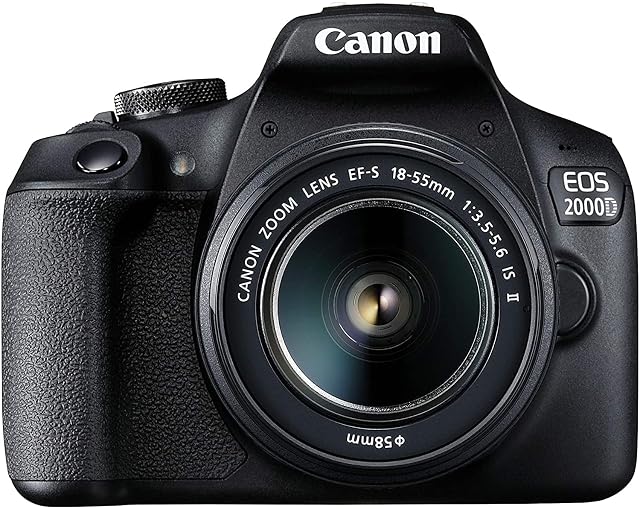
24.1 MP APS-C CMOS · DIGIC 4+ · EF-S 18-55mm f/3.5-5.6 IS II supplied · 7.5 cm LCD · Full HD · WLAN and NFC · two LP-E10 batteries · viewfinder figures, focus points and card slots not published
A reflex sold as a kit with two batteries and a stabilised standard zoom, whose listing names its sensor, its processor and its wireless features while leaving every figure about the optical finder unwritten.
Best for: A first reflex where an optical finder and a stock of cheap lenses matter more than video specification.
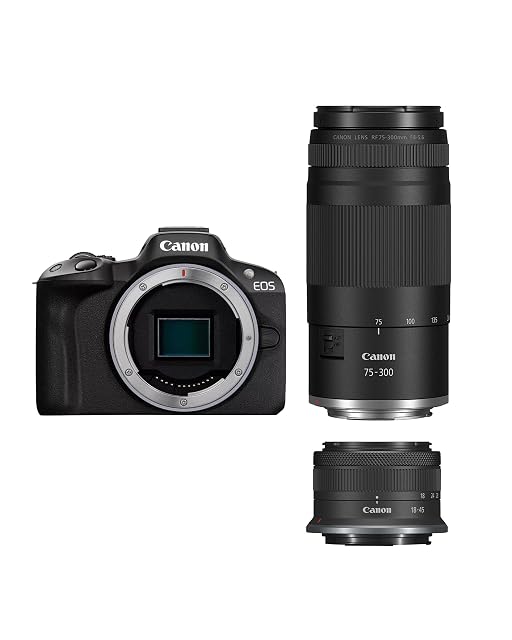
24.2 MP APS-C · two lenses supplied, RF-S 18-45mm f/4.5-7.1 IS STM and RF 75-300mm · 4K 30p oversampled from 6K · deep-learning subject detection · viewfinder, card slots and sealing not published
The only body here that arrives with two lenses, covering 18 to 300 mm between them, and states its sensor format outright while leaving its viewfinder and card provision unwritten.
Best for: A first interchangeable-lens purchase where the two-lens span from wide to 300 mm matters more than the finder or the card count.
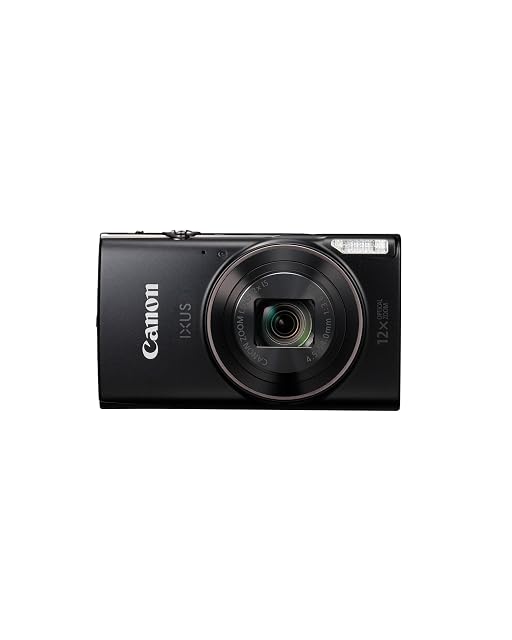
20.2 MP stated · 12× OPTICAL zoom · no aperture published · Full HD video · WLAN and NFC · metal body · no sensor size, screen movement or dimensions published
A slim metal point-and-shoot with a 12× optical zoom and wireless sharing, listed at 369 € to 400 € across euro stores — the same money as cameras on this shelf that offer 4K and a one-inch sensor.
Best for: Someone who specifically wants a slim metal Canon in a pocket and will use the 12× reach and the phone transfer.
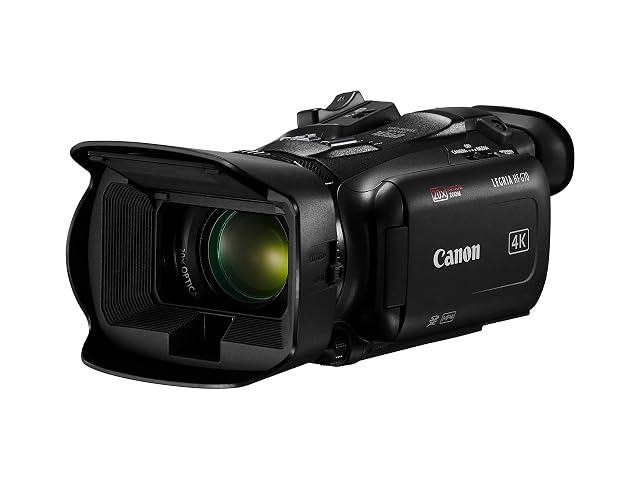
4K sensor stated, size not published · 20× OPTICAL zoom · DIGIC DV6 processor · eight-blade iris · five-axis stabilisation · 4K UHD at 150 Mbit/s and 25p · 0.5× Full HD slow motion · time lapse to 1200× · MP4 · lens hood with integrated cap supplied · no recording limit published
The dearest camcorder here at 992 €, and the only one to publish a bit rate — 150 Mbit/s at 4K — an eight-blade iris and a genuine 20× optical zoom.
Best for: Long-form recording where the bit rate and the iris matter, by someone who will check the audio arrangement in the maker’s own documentation.
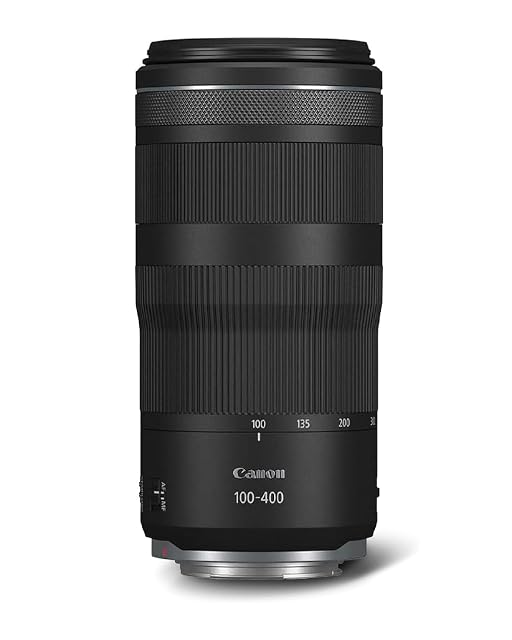
RF mount · 100-400mm · F5.6 at the short end, F8 at the long one · 5.5 stops of stabilisation claimed · UD glass · 635 g · 164.7mm long · no tripod collar published · no minimum focus published · no filter thread published · no sealing claimed
The only lens on this shelf that publishes its weight and its length — 635 g and 164.7mm for 400mm of reach — with 5.5 stops of stabilisation claimed, and a page that names two different autofocus motors in two different places.
Best for: Daylight sport and wildlife on an EOS R body, carried rather than mounted, where 635 g and 5.5 stops matter more than the last stop of aperture.
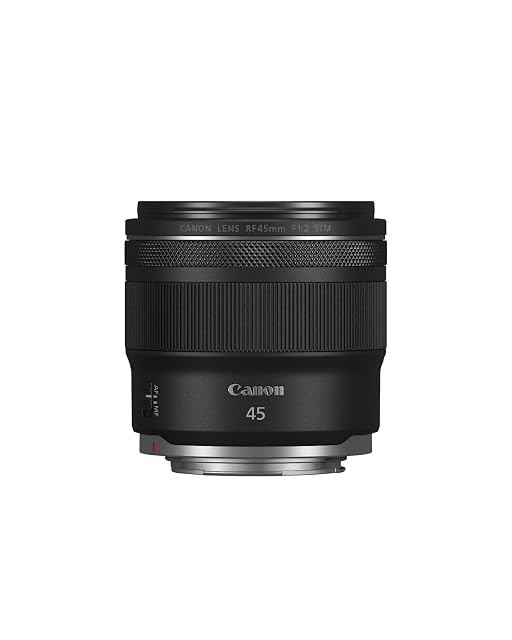
RF mount · 45mm · F1.2 · STM motor · configurable control ring · stated as weighing less than 400 g, which is a ceiling rather than a measurement · no blade count published · no minimum focus published · no filter thread published · no sealing claimed
The widest aperture in this entire lot at F1.2 for 439 €, in a barrel the page says weighs less than 400 g — a ceiling rather than a figure — with no blade count, no thread and no close-focus distance published.
Best for: Street portraits on an EOS R body where F1.2 is the entire point, and the control ring replaces the settings a spare hand would otherwise reach for.
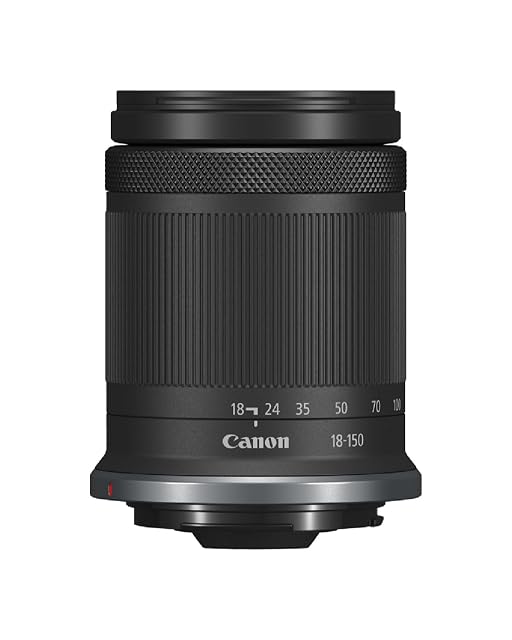
RF-S mount · APS-C · 18-150mm · F3.5 at the short end, F6.3 at the long one · 4.5 stops of stabilisation claimed · STM focus · no filter thread published · no minimum focus published · no sealing claimed · no weight published
The variable-aperture side of this three-lens shelf at 430 €, with eight and a half times the range of its own short end and a 4.5-stop stabiliser in the title, and six of the nine lines this shelf is compared on left blank.
Best for: One lens on an EOS R APS-C body for travel, where the range matters more than the aperture and the stabiliser carries the long end.
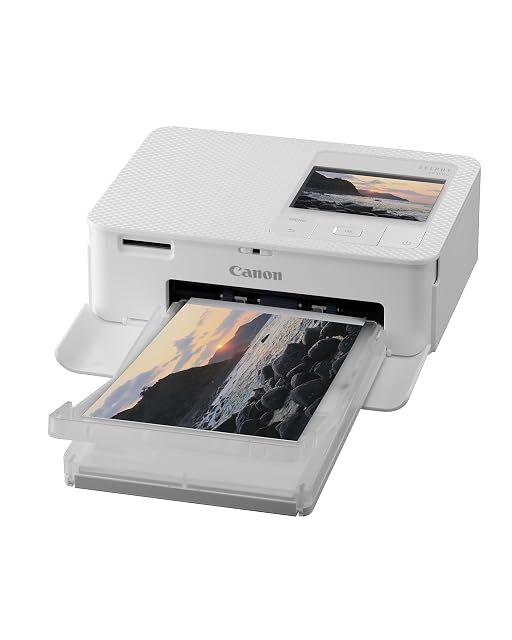
DYE-SUBLIMATION · ribbon-and-paper cassette, a POSTCARD-FORMAT cassette supplied · dye ribbon · MAXIMUM PAPER SIZE PUBLISHED: postcard 100 by 148 mm down to mini-stickers of 22 by 17.3 mm — the widest published range on this shelf · borderless support not stated · FOUR MEDIA PATHS: wireless from a phone, USB-C from a computer, camera or USB stick, and an SD, SDHC or SDXC CARD SLOT · an 8.9 cm LCD screen on the body · no colour profile availability mentioned · a hundred-year permanence claim in the title · supplied with a postcard cassette, a CA-CP300 B compact mains adapter and a power cable
Four ways in — phone, computer, USB stick and memory card — with a screen on the body and sizes from postcard to mini-sticker, for 119 €.
Best for: Printing at home from a camera card at postcard size, without a phone in the chain.
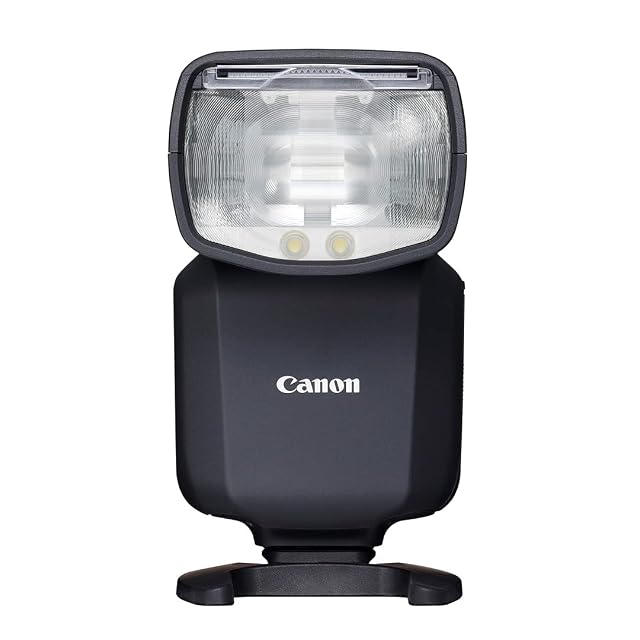
Canon system flash · guide number 60, no sensitivity or coverage stated · recycle 0.1 to 1.2 s · about 85 flashes at full power in a burst · manual levels from 1/1 to 1/1024, eleven stops · LP-EL lithium pack, up to 350 shots at full power · FP high-speed sync named in the title · improved passive cooling · weather-resistant seals · a compatibility list that excludes several current bodies
The dearest flash of the five here at 325 €, with weather seals, eleven stops of manual control and 350 full-power shots from its own lithium pack — and a compatibility list that rules out every reflex and several mirrorless bodies.
Best for: A recent EOS R body used in weather, where fast recycling, deep manual control and sealed construction justify the price.
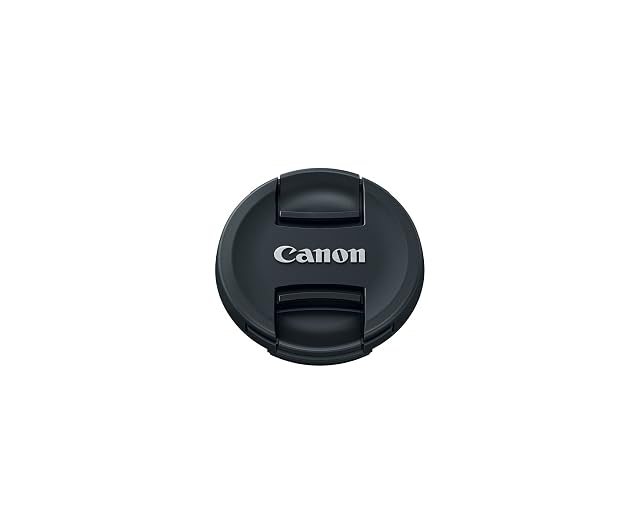
Four euros for Canon’s own 58 mm cap, from a listing whose three bullets are a colour and two camera specifications that have nothing to do with a cap.
Cap type
A front cap — the Canon E-58II, identified by part number in the title. The "II" marks Canon’s revised centre-pinch design, replacing an older rim-grip cap, which is the single most useful fact about it and appears nowhere in the bullets
Thread or mount fit
58 mm, carried only by the part number: E-58II. No bullet states a diameter, and no lens is named — where the 4 € JJC on this shelf names nine
Pinch mechanism
NOT STATED. The E-58II is a centre-pinch cap, which is why it can be removed inside a hood, and the page does not say so
Tether provision
NONE. No cord, no hole and no keeper
Material
Not named
Pack contents
Not stated. What the three bullets do contain is: "colour: black"; "Intervall-Aufnahme Y" — interval shooting, yes; and "USB Konnektivitätstechnologie" — USB connectivity technology. The last two are fields from a camera-body template, published on the listing for a piece of plastic with no electronics in it
Amazon reference
B00A2BWAKK (same reference on 6 Amazon marketplaces)
EAN
4960999795904
Canon’s own part, so the fit and the pinch action are the originals
The E-58II part number identifies it unambiguously
Two of its three bullets are camera specifications — interval shooting and USB
Best for: Replacing a lost original cap on a 58 mm Canon lens, bought by part number.
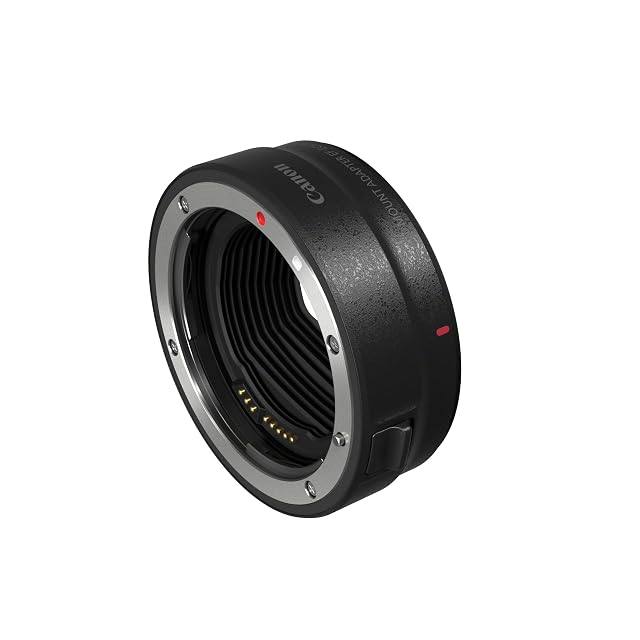
Ninety-five euros to put EF and EF-S lenses on an RF body, with ten cameras named, a sealed metal mount, and two caps and a pouch in the box.
Mounts joined
EF and EF-S to RF — a real mount adapter, unlike the three ring sets on this shelf, which join filter threads. The intro above explains why this direction works at all: an adapter can only add to the distance between mount face and sensor, and EF is the longer-flanged system, so the gap is filled by an empty tube rather than corrected by glass
Contacts present
Not itemised, and that is the gap on this page. The first bullet claims existing EF and EF-S lenses work with performance unchanged and in parts better, and the fourth says the body generates a crop for EF-S lenses — both of which require the body to know what is attached. The contacts are implied throughout and never listed
Functions claimed
Performance "unchanged and in parts better", in the first bullet. The intro above asks for functions one at a time — autofocus, aperture control, stabilisation communication, metadata — and this page names none of them individually, which is the pattern that tip warns about
Optical elements
None named, and none is needed here. EF sits further from the sensor than RF, so the adapter is a spacer; the corrective element the intro above describes belongs to adapters working the other way, against the flange distance
Tripod foot
Not mentioned. The intro above says a foot matters as soon as the lens outweighs the body, which on a mirrorless body with a long EF telephoto is most of the time
Aperture ring
Not on this version. The page describes one adapter and names no control ring and no filter slot
Build
A metal mount, dust- and splash-protected, in the third bullet. The fifth lists what comes with it: the adapter, an R-F-3 body cap, an RF rear lens cap, a pouch and a manual — two caps, because an adapter left on the body means the lens cap and the body cap no longer fit what they were bought for
Amazon reference
B07H5SL6W3 (same reference on 6 Amazon marketplaces)
EAN
4549292115703
Ten RF bodies named on the page, rather than a mount specification alone
A dust- and splash-protected metal mount, at 95 €
No function list: "performance unchanged and in parts better" stands in for autofocus and aperture claims
Best for: A bag of EF glass moving onto an RF body, where the lenses are to keep working exactly as they did.
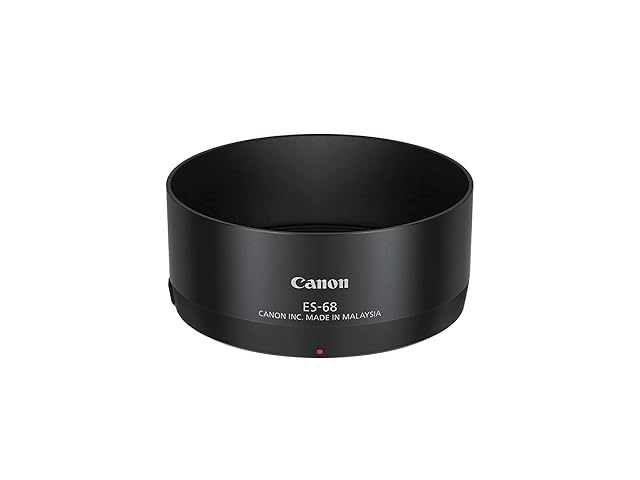
Eighteen euros for Canon’s own ES-68 hood, whose specification consists of three words — the emptiest page on this shelf and the only one from the lens maker.
Shape
NOT STATED. The ES-68 is Canon’s own cylindrical hood for its EF 50 mm f/1.8 STM, but nothing on the page says so — not the shape, not the lens, not the diameter
Lenses named
NONE. The title says "für EF Objektive" — for EF lenses — and the EF mount covers hundreds of lenses across thirty years, of which the ES-68 fits one. It is the loosest compatibility statement on this shelf, from the only maker on it that built the lens
Fitting method
Not stated. Canon’s ES-68 is a bayonet hood, and the page does not say
Filter access
Not addressed
Reversibility
Not mentioned — on a hood that does reverse over the barrel
Material
NOT NAMED. Three bullets exist: durable; flexible design; quality/durability. That is the whole listing, and not one of the three words is a specification
Amazon reference
B00XHG4UUA (same reference on 6 Amazon marketplaces)
EAN
4549292037739
Canon’s own part, so the fit on the lens it was made for is exact
The part number ES-68 identifies it beyond doubt for anyone who knows it
Three bullets, none of which is a specification
Best for: A Canon EF 50 mm f/1.8 STM, bought by part number because the page will not tell you anything else.
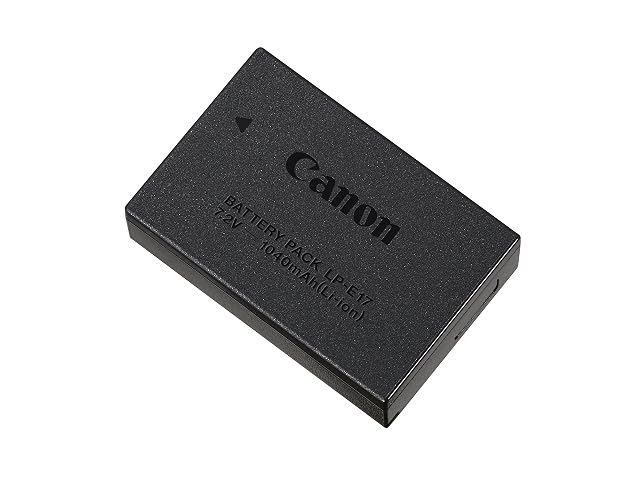
Forty-one euros for Canon’s own LP-E17, from a page that publishes no capacity, no voltage and no camera — the same three words it prints on its hoods and caps.
Bodies named
NONE. Not one camera is named, on a battery whose whole identity is which bodies take it. The LP-E17 belongs to the EOS 750D, 760D, 800D, 77D, 200D, 250D, RP and R8 among others — and a buyer has to know that before arriving
Capacity in mAh and watt-hours
NEITHER IS PUBLISHED. Four third-party cells on this shelf publish 2000, 1500, 1500 and 1100 mAh, and two add watt-hours. The original publishes nothing, which makes it the only battery here that cannot be compared with any other on capacity
Voltage
NOT PUBLISHED
Chip communication described
Not described — and this is the irony of the page. An original Canon cell is precisely the one that reports its charge as a percentage, its remaining life and its serial number to the body, which is the main reason to pay 41 € rather than 12. The listing never mentions it
Charger contents
None, and not mentioned
Stated protection
None. The three bullets are: durable; flexible design; quality and durability. They are the identical three bullets Canon publishes for its ES-68 lens hood and its E-58II lens cap in this catalogue — a template applied to three unrelated products
Amazon reference
B00T3ESRTU (same reference on 6 Amazon marketplaces)
EAN
4549292020984
The original cell, which reports charge and battery health to the body properly
The part number LP-E17 identifies it unambiguously
Three bullets, and the same three Canon prints on its hoods and caps
Best for: A Canon body whose battery readout and firmware compatibility should be beyond question, bought by part number.
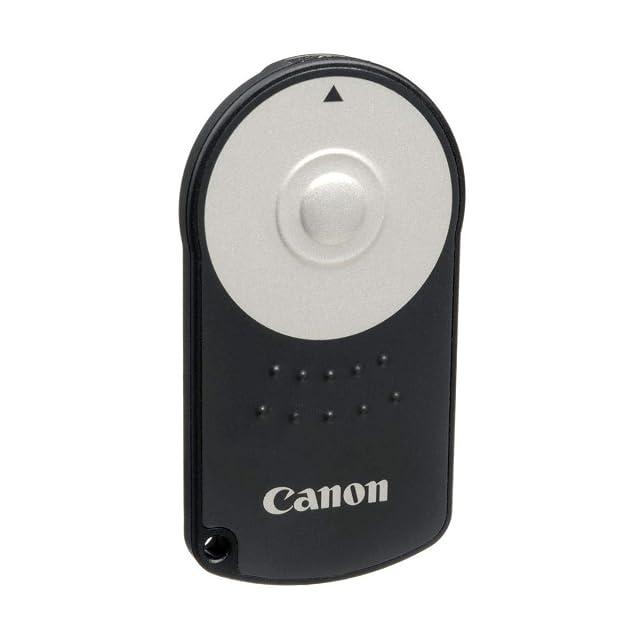
Sixteen euros for Canon’s own infrared remote, from a page of three bullets that names one camera in lower case and lists its contents twice.
Connection type
INFRARED — the only one on this shelf, and the constraint that defines it: an infrared remote needs LINE OF SIGHT to the sensor on the FRONT of the camera. It works from in front, where you are standing to be photographed, and not from behind. Every other remote here uses radio or Bluetooth and works through a wall
Sockets and bodies named
ONE, and written as "t1i" in lower case — the EOS Rebel T1i, a camera from 2009. The RC-6 in fact works with a long list of Canon bodies carrying an infrared receiver, and the page names a single one of them, in the wrong case
Half-press support
Not stated. The RC-6 has a two-position switch — immediate release and a two-second delay — and the page mentions neither
Intervalometer functions
None
Stated range
NOT PUBLISHED. Two remotes on this shelf publish 50 m and one publishes 10 m; the original publishes nothing, on a technology whose range is its main limitation
Power source
NOT PUBLISHED. The RC-6 uses a CR2032, and the page does not say so — where the 8 € ATUMTEK publishes the cell, its capacity and its shot count
Amazon reference
DE B0037NX6JY · US B07L8HTKDH · GB B07L8HTKDH · FR B07L8HTKDH · IT B07L8HTKDH · ES B07L8HTKDH
EAN
4960999669304
Canon’s own remote, so the infrared protocol is the correct one
The RC-6 part number identifies it unambiguously
Three bullets, and the contents are listed twice
Best for: A Canon body with an infrared receiver, standing in front of the camera — bought by part number because the page says nothing else.
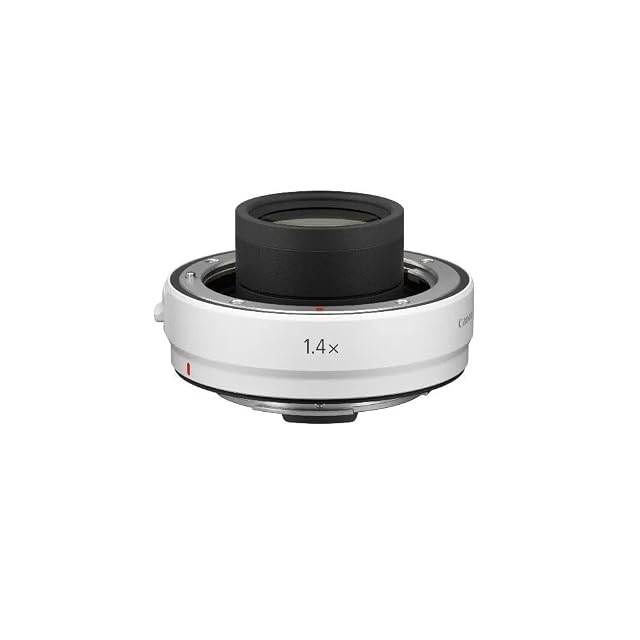
Four hundred and seventy-nine euros for a 1.4× extender sealed against dust, splashes and heat, with a three-layer combination lens — and six bullets that name no lens.
Magnification
1.4×, in the first bullet, named for press, nature and sports photographers. One stop, by the arithmetic in the intro above — which this page does not state
Lenses named as compatible
NONE. Six bullets, and the compatibility statement is that the lens design is optimised for the RF mount. The intro above insists that a converter is sold with an explicit list precisely because it protrudes, and the 169 € Viltrox on this shelf names five lenses with the word "only". At 479 €, this is the most expensive silence on the shelf
Light loss in stops
Not published. One stop for a 1.4×: an f/2.8 lens works at f/4, an f/4 at f/5.6. The page never mentions it
Autofocus limits stated
Not stated, and autofocus is not mentioned in any of the six bullets — on a device sold to press and sports photographers, for whom focus is the whole purchase
Added length
Not published, where the 323 € OM SYSTEM publishes 15 mm
Sealing
The fullest claim on this shelf: dust and splash protection AND a heat-repellent coating, in the third bullet, described as ready for extreme situations. Heat resistance appears on no other page here, and it belongs to a converter that will sit on a white telephoto in the sun
Published weight
Not published, as on all six converters here
Amazon reference
B08CNFXJR9 (same reference on 6 Amazon marketplaces)
EAN
4549292168044
Dust and splash protection plus a heat-repellent coating, the only heat claim on this shelf
A three-layer combination lens and high-refractive low-dispersion glass, both named
Not one compatible RF lens named, in six bullets, at 479 €
Best for: An RF telephoto already confirmed to accept it, used in heat and weather where the sealing and the coating earn their price.
Each amount in a write-up is what the listing showed when that page was written. The figure next to the product is pulled in as you read, and it is the one that counts.