One focal length, and usually the widest aperture the money buys · review
Canon RF 45mm F1.2 STM, under 400 g review
The widest aperture in this entire lot at F1.2 for 439 €, in a barrel the page says weighs less than 400 g — a ceiling rather than a figure — with no blade count, no thread and no close-focus distance published.
The bottom line F1.2 for 439 € is the headline and it is a real one: nothing else of the eight here opens that wide. The page then declines to publish a blade count on a lens sold for bokeh, gives a weight ceiling instead of a weight, and leaves the thread and the close-focus distance out entirely.
On the listing
Five bullets. A bright 45mm prime whose extremely high F1.2 speed is offered as creative freedom; an F1.2 aperture credited with striking subject separation and soft background bokeh, named for expressive portraits; a built-in STM motor for fast, quiet, smooth autofocus, with a configurable control ring giving direct access to important camera settings; a travel bullet saying the lens weighs less than 400 g and suits street portraits, fitting easily into any camera bag; and a compatibility bullet naming the Canon EOS R System.
F1.2, and what it costs to make one
The widest aperture of the eight here. Two-thirds of a stop past the Sigma below it and a stop and a third past the F1.8 lenses, which is roughly two and a half times the light at the same shutter speed. Lenses that open this far are normally heavy and dear; this one is neither by the standards of its aperture.
Less than four hundred grams is a ceiling, not a weight
The fourth bullet states a threshold. Two lenses on this shelf publish 230 g and 156 g, and those can be set beside each other. This one can be said to be under 400 g and nothing more precise, which is a different kind of claim and is worth reading as one.
A ring that replaces a hand
With no zoom to turn, the control ring is the only thing the left hand does on this lens besides focus. Assigned to aperture or exposure compensation, it moves a setting off the camera body and under the fingers already holding the lens.
A phrase from another product, again
The fourth bullet calls this an action camera lens in the middle of a sentence about street portraits. It is a template artefact, like the video resolution field on the 24mm pancake two shelves over, and it describes nothing about a 45mm F1.2 prime.
Sold on bokeh, silent on the aperture that makes it
No blade count, no shape. Also no thread, no minimum focus distance and no sealing claim — four of the nine lines this shelf compares, blank on a 439 € lens.
Availability
Between 439 € and 499 € on the German, French, Italian and Spanish Amazon stores when this page was last checked.
The British Amazon store carry it too, priced in local currency. Those amounts are deliberately absent from the range above, which reads euro stores only.
Nothing came back from the American Amazon store at all, so the button for that country runs a search instead of opening an entry that is not there.
Everything in this section is the figure Keepa carried on the day of the last update to this page. Availability and prices shift without notice.
Prices quoted in this text were read on 13 September 2026. The live price is at the top of the page.
What it does well, and what it gives up
Strengths
F1.2, the widest maximum aperture of the eight here by two-thirds of a stop
A configurable control ring alongside the STM motor, giving direct access to a camera setting from the barrel
Under 400 g for an F1.2 lens, which is light for that aperture whatever the exact figure
Compromises
The weight is given as a ceiling rather than a number, so it cannot be compared with the published figures on this shelf
No blade count, on a lens whose second bullet sells the bokeh
No filter thread, no minimum focus distance and no sealing claim
Specifications
Focal length
45mm, fixed, in the title. Slightly wider than the traditional 50mm normal lens and noticeably tighter than a 35mm, and the page never publishes an angle of view to place it
Format
Not stated directly. The title and the fifth bullet name the Canon EOS R System, which includes both full-frame and APS-C bodies, and no bullet says which this lens was computed for. The RF designation without an S is Canon’s full-frame marking, but the page itself never states the format, so nothing here should be read as a claim
Maximum aperture
F1.2, in the title and in the first two bullets. It is the widest maximum aperture among the eight here — two-thirds of a stop past the F1.4 Sigma and a full stop and a third past the F1.8 lenses — and the second bullet names what it is for: subject separation and soft background bokeh in portraits
Blade count and shape
Not published on the listing. The second bullet sells the bokeh as the reason to buy, and the number that shapes it appears nowhere
Autofocus motor
STM, named in the third bullet for fast, quiet, smooth autofocus. The same bullet names a configurable control ring giving direct access to camera settings, which is the RF system’s own control and is worth more than it sounds on a lens with no zoom ring
Minimum focus
Not published on the listing, and no magnification ratio. A fast normal lens is often used close, and the page gives nothing
Filter thread
Not published in millimetres. Five bullets, and no diameter
Sealing
Not claimed. Street portraits and travel are named as uses and no protection against dust or moisture is stated
Weight
Stated as less than 400 g in the fourth bullet, which is a ceiling and not a measurement. The lens weighs something below that figure and the page does not say what — a different kind of statement from the 230 g and 156 g published elsewhere on this shelf, and it cannot be compared with them
Amazon reference
B0G12GQQG8 (same reference on 5 Amazon marketplaces)
EAN
4549292248982
What people ask before they commit
How much does F1.2 give over F1.8?
A stop and a third, which is about two and a half times the light at the same shutter speed. It also gives a shallower depth of field at the same distance, which is what the second bullet means by subject separation. Both effects are why F1.2 lenses are large and expensive; this one is 439 € in Germany and 405 € on the British shelf, which is modest for the aperture.
Why does the page say less than 400 g instead of a weight?
That is how the fourth bullet is written, and the distinction matters. A ceiling tells you the lens is under a threshold; a measurement tells you where. Two lenses on this shelf publish 230 g and 156 g and can be compared directly with each other. This one can only be compared with the threshold it was written against.
What is the control ring for?
The third bullet calls it configurable and says it gives direct access to important camera settings. On Canon’s RF mount that ring is normally assigned to aperture, exposure compensation or sensitivity, and it is set in the camera menu. On a prime, where there is no zoom ring competing for the same hand position, it is the most useful control the lens can carry.
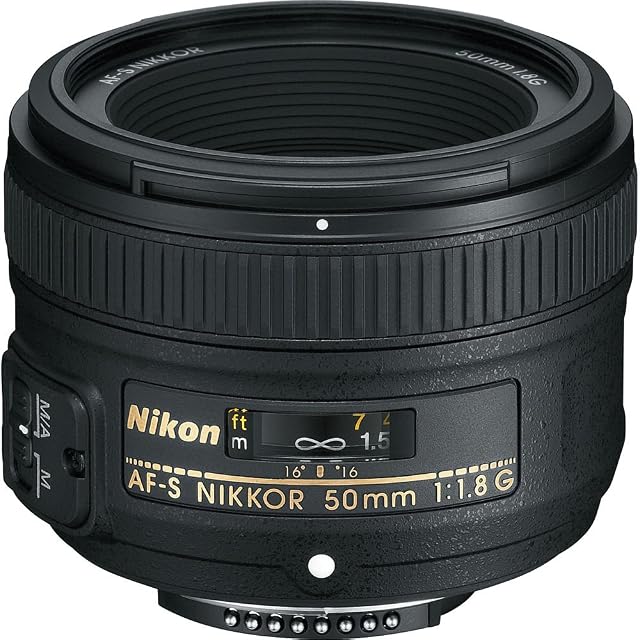
Nikon F mount · FX format, framing as 75mm on a DX body · 50mm · f/1.8 · Silent Wave Motor · two focus modes, autofocus and manual · aspherical element · 58mm filter thread · no blade count published · no minimum focus published · no sealing claimed · no weight published
The classic normal prime on the F mount at 219 €, publishing a 58mm thread, a Silent Wave Motor and its DX framing — on a page that prints the same five bullets twice over.
Best for: A normal prime on an FX body, or a short portrait lens on a DX one, where a motor in the lens and a cheap thread matter as much as the glass.
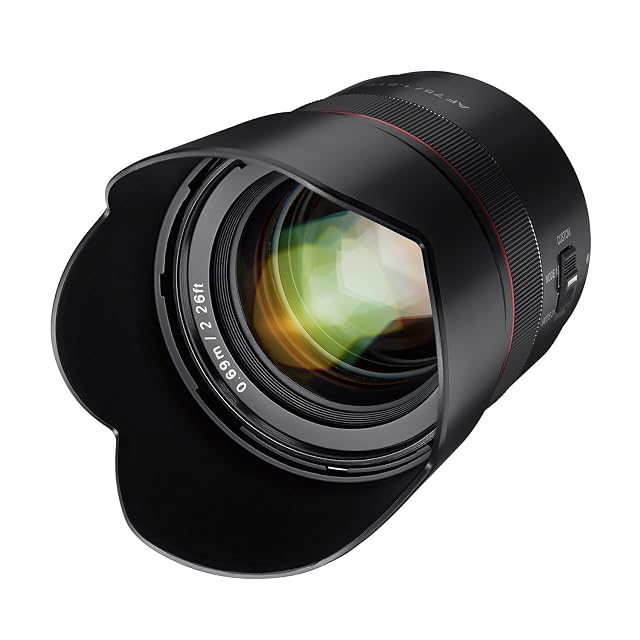
Sony E mount · full frame, and APS-C · 75mm · F1.8, closing to F22 · 9 aperture blades · LSTM autofocus, under 0.2 seconds and 23 dB · minimum focus 69 cm · 58mm filter thread · 230 g · 69mm long · 10 elements in 9 groups, 3 ED and 2 HR · angles of view 32.9 degrees on full frame and 21.9 on APS-C · no sealing claimed
Eight of the nine lines this shelf compares, answered with figures: 230 g, nine blades, 58mm of thread, 69 cm of close focus, and an autofocus timed at under 0.2 seconds and measured at 23 decibels.
Best for: Portraits on a Sony full-frame body where the lens has to stay light, and video where 23 decibels of focusing noise is the specification that matters.
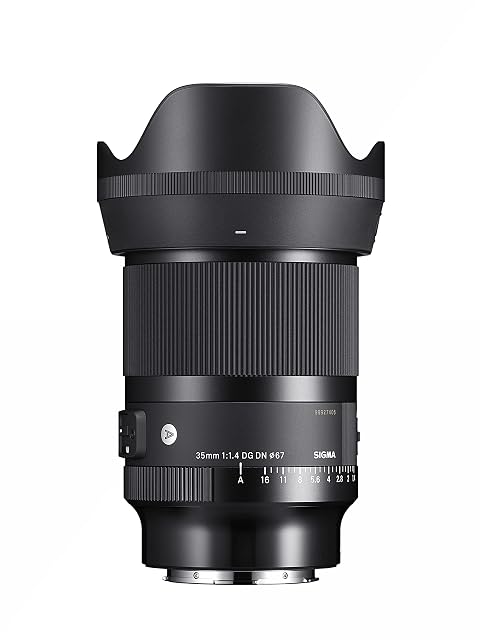
Sony E mount · full frame, from the DG designation · 35mm · F1.4 · Super Multi-Layer coating against flare and ghosting · autofocus described as fast and quiet, motor not named · no blade count published · no minimum focus published · no filter thread published · no sealing claimed · no weight published
The dearest lens of the eight here at 879 €, a full-frame 35mm at F1.4 from Sigma’s Art line — sold on five phrases that publish the aperture and nothing else measurable.
Best for: Full-frame reportage where F1.4 at 35mm is the requirement and the specification sheet will be found somewhere other than the listing.