One focal length, and usually the widest aperture the money buys · review
Samyang AF 75mm F1.8 FE, 230 g, 9 blades review
Eight of the nine lines this shelf compares, answered with figures: 230 g, nine blades, 58mm of thread, 69 cm of close focus, and an autofocus timed at under 0.2 seconds and measured at 23 decibels.
The bottom line This is the most completely described lens in this catalogue: a blade count, a thread, a close-focus distance, a weight, a length, two angles of view, an element count and a focus motor timed and measured. Only the sealing line is blank, and at 262 € the specification sheet does the arguing.
On the listing
Five bullets, one of which is a full specification. An innovative light full-frame portrait lens at 75mm, developed for Sony E full frame and also suited to APS-C E-mount, with modern LSTM autofocus and a configurable custom switch; an autofocus bullet giving focusing in well under 0.2 seconds at 23 dB, a length of 69mm and a weight of 230 g; a compatibility list running from the A6700 and A7 series through the NEX bodies; a detail bullet giving 75mm, 32.9 degrees on full frame and 21.9 on APS-C, an aperture range from F1.8 to F22, a 69 cm minimum focus, 10 elements in 9 groups including three ED and two high-refractive, nine aperture blades, UMC coating, a 58mm filter thread and a 65mm barrel; and a box list naming the lens, a detachable hood, both caps, the box and the paperwork.
Nine blades, counted
Three pages in this entire lot publish a blade count, and this is one of them. The hub above says the figure decides how out-of-focus highlights are drawn and how many points a star shows around a bright light. Nine is an odd number, so the spikes do not overlap: eighteen points rather than nine.
Two hundred and thirty grams and sixty-nine centimetres
The weight makes it carriable and the close focus sets the distance. A full-frame 75mm at F1.8 that weighs 230 g is genuinely unusual, and 69 cm is how far back the photographer stands for the tightest frame this lens will give.
Twenty-three decibels, which nobody else prints
Focusing speed is claimed all over this catalogue. A sound level is claimed here and nowhere else. For anyone recording with the camera’s own microphone it is the difference between a motor that is in the take and one that is not.
The one blank, and it is conspicuous
No sealing claim. The same maker publishes a weather protection function on the 12mm lens two shelves over, which makes its absence here a statement rather than an oversight.
Availability
Between 262 € and 274 € on the German, French, Italian and Spanish Amazon stores when this page was last checked.
The American and British Amazon stores carry it too, priced in local currency. Those amounts are deliberately absent from the range above, which reads euro stores only.
Everything in this section is the figure Keepa carried on the day of the last update to this page. Availability and prices shift without notice.
Prices quoted in this text were read on 13 September 2026. The live price is at the top of the page.
What it does well, and what it gives up
Strengths
Eight of the nine lines this shelf compares are answered with published figures
Autofocus given as a time and a noise level — under 0.2 seconds, 23 dB — which nothing else of the eight here does
Nine blades, 58mm thread, 69 cm close focus and 230 g, all printed in one bullet
Compromises
No sealing claim, where the same maker claims weather protection on its 12mm lens
Seventy-five millimetres is between the standard portrait lengths, so it matches neither habit
Sixty-nine centimetres of minimum focus means a step back for a tight head-and-shoulders frame
Specifications
Focal length
75mm, fixed, in the title. The fourth bullet publishes both angles it produces: 32.9 degrees on full frame and 21.9 on APS-C. It sits between the classical 50mm and 85mm portrait lengths, which is the unusual choice this lens makes
Format
Full frame, with APS-C explicitly covered. The first bullet says the lens was developed for Sony E full frame and is also suited to APS-C E-mount, and the fourth prints an angle of view for each — the only page of the eight here to publish both figures rather than naming both formats and stopping
Maximum aperture
F1.8, with the fourth bullet giving the range to F22. Wide enough for the portrait separation the first bullet promises, and a stop and two thirds behind the widest lens on this shelf
Blade count and shape
Nine blades, published in the fourth bullet. It is one of only three blade counts in this entire lot, and the hub above treats the figure as the one makers publish and rarely explain — this page publishes it without explaining it, which is still more than most
Autofocus motor
LSTM, named in the first bullet and measured in the second: focusing in well under 0.2 seconds at just 23 dB. A time and a noise level, both published, on a shelf where naming the motor at all is unusual. The first bullet adds a configurable custom switch on the barrel
Minimum focus
69 cm, published in the fourth bullet. Long, as portrait lenses are, and it is the working distance that decides how a head is framed — the figure the 85mm lens on this shelf never gives
Filter thread
58mm, published in the fourth bullet alongside a 65mm barrel diameter. A common and inexpensive size, and the same thread as the Nikon two places up
Sealing
Not claimed. The 12mm lens from the same maker on the wide-angle shelf claims a weather protection function; this page does not, and the omission is worth noticing precisely because the same brand makes the claim elsewhere
Weight
230 g, published in the second bullet along with a 69mm length. The second bullet calls that light, and for a full-frame 75mm at F1.8 it is
Amazon reference
B086RDVSNP (same reference on 6 Amazon marketplaces)
EAN
8809298886318
What people ask before they commit
What does 23 dB of focusing noise mean in practice?
It is a measured sound level for the motor, and the second bullet gives it alongside the focusing time. For comparison, a quiet room sits around 30 dB. The number matters when the camera’s own microphone is recording: a focus motor above the room noise is audible in the take, and one below it is not. No other page of the eight here publishes a figure of any kind for this.
Why 75mm rather than 85mm?
It is a deliberate middle. The fourth bullet gives 32.9 degrees on full frame, which is slightly wider than a classical 85mm portrait lens and noticeably tighter than a 50mm. In practice it lets a photographer stand closer than 85mm requires in a small room while still separating the subject. On an APS-C body the same lens frames at 21.9 degrees, which is a long portrait lens.
What is the custom switch on the barrel?
The first bullet names it as configurable and says no more. Samyang uses a switch on some autofocus lenses that changes what the focus ring does — for instance switching it between focus and aperture control — with the behaviour set through the maker’s software. The listing states that it exists and is configurable, and does not enumerate the options.
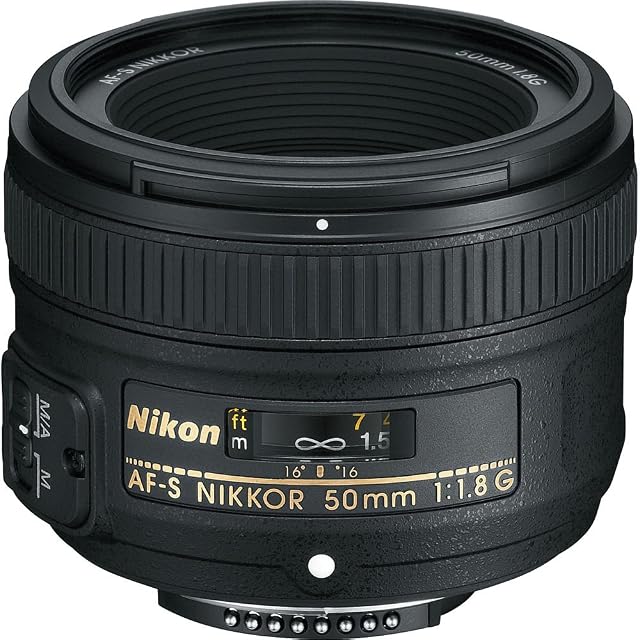
Nikon F mount · FX format, framing as 75mm on a DX body · 50mm · f/1.8 · Silent Wave Motor · two focus modes, autofocus and manual · aspherical element · 58mm filter thread · no blade count published · no minimum focus published · no sealing claimed · no weight published
The classic normal prime on the F mount at 219 €, publishing a 58mm thread, a Silent Wave Motor and its DX framing — on a page that prints the same five bullets twice over.
Best for: A normal prime on an FX body, or a short portrait lens on a DX one, where a motor in the lens and a cheap thread matter as much as the glass.
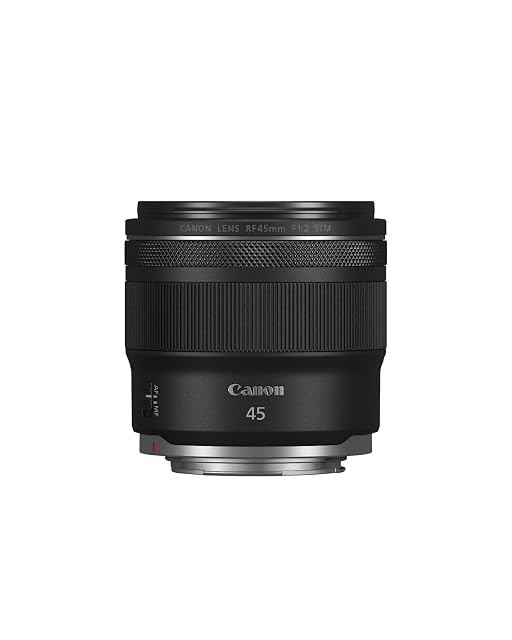
RF mount · 45mm · F1.2 · STM motor · configurable control ring · stated as weighing less than 400 g, which is a ceiling rather than a measurement · no blade count published · no minimum focus published · no filter thread published · no sealing claimed
The widest aperture in this entire lot at F1.2 for 439 €, in a barrel the page says weighs less than 400 g — a ceiling rather than a figure — with no blade count, no thread and no close-focus distance published.
Best for: Street portraits on an EOS R body where F1.2 is the entire point, and the control ring replaces the settings a spare hand would otherwise reach for.
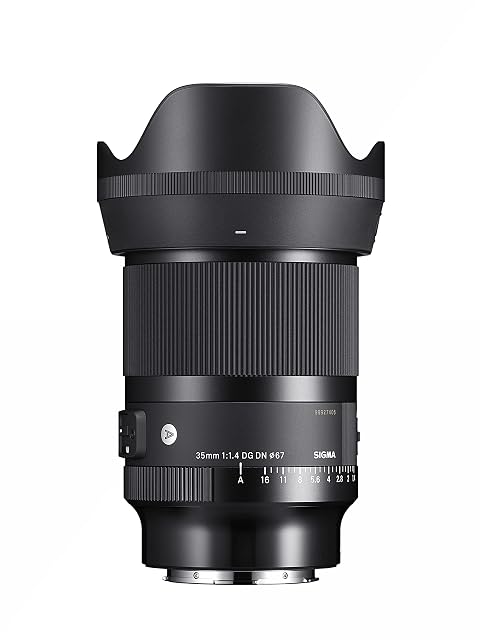
Sony E mount · full frame, from the DG designation · 35mm · F1.4 · Super Multi-Layer coating against flare and ghosting · autofocus described as fast and quiet, motor not named · no blade count published · no minimum focus published · no filter thread published · no sealing claimed · no weight published
The dearest lens of the eight here at 879 €, a full-frame 35mm at F1.4 from Sigma’s Art line — sold on five phrases that publish the aperture and nothing else measurable.
Best for: Full-frame reportage where F1.4 at 35mm is the requirement and the specification sheet will be found somewhere other than the listing.