The magnification ratio is the specification, and 1:1 is the dividing line · review
Canon EF 100mm F2.8L IS USM Macro, 67mm thread review
A sealed L-series macro with a focus limiter, Hybrid stabilisation and a 67mm thread for 762 € — and a listing that never once states the magnification ratio this shelf is built around.
The bottom line The limiter, the hybrid stabilisation and the L-series seal are exactly what a working macro lens needs, and at 762 € they are what is being paid for. Then the page omits the magnification ratio, the minimum focus distance and the working distance — the three figures the hub above says define this shelf.
On the listing
Five bullets and a box list. A focus limiter for precise, fast focusing within a chosen range, with Hybrid IS for effective stabilisation even at close range; a nine-blade iris diaphragm for controlled background blur at wide apertures; a UD element credited with minimised distortion, controlled chromatic aberration, high resolution and strong contrast; L-series sealing against dust and splashes; and a box containing the lens, the E-67U front cap, the E rear cap, the LP1219 pouch, the ET-73 hood, the manual and the warranty card. A sixth entry directs the reader to a retailer list in the documents section.
Sixty-seven millimetres, and no ratio
The thread is in the title and the magnification is nowhere. On this shelf that is the wrong way round. The hub above says the ratio is the specification and that a macro claim without one says nothing; this page gives the filter size, the blade count, the hood code and the pouch code, and never the number the lens is named for.
A focus limiter is the working feature
It is the first thing the first bullet names, and no other page of the seven here mentions one. Restricting the focus range is how a macro lens stays usable, because the alternative is a motor travelling from a few centimetres to infinity every time it loses the subject.
Hybrid stabilisation, named for the close range
The distinction is real and the bullet makes it: at macro distances the camera drifting forwards and backwards ruins more frames than the camera tilting. A system that corrects only the tilt is of little use at the distances this lens is bought for. No stop figure is published for either kind.
What comes in the box, named to the part code
Hood ET-73, pouch LP1219, caps E-67U and E. The accessories are identified precisely enough to reorder, and the lens is neither weighed nor measured.
Availability
Between 762 € and 837 € on the German, French, Italian and Spanish Amazon stores when this page was last checked.
The American and British Amazon stores carry it too, priced in local currency. Those amounts are deliberately absent from the range above, which reads euro stores only.
Everything in this section is the figure Keepa carried on the day of the last update to this page. Availability and prices shift without notice.
Prices quoted in this text were read on 13 September 2026. The live price is at the top of the page.
What it does well, and what it gives up
Strengths
A focus limiter, which is the working control on a macro lens and appears on no other page here
Hybrid IS, named specifically for effectiveness at close range
L-series sealing against dust and splashes, with a hood and a pouch in the box
Compromises
No magnification ratio anywhere on the listing, on a lens sold as a macro
No minimum focus distance and no working distance published
No weight, and no statement about whether the barrel extends as it focuses
Specifications
Magnification ratio
Not published on the listing. Five bullets and a box list, and the ratio that the hub above calls the specification for this shelf appears in none of them. The word macro is in the product name and no number stands behind it anywhere on this page
Working distance
Not published on the listing, and no minimum focus distance either. The first bullet names a focus limiter for fast, precise focusing within a chosen range, which implies a close range exists without saying where it begins
Focal length
100mm, fixed, in the title. The hub above explains why the figure matters on this shelf: working distance grows with focal length, so a 100mm macro stands further back from its subject than a shorter one at the same magnification
Maximum aperture
F2.8, in the title. The second bullet describes the nine-blade iris and the background separation it gives at wide apertures, which is the portrait use of a macro lens rather than the close-up one
Stabilisation
Hybrid IS, named in the first bullet as effective stabilisation even at close range. No figure in stops is published. Hybrid is the significant word: conventional stabilisation corrects angular movement, and at macro distances the damaging movement is the camera shifting bodily towards and away from the subject, which a hybrid system is designed to also address
Internal focus
Not stated. The page never says whether the barrel extends as the lens focuses closer, which on a macro lens decides how much room is left in front of the glass
Filter thread
67mm, published in the title. One of four thread diameters in this catalogue, and on a macro lens it is also the size a ring light or a close-up attachment has to match
Weight
Not published in grams. The box list names the pouch and the hood by part code and the lens itself is never weighed
Amazon reference
B002NEFLD2 (same reference on 6 Amazon marketplaces)
EAN
0013803108620
What people ask before they commit
What does a focus limiter do?
It restricts the range the autofocus will search. A macro lens can focus from a few centimetres to infinity, and hunting across that whole range takes time; setting the limiter to the close range, or to the far one, means the motor only travels where the subject actually is. The first bullet names it first, which is correct — it is the control a macro photographer uses most.
Why does Canon call the stabilisation Hybrid?
Because it addresses two kinds of movement. Ordinary stabilisation corrects the camera tilting, which is what blurs a distant subject. Up close, the more destructive movement is the camera drifting bodily nearer to or further from the subject, which shifts the focus plane rather than the framing. The first bullet claims effectiveness at close range specifically, which is what the second correction is for.
Does this lens reach life size?
The listing does not say. There is no magnification ratio anywhere on the page — not in the title, not in the five bullets, not in the box list. The hub above is explicit that a lens described as macro without a ratio is telling you nothing, and on this page that is the position. It is the single most surprising omission in this catalogue.
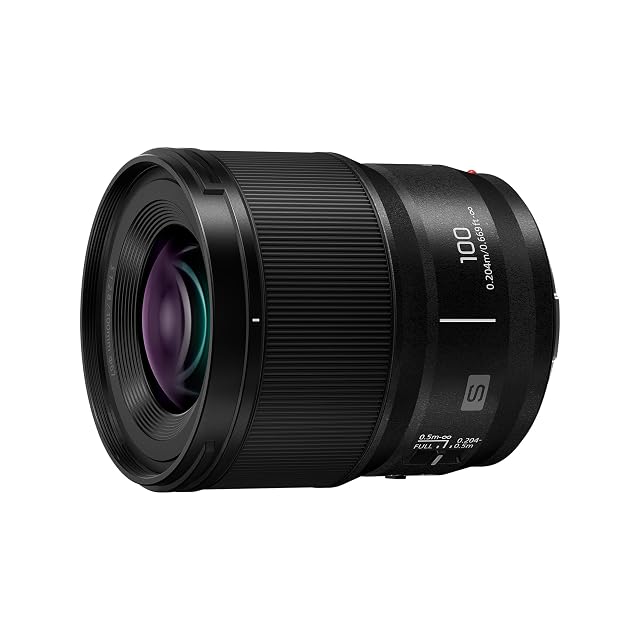
L mount · full frame · 100mm · F2.8 · 1:1 magnification · minimum focus 20.4 cm · 298 g · 3 aspherical elements · dual-phase linear motor, focus breathing suppressed · protection against dust, splashes and cold claimed · no working distance published · no stabilisation named · no internal focus stated · no filter thread published
A full-frame 1:1 macro weighing 298 g at 949 €, publishing its ratio, its minimum focus and its mass — and carrying a smallest-and-lightest claim the listing itself dates to 8 January 2024.
Best for: Full-frame macro work carried on foot, and video where a lens that does not change framing as it focuses is worth the price on its own.
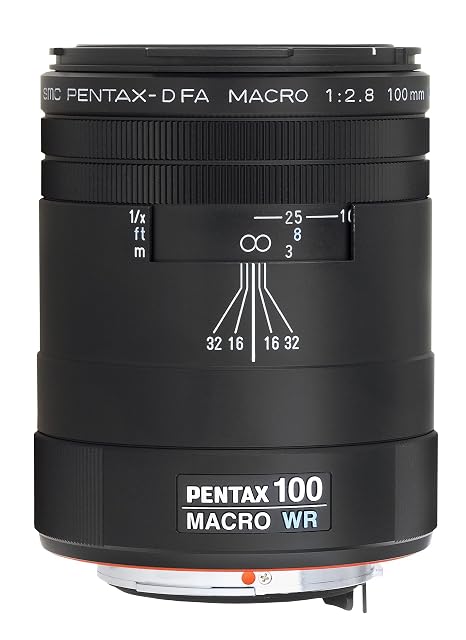
Pentax K mount · full frame · 100mm · F2.8 · 1:1, given as 1.00x · 13 cm from the front of the lens to the subject · stabilisation in the camera body, not in the lens · rear-element extension focusing · rounded iris from wide open to F5.6 · weather-resistant construction with dedicated seals · fluorine SP coating on the front element · Quick-Shift focus · aluminium outer body · hood PH-RBE49 and case S80-120 supplied · no filter thread published · no weight published
The only lens of the seven here that publishes a true working distance — 1:1 at 13 cm from the lens to the subject — across ten bullets, which is precisely the figure its own shelf says to buy on.
Best for: Macro work on a Pentax K-series body, where the body provides the stabilisation and 13 cm of working distance is the reason to choose this over anything else on the shelf.
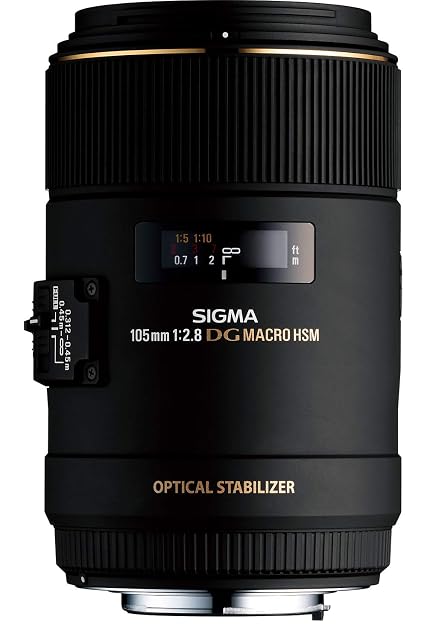
Canon EF mount · full frame, from the DG designation · 105mm · F2.8 · 1:1 magnification · Hyper Sonic Motor · optical stabilisation in the product name only, no figure published · no working distance published · no internal focus stated · no filter thread published · no weight published
A 1:1 macro at 105mm whose page states the ratio and then four adjectives — with an optical stabiliser announced in the product name and described in none of the five bullets.
Best for: Life-size work on a Canon EF body at the longest focal length on this shelf, for a buyer who will find the specification somewhere other than the listing.