The magnification ratio is the specification, and 1:1 is the dividing line · review
Pentax smc PENTAX-D FA MACRO 100mm F2.8 WR, 1:1 at 13 cm review
The only lens of the seven here that publishes a true working distance — 1:1 at 13 cm from the lens to the subject — across ten bullets, which is precisely the figure its own shelf says to buy on.
The bottom line Ten bullets, and among them the one figure this whole shelf is supposed to be compared on and nobody else prints: 1:1 at 13 cm from the lens to the subject. Add the rounded iris to F5.6, the seals, the fluorine coating and the case, and the documentation is the best of the seven here — with the stabilisation left to the camera and the thread and weight unstated.
On the listing
Ten bullets, which is twice what anything else on this shelf offers. In-body Shake Reduction on Pentax K-series digital reflex bodies, benefiting every compatible lens; a bullet on the pleasure of close-up discovery; a reproduction ratio of 1:1, given as 1.00x, allowing photography at a distance of up to 13 cm from the lens to the subject; a focusing system using a fixed extension of the rear element, credited with minimising ghosting and flare from infinity down to macro distances; a weather-resistant construction with dedicated seals; a rounded iris used from wide open through F5.6 for a more natural rendering of point light sources; a fluorine SP coating on the front element to stop dust, water, grease and other substances adhering; a Quick-Shift focus system allowing an immediate switch to manual after the camera has focused; an aluminium outer body; and a box list naming the front cap, the mount cap, the PH-RBE49 hood and the S80-120 case.
Thirteen centimetres, lens to subject
This is the figure the shelf was built to compare and this is the only page that prints it. Not a distance from the sensor, not a minimum focus: the gap in front of the glass at life size. The buying advice for this shelf says to choose on it for anything alive, because every lens here reaches 1:1 and only some of them leave the insect where it was.
The stabilisation is in the camera, not the lens
The first bullet states the arrangement rather than implying it, which no other page of the seven here does. One mechanism in the body serves every lens mounted on it. The corollary is equally clear and equally worth knowing: the lens itself has none.
A rounded iris, and the apertures it covers
The sixth bullet gives a range — round from wide open to F5.6 — rather than a blade count. On a macro lens that is the better statement, because F5.6 is inside the working range for this kind of photography, and a diaphragm that stays circular there keeps point highlights round rather than polygonal.
Fluorine on the front element
Named in the seventh bullet against dust, water and grease. The front of a macro lens lives a few centimetres from the ground and gets touched more than any other optic on the shelf, so a coating that sheds is a working feature rather than a refinement.
Ten bullets, and two blanks
No filter thread in millimetres, though the hood carries a part code. No weight, though the barrel is described as aluminium. Everything else this shelf asks about is on the page.
Availability
Not one of the stores queried held a live offer against it when this page was written.
Listed in the German, American, British, French, Italian and Spanish Amazon catalogues with nothing on sale against the entry: the camera has a page there and no seller behind it.
Everything in this section is the figure Keepa carried on the day of the last update to this page. Availability and prices shift without notice.
What it does well, and what it gives up
Strengths
1:1 at 13 cm from the lens to the subject — the only true working distance published among the seven here
A rounded iris held from wide open to F5.6, the apertures a macro photographer actually uses
Weather-resistant construction with dedicated seals, a fluorine coating on the front element, Quick-Shift focus and a hood and case in the box
Compromises
No stabilisation in the lens at all, so a body without Shake Reduction leaves the combination unstabilised
No filter thread published, and no weight
Ten bullets, and the aperture range below F5.6 is never stated
Specifications
Magnification ratio
1:1, written in the third bullet as a reproduction ratio of 1:1 and given again as 1.00x. Life size, stated twice in two notations, which is the clearest statement of this figure anywhere in this catalogue
Working distance
13 cm, and the third bullet defines it exactly as the hub above does: photography at a distance of up to 13 cm from the lens to the subject. Every other page on this shelf either publishes nothing or publishes a distance measured from the sensor. This is the only true working distance of the seven here, and it is the figure the buying advice for this shelf says to choose on
Focal length
100mm, fixed, in the title. In the group that stands furthest back at life size, and the page proves it with the 13 cm rather than leaving it to geometry
Maximum aperture
F2.8, in the title. The sixth bullet adds something more useful for this shelf: the iris stays round from wide open through to F5.6, which is where a macro photographer actually works
Stabilisation
In the camera, not in the lens, and the first bullet is explicit about it: Pentax K-series digital reflex bodies carry a Shake Reduction mechanism in the body, so every compatible lens benefits. It is the only page of the seven here that explains where the stabilisation lives, and the consequence is plain — with a body that has it the lens is stabilised, and with one that does not, nothing here is
Internal focus
Described rather than named: the fourth bullet credits a focusing system using a fixed extension of the rear element with minimising ghosting and flare and holding quality from infinity down to macro distances. That is a statement about where the movement happens, which no other page on this shelf offers
Filter thread
Not published in millimetres. The box list names the hood as a PH-RBE49 and the case as an S80-120, both by part code, and no front diameter is printed
Weight
Not published in grams. The ninth bullet claims an aluminium outer body and a refined feel in use, which is a material and a sensation rather than a mass
Amazon reference
DE B0030GGS3O · US B0030GGS3O · GB B000NTQM1O · FR B000NTQM1O · IT B000NTQM1O · ES B000NTQM1O
EAN
0027075163034
What people ask before they commit
Why does 13 cm matter more than a 20 cm minimum focus?
Because they measure different things. A minimum focus distance runs from the sensor, through the camera and the whole lens, to the subject; a working distance is the gap in front of the glass. The buying advice for this shelf says to buy working distance rather than magnification for anything alive, because both lenses reach life size and only one lets the insect stay. This is the page that publishes the figure that advice is about.
What happens if the camera has no Shake Reduction?
Then nothing in this combination is stabilised, because the lens contains no stabiliser of its own. The first bullet explains the arrangement plainly: the mechanism sits in the K-series body and every compatible lens benefits from it. It is an efficient design — one mechanism serves every lens — and it does mean the capability belongs to the camera and not to this purchase.
What is the fluorine coating on the front element for?
The seventh bullet says it prevents dust, water drops, grease and other substances from adhering. On a macro lens that is more useful than it sounds: the front element spends its life within a few centimetres of soil, leaves and water, and it gets touched. A surface that sheds rather than holds is the difference between a wipe and a cleaning kit.
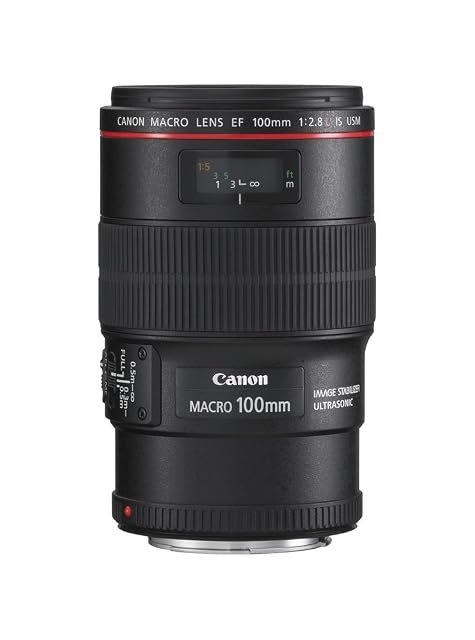
Canon EF mount · 100mm · F2.8 · Hybrid IS, no stop figure published · focus limiter · 9-blade aperture · UD element · L-series sealing against dust and splashes · 67mm filter thread · hood ET-73 and pouch LP1219 supplied · no magnification ratio published · no working distance published · no internal focus stated · no weight published
A sealed L-series macro with a focus limiter, Hybrid stabilisation and a 67mm thread for 762 € — and a listing that never once states the magnification ratio this shelf is built around.
Best for: Field macro work in unreliable weather on an EF body, where the limiter, the sealing and the hybrid stabilisation are what separate it from cheaper glass.
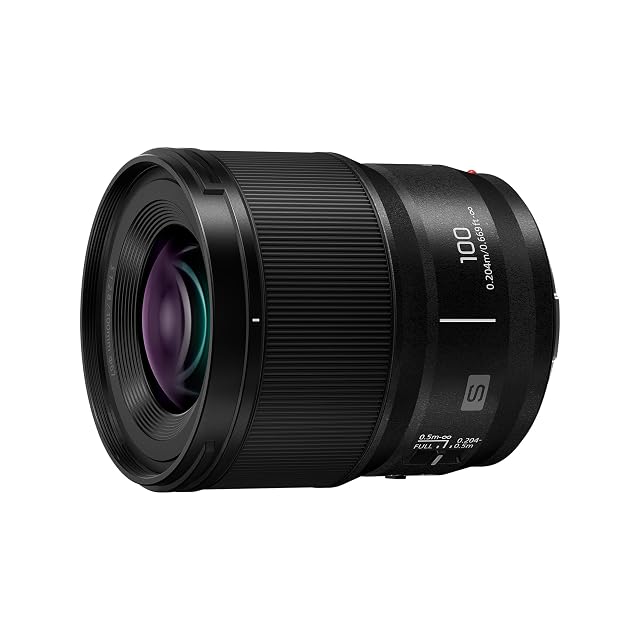
L mount · full frame · 100mm · F2.8 · 1:1 magnification · minimum focus 20.4 cm · 298 g · 3 aspherical elements · dual-phase linear motor, focus breathing suppressed · protection against dust, splashes and cold claimed · no working distance published · no stabilisation named · no internal focus stated · no filter thread published
A full-frame 1:1 macro weighing 298 g at 949 €, publishing its ratio, its minimum focus and its mass — and carrying a smallest-and-lightest claim the listing itself dates to 8 January 2024.
Best for: Full-frame macro work carried on foot, and video where a lens that does not change framing as it focuses is worth the price on its own.
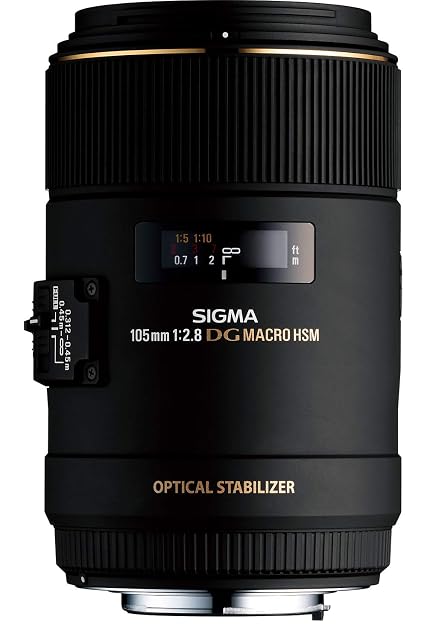
Canon EF mount · full frame, from the DG designation · 105mm · F2.8 · 1:1 magnification · Hyper Sonic Motor · optical stabilisation in the product name only, no figure published · no working distance published · no internal focus stated · no filter thread published · no weight published
A 1:1 macro at 105mm whose page states the ratio and then four adjectives — with an optical stabiliser announced in the product name and described in none of the five bullets.
Best for: Life-size work on a Canon EF body at the longest focal length on this shelf, for a buyer who will find the specification somewhere other than the listing.
Each amount in a write-up is what the listing showed when that page was written. The figure next to the product is pulled in as you read, and it is the one that counts.