The magnification ratio is the specification, and 1:1 is the dividing line · review
Sigma 105mm F2.8 EX Macro DG OS HSM for Canon EF review
A 1:1 macro at 105mm whose page states the ratio and then four adjectives — with an optical stabiliser announced in the product name and described in none of the five bullets.
The bottom line The ratio is published and the focal length is the longest on the shelf, which are two real things. Everything else is an adjective: a stabiliser that exists only in the model name, no working distance, no thread, no weight — the fourth Sigma page of the seven here to describe a lens without measuring it.
On the listing
Five short statements. A fast tele-macro lens allowing a reproduction scale of 1:1; easy handheld photography; excellent correction of all aberrations and of distortion; a Hyper Sonic Motor for fast and almost silent focusing; and a use list naming travel, macro photography, nature and landscape, animals, and people and portraiture.
One to one, and four adjectives
The ratio is the page. It is the figure the hub above says defines this shelf, and it is published here while two lenses costing more publish nothing. After that come fast, easy, excellent and almost silent, none of which can be checked against anything.
OS in the name, and nowhere in the bullets
Two letters in the model designation are the entire stabilisation claim. The Canon on this shelf explains why its system is hybrid and what that corrects at close range; the Tamron says its stabiliser was tuned for the macro range specifically. This page does not mention stabilisation in a single sentence.
The longest focal length here, unmeasured
A hundred and five millimetres stands further back at life size than 90mm or 100mm. That is the practical advantage of this lens over every other on the shelf, and turning it into a number would require a working distance the page does not give.
The fourth Sigma page in this catalogue
The 18-50mm zoom, the 16mm wide-angle, the 35mm Art and now this one: four listings, and between them one precisely worded mount seal and two figures. Whatever these lenses are, they are not described where they are sold.
Availability
About 430 € on the Italian Amazon store when this page was last checked.
The British Amazon store carry it too, priced in local currency. Those amounts are deliberately absent from the range above, which reads euro stores only.
Listed in the German, American, French and Spanish Amazon catalogues with nothing on sale against the entry: the camera has a page there and no seller behind it.
Everything in this section is the figure Keepa carried on the day of the last update to this page. Availability and prices shift without notice.
Prices quoted in this text were read on 13 September 2026. The live price is at the top of the page.
What it does well, and what it gives up
Strengths
1:1 magnification published, where the two dearest lenses on this shelf publish no ratio
105mm, the longest focal length here, which stands furthest back from a subject at life size
A Hyper Sonic Motor named for fast and near-silent focusing
Compromises
Optical stabilisation appears only as OS in the model name, described nowhere on the page
No working distance, no minimum focus, no filter thread and no weight
Four of the five bullets are adjectives — fast, easy, excellent, near-silent — with nothing measurable behind them
Specifications
Magnification ratio
1:1, stated in the first bullet, which calls it a reproduction scale of 1:1 on a fast tele-macro lens. It is published, which puts this page ahead of the two dearest lenses on this shelf, and it is also the only measurable thing the listing contains
Working distance
Not published on the listing, and no minimum focus distance either. The second bullet claims easy handheld photography, which says something about how the lens is meant to be used and nothing about how far it stands from a subject
Focal length
105mm, fixed, in the title. The longest focal length on this shelf, which by the geometry the hub above sets out means it stands furthest back at life size — an advantage the page never converts into a distance
Maximum aperture
F2.8, in the title. The first bullet calls the lens fast, and no minimum aperture is published — which on a macro lens is the end of the range that gets used
Stabilisation
OS appears in the product name, which is Sigma’s designation for its optical stabiliser, and not one of the five bullets mentions stabilisation at all. No figure in stops, no modes, and no statement about behaviour at close range. The claim exists only as two letters in a model name
Internal focus
Not stated. The third bullet claims excellent correction of all aberrations and of distortion, and nothing describes whether the barrel extends as the lens focuses closer
Filter thread
Not published in millimetres. Five bullets, and no diameter anywhere
Weight
Not published in grams, and no length. The page contains no physical description of the lens at all
Amazon reference
DE B0058NYVXG · US B00L9IZIFY · GB B0058NYVXG · FR B0058NYVXG · IT B0058NYVXG · ES B0058NYVXG
EAN
0085126258542
What people ask before they commit
What does EX mean on a Sigma lens?
It is the maker’s own designation for its professional range, used on the lenses built to a higher mechanical and optical standard than the consumer line. It is not an industry term and carries no defined specification, and this listing uses it in the product name without explaining it — the same pattern as the Art and Contemporary markings elsewhere in this catalogue.
Does the lens have image stabilisation or not?
The product name contains OS, which is Sigma’s abbreviation for its optical stabiliser, so the designation says yes. What can be read from the page is nothing further: no bullet mentions it, no figure in stops is given, and nothing is said about whether it operates at macro distances. A claim that exists only in a model name cannot be compared with the Hybrid IS or VC systems on this shelf, both of which are described in sentences.
Why does 105mm matter against the 90mm and 100mm lenses here?
Working distance grows with focal length, as the hub above explains. At the same magnification a 105mm lens sits further from its subject than a 90mm one, which means more room for light and less chance of disturbing anything alive. It is the strongest structural argument this lens has, and the page never turns it into the distance that would prove it.
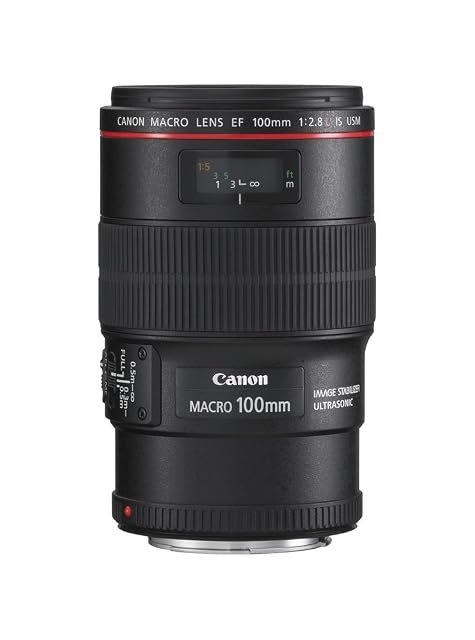
Canon EF mount · 100mm · F2.8 · Hybrid IS, no stop figure published · focus limiter · 9-blade aperture · UD element · L-series sealing against dust and splashes · 67mm filter thread · hood ET-73 and pouch LP1219 supplied · no magnification ratio published · no working distance published · no internal focus stated · no weight published
A sealed L-series macro with a focus limiter, Hybrid stabilisation and a 67mm thread for 762 € — and a listing that never once states the magnification ratio this shelf is built around.
Best for: Field macro work in unreliable weather on an EF body, where the limiter, the sealing and the hybrid stabilisation are what separate it from cheaper glass.
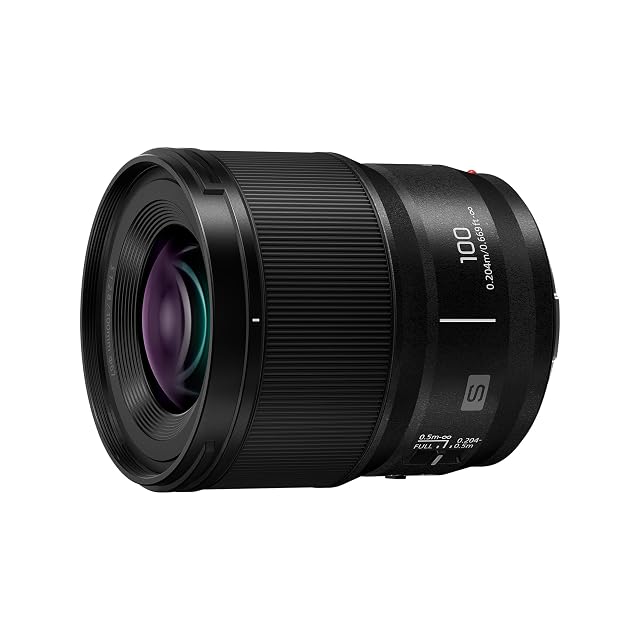
L mount · full frame · 100mm · F2.8 · 1:1 magnification · minimum focus 20.4 cm · 298 g · 3 aspherical elements · dual-phase linear motor, focus breathing suppressed · protection against dust, splashes and cold claimed · no working distance published · no stabilisation named · no internal focus stated · no filter thread published
A full-frame 1:1 macro weighing 298 g at 949 €, publishing its ratio, its minimum focus and its mass — and carrying a smallest-and-lightest claim the listing itself dates to 8 January 2024.
Best for: Full-frame macro work carried on foot, and video where a lens that does not change framing as it focuses is worth the price on its own.
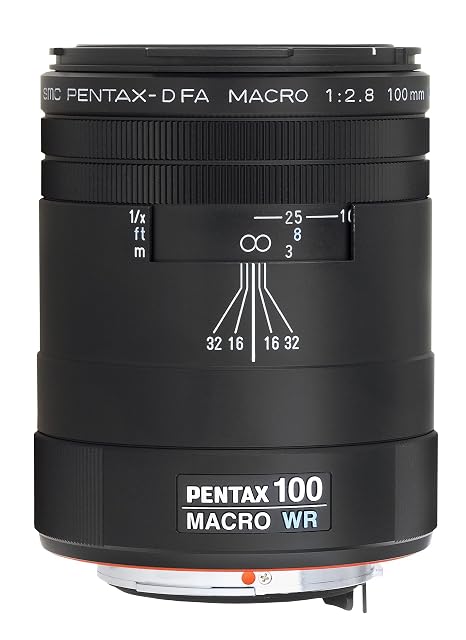
Pentax K mount · full frame · 100mm · F2.8 · 1:1, given as 1.00x · 13 cm from the front of the lens to the subject · stabilisation in the camera body, not in the lens · rear-element extension focusing · rounded iris from wide open to F5.6 · weather-resistant construction with dedicated seals · fluorine SP coating on the front element · Quick-Shift focus · aluminium outer body · hood PH-RBE49 and case S80-120 supplied · no filter thread published · no weight published
The only lens of the seven here that publishes a true working distance — 1:1 at 13 cm from the lens to the subject — across ten bullets, which is precisely the figure its own shelf says to buy on.
Best for: Macro work on a Pentax K-series body, where the body provides the stabilisation and 13 cm of working distance is the reason to choose this over anything else on the shelf.