A 149 € pancake that publishes the two things this shelf most often leaves out — a 52mm filter thread and a minimum focus of about 0.16 m — and carries two catalogue fields that belong to a video camera.
The bottom line For 149 € it answers five of the eight lines this shelf is compared on, including the two that are hardest to find — a filter thread and a close-focus distance. The aperture is the modest one on this shelf and the weight is missing, and the page carries two fields describing a product that is not this lens.
On the listing
An extremely compact pancake lens, with angles of view given as 59°10 horizontal, 50°35 vertical and 34°55 diagonal; a natural perspective compared to the human eye; continuous, quiet STM focusing during video recording, with a note that the lens is not compatible with an extender; a high speed for low-light shooting and a minimum focus distance of about 0.16 m; and a box list naming the lens, the E-52II front cap, the E rear cap, a warranty card, the carton, a brochure and the manuals.
Fifty-two millimetres, in the title
The cheapest thread on this shelf, and the only one in a title. The hub above explains why the figure matters: wide lenses either carry an expensive diameter or no thread at all, and a bracket system then costs as much as the lens. A 52mm polariser is an inexpensive object, and the box list confirms the size with the cap code.
Sixteen centimetres, on a pancake
The fourth bullet gives the minimum focus as about 0.16 m. Measured from the sensor, on a barrel this shallow, that puts the front of the lens very close to whatever is being photographed — near enough that the lens itself starts to shade it. It is a real capability and a real awkwardness at the same time.
Three angles, printed to the arc-minute
Horizontal, vertical and diagonal, all three. No other page on this shelf prints more than one figure, and two print none. It describes exactly what lands in the frame on the format the lens was built for.
Two fields that belong to another product
At the end of the listing sit two entries from a catalogue template: an optical zoom given as 0.27, and a video recording resolution of 1080p Full HD. This is a fixed 24mm lens with no zoom and no recording capability of its own. Neither field describes anything about it, and both are worth ignoring.
Availability
Between 149 € and 163 € on the German, French, Italian and Spanish Amazon stores when this page was last checked.
The American and British Amazon stores carry it too, priced in local currency. Those amounts are deliberately absent from the range above, which reads euro stores only.
Everything in this section is the figure Keepa carried on the day of the last update to this page. Availability and prices shift without notice.
Prices quoted in this text were read on 13 September 2026. The live price is at the top of the page.
What it does well, and what it gives up
Strengths
A 52mm filter thread, published in the title, where wide lenses routinely have an expensive size or none at all
Minimum focus of about 0.16 m, stated as a figure rather than implied
Three angles of view printed to the arc-minute, the most precise framing statement on this shelf
Compromises
F2.8 is the narrowest maximum aperture of the five lenses here, the others reaching F2, F1.8 and F1.4
No weight published, on a lens whose entire argument is that it is small
Two catalogue fields on the page — an optical zoom multiplier and a video recording resolution — that describe no part of this lens
Specifications
Focal length
24mm, fixed, in the title. On the APS-C format this lens is built for, the third bullet describes the result as a natural perspective comparable to the angle of view of the human eye — which is a claim about the framing rather than about the engraving
Format
APS-C. EF-S is Canon’s designation for it, stated in the product name, and it is the reason the first bullet can print three angles of view: 59°10 horizontally, 50°35 vertically and 34°55 diagonally
Maximum aperture
F2.8, in the title. The fourth bullet calls it a high speed for shooting in low light — modest for a prime, and the price of a barrel that is barely deeper than the mount
Filter provision
52mm thread, published in the title and confirmed by the box list, which names an E-52II front cap. The hub above warns that the widest lenses often have no thread at all; this one has a small and inexpensive size, which is one of the real advantages of a pancake design
Distortion type
Not stated on the listing. Three angles of view are printed and no description of how straight lines are rendered appears, so the page gives the geometry of the frame and not the geometry within it
Minimum focus
About 0.16 m, published in the fourth bullet. That is 16 cm from the sensor plane, which on a lens this short means the front element ends up close to the subject — and it is the only close-focus figure on this shelf apart from the two that follow it
Sealing
Not claimed. Nothing on the listing mentions dust or moisture, which is the expected position at this price
Weight
Not published in grams. The first bullet calls the lens extremely compact, and the page never puts a number to it — an odd blank on a listing that otherwise gives angles of view to the arc-minute
Amazon reference
B00NLBGD1A (same reference on 6 Amazon marketplaces)
EAN
4549292010220
What people ask before they commit
What is a pancake lens?
A lens whose barrel is barely deeper than the mount it attaches to, achieved by keeping the focal length short and the maximum aperture modest. The first bullet calls this one extremely compact. The effect on a camera is disproportionate: an APS-C body with a pancake fits in a coat pocket, which is a different object from the same body with a zoom.
Why does the third bullet compare the lens to the human eye?
Because of the format. On the APS-C sensor this lens is computed for, 24mm frames close to what people perceive as a natural field of view — neither stretched nor compressed. The same engraving on a full-frame body would be a genuine wide angle. It is the point the hub above makes about reading focal length and format together.
What does not compatible with an extender mean?
The third bullet states it plainly. An extender, or teleconverter, sits between lens and camera and multiplies the focal length at the cost of light. They are designed for telephoto lenses; on a 24mm the combination is not offered, and the page says so rather than leaving a buyer to discover it. It is a useful piece of honesty in a bullet about something else.
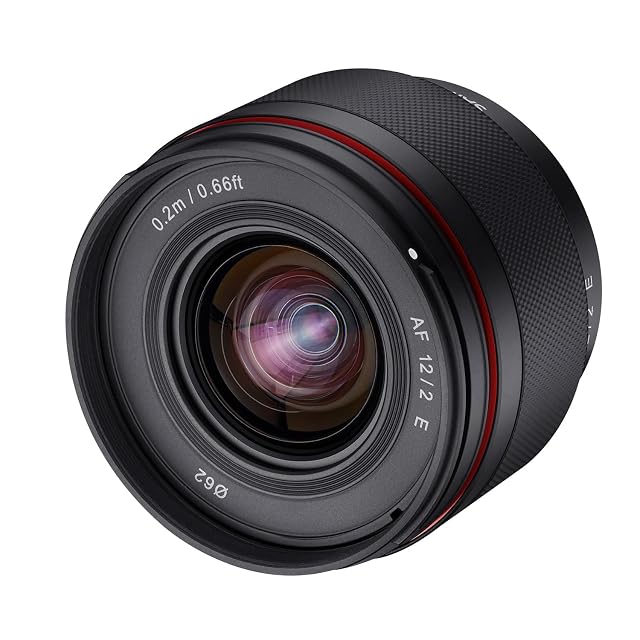
Sony E mount · APS-C · 12mm · F2.0, closing to F22 · 99.1 degree angle of view · 62mm filter thread · minimum focus 19 cm · 12 elements in 10 groups · UMC coating · weather protection claimed · 213 g · 59mm long · detachable hood supplied
The best-documented page of the five here: 213 g, 62mm of thread, 19 cm of close focus, 99.1 degrees, twelve elements in ten groups and a weather-protection claim, for 283 €.
Best for: Astrophotography and interiors on a Sony APS-C body, for someone who wants an ultra wide that autofocuses and whose filters cost what filters normally cost.
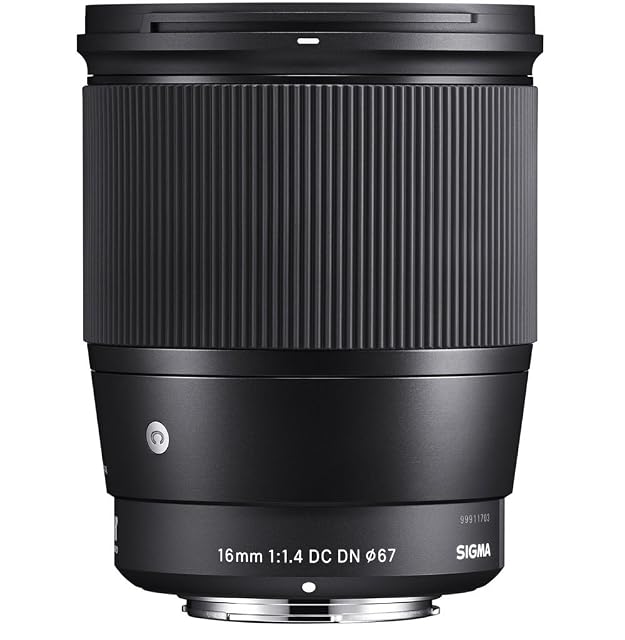
Sony E mount · APS-C · 16mm · F1.4 · dust and splash protection at the mount, stated for the mount alone · quiet autofocus · no filter provision published · no distortion type stated · no minimum focus published · no weight published
The widest aperture on this shelf at F1.4 for 385 €, with a dust and splash-proof mount stated precisely as the mount — and five phrases of copy that answer none of the other seven lines this shelf compares.
Best for: Available light on a Sony APS-C body, where F1.4 at 16mm is the whole reason and the rest will be discovered after purchase.
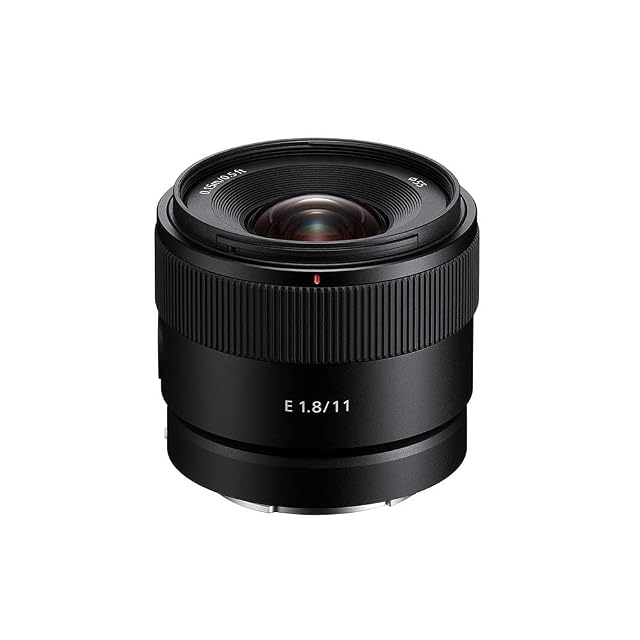
E mount · APS-C · 11mm · F1.8 held as a constant maximum · three ED and three aspherical elements · 7-blade circular aperture · two linear motors · hood supplied · no filter provision published · no distortion type stated · no minimum focus published · no sealing claimed · no weight published
The widest engraving on this shelf at 11mm with an F1.8 maximum, for 460 €, sold on six named elements and two focus motors — and publishing neither a thread, a close-focus distance, a weight nor a sealing claim.
Best for: Handheld vlogging and interiors on a Sony APS-C body, where 11mm at F1.8 covers the room and the arm holding the camera.