A bulbous front element decides whether filters are possible at all · review
TTARTISAN 10mm F2, 105 degrees, manual focus for M4/3 review
A 105 degree ultra wide at F2 for 199 €, manual focus, publishing an angle of view, a close-focus distance and a blade count — and naming two different formats in one title.
The bottom line A hundred and five degrees at F2 for 199 €, with a distortion claim, a blade count and a close-focus distance all published — this page answers more than most on the shelf. It leaves out the filter question entirely, which on an ultra wide is the one that costs money, and its title names two formats.
On the listing
Five bullets, each one about what the lens does rather than what it is. A 105 degree ultra wide angle for sweeping landscapes, starry skies and cityscapes with dramatic perspective; an F2.0 aperture credited with sharp, detailed night shots from stars to neon lights; near-zero distortion from advanced optics and aspherical elements, keeping straight lines straight; a 0.25 m close focus for flowers, small objects and more creative compositions; and an optimised starburst effect from the eight-blade design, producing a clean eight-pointed pattern around points of light.
A hundred and five degrees, and the mount it arrives on
The angle is the useful number and the page leads with it. Ten millimetres means nothing until the format is known, and the format is where this title becomes difficult: it names APS-C and an M4/3 mount in the same line. The mount is unambiguous; the sensor size the optics were computed for is not, and this page will not guess.
Near-zero distortion is a claim about type
The hub above draws the line between rectilinear designs, which keep straight lines straight at the cost of stretched corners, and fisheye designs, which bend everything deliberately. The third bullet puts this lens firmly on the rectilinear side, which matters: at 105 degrees the two produce entirely different pictures of the same room.
Eight blades and the star they draw
Named in the fifth bullet with the effect explained, which is unusual. Even blade counts halve their spikes by overlap, so eight blades give eight points. On a night-time cityscape at F8 that is the difference between a smear of light and a clean star.
The question this page never touches
No thread, no rim, no bracket. On a lens this wide the front element is the expensive unknown, and the listing says nothing about whether a filter can be fitted at all. It is the one thing the hub above tells a buyer to check first.
Availability
About 199 € on the German, French, Italian and Spanish Amazon stores when this page was last checked.
Listed in the American and British Amazon catalogues with nothing on sale against the entry: the camera has a page there and no seller behind it.
Everything in this section is the figure Keepa carried on the day of the last update to this page. Availability and prices shift without notice.
Prices quoted in this text were read on 13 September 2026. The live price is at the top of the page.
What it does well, and what it gives up
Strengths
A 105 degree angle of view published, and F2 to use it with after dark
Near-zero distortion claimed explicitly, which is a statement of type rather than an adjective
Eight blades named, with the eight-pointed star pattern they produce explained in the same bullet
Compromises
The title names APS-C and an M4/3 mount together, and the page never reconciles them
No filter provision of any kind stated, which on an ultra wide is the expensive unknown
Manual focus only, and neither a weight nor a length published
Specifications
Focal length
10mm, fixed, in the title. The shortest engraving of the five here, and the first bullet turns it into what it means in the frame: a 105 degree ultra wide angle for landscapes, night skies and cityscapes
Format
The title names two things at once — APS-C, and an M4/3 mount, repeated as M43 in the parenthesis. Those are different sensor sizes, and the page never reconciles them. What is certain is the mount it attaches to; the format the optics were computed for is stated in a way this page cannot settle
Maximum aperture
F2.0, in the title and argued in the second bullet, which credits it with sharp, detailed night shots from stars to neon. Wide for an ultra wide, and the reason the fifth bullet talks about points of light at all
Filter provision
Not published on the listing. No thread diameter appears, and the page does not say whether the front element protrudes past a rim — which the hub above names as the question that decides whether filters are possible at all on a lens this wide
Distortion type
Near-zero distortion claimed in the third bullet, credited to advanced optics and aspherical elements, with straight lines and a true-to-life rendering of the scene. That is a rectilinear claim in the maker’s own words, and it places the lens on the opposite side of the divide from a fisheye
Minimum focus
0.25 m, published in the fourth bullet, which frames it as close-up work on flowers and small objects. On a 10mm lens a quarter of a metre puts a foreground object very large against a very wide background, which is the effect the bullet is selling
Sealing
Not claimed. Landscapes and night skies are named as the uses and no protection against dust or moisture is stated
Weight
Not published in grams, and no length either. The page describes what the lens sees and never what it is
Amazon reference
B0H3ZZNQB7 (same reference on 6 Amazon marketplaces)
EAN
0744963279720
What people ask before they commit
What does the 105 degree figure describe?
The angle of view — how much of the scene, corner to corner, lands on the sensor. It is the figure that actually matters to a buyer, because the engraved 10mm means different things on different formats while the angle is the result. The first bullet publishes it directly, which is more useful than the focal length alone.
Why does an eight-blade aperture produce eight-pointed stars?
The fifth bullet makes the claim and the geometry behind it is simple: light diffracts around the straight edges of the blades, producing a spike perpendicular to each. With an even number of blades the spikes from opposite sides overlap, so eight blades give eight points rather than sixteen. It is why this is the bullet about street lights and night shooting.
Which format is this lens for?
The listing says both APS-C and M4/3, and they are not the same size. The mount named in the title and repeated in the parenthesis is M4/3, so that is what the lens physically attaches to. Whether the image circle was computed for the larger APS-C format is something this page states without resolving, and nothing here should be read as settling it.
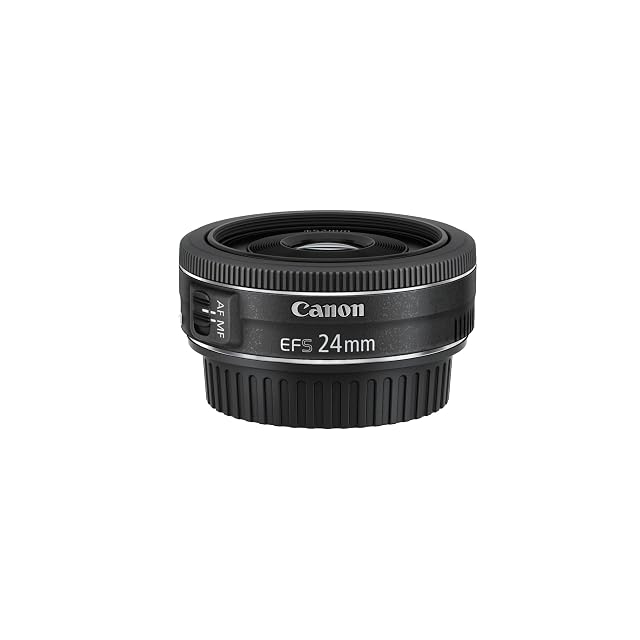
EF-S mount · APS-C · 24mm · F2.8 · 52mm filter thread · angles of view 59°10 by 50°35 by 34°55 · minimum focus about 0.16 m · STM focusing, not compatible with an extender · no distortion type stated · no sealing claimed · no weight published
A 149 € pancake that publishes the two things this shelf most often leaves out — a 52mm filter thread and a minimum focus of about 0.16 m — and carries two catalogue fields that belong to a video camera.
Best for: An EF-S body that needs to become pocketable, where 24mm on APS-C frames much as the eye does and the thread stays cheap.
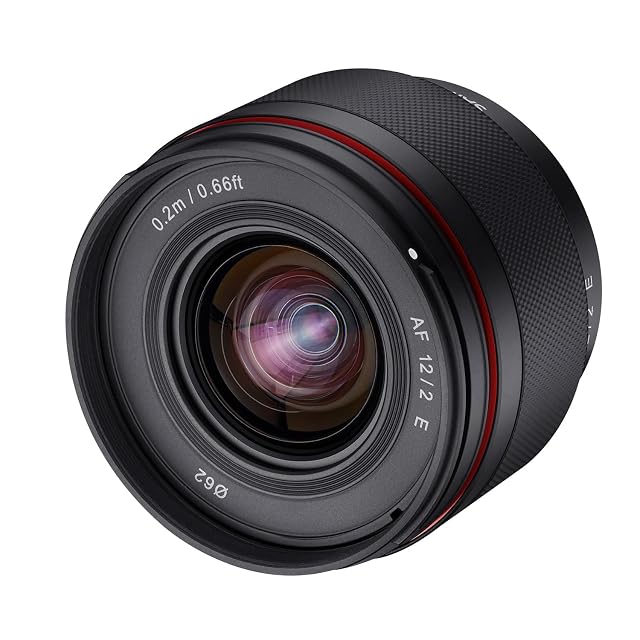
Sony E mount · APS-C · 12mm · F2.0, closing to F22 · 99.1 degree angle of view · 62mm filter thread · minimum focus 19 cm · 12 elements in 10 groups · UMC coating · weather protection claimed · 213 g · 59mm long · detachable hood supplied
The best-documented page of the five here: 213 g, 62mm of thread, 19 cm of close focus, 99.1 degrees, twelve elements in ten groups and a weather-protection claim, for 283 €.
Best for: Astrophotography and interiors on a Sony APS-C body, for someone who wants an ultra wide that autofocuses and whose filters cost what filters normally cost.
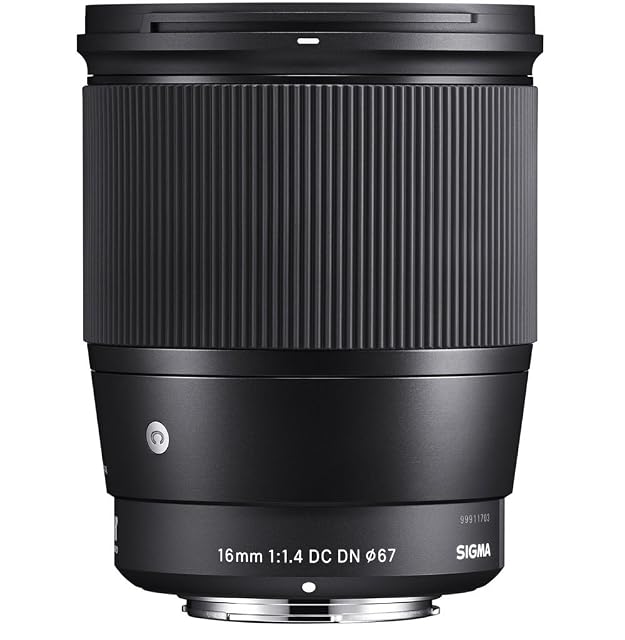
Sony E mount · APS-C · 16mm · F1.4 · dust and splash protection at the mount, stated for the mount alone · quiet autofocus · no filter provision published · no distortion type stated · no minimum focus published · no weight published
The widest aperture on this shelf at F1.4 for 385 €, with a dust and splash-proof mount stated precisely as the mount — and five phrases of copy that answer none of the other seven lines this shelf compares.
Best for: Available light on a Sony APS-C body, where F1.4 at 16mm is the whole reason and the rest will be discovered after purchase.