Tripods, scanners, lights and a hundred-hour intervalometer
Where it turns up
Camera tripods, film scanners, LED video lights, on-camera flashes, battery grips, remote shutter releases, from 14 € to 103 €.
The intervalometer is the standout
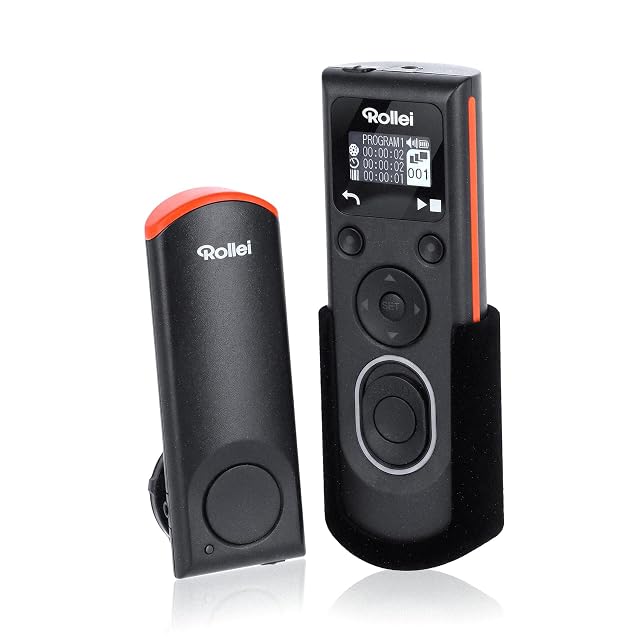
Nine bullets covering interval shooting, a release programmable a hundred hours ahead, unlimited burst, and a manual long exposure adjustable from one second to 99 hours 59 minutes 59 seconds — with an illuminated OLED display for setting it in the dark and two stored setups. Nothing else on that shelf runs a programme at all.
Ninety-nine hours, and no battery named
It never says what powers it. On a device left alone to run a hundred-hour timer, that is the specification that decides whether the programme finishes.
The 99 Wh grip, and why the number is exact
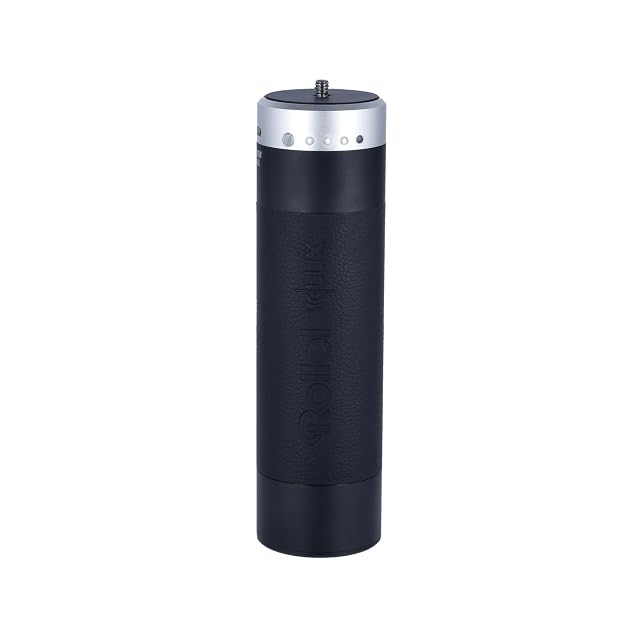
A 6600 mAh pack rated at 99 watt-hours — one below the threshold above which airlines require approval — with D-Tap and USB-C outputs, for the maker’s own LUX lights rather than for a camera. The figure is engineering rather than marketing, and the listing names air travel as the reason.
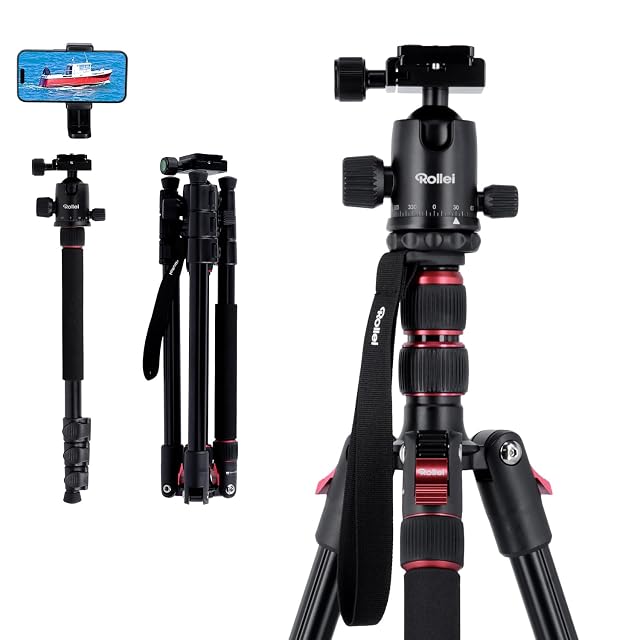
44 to 180 cm · folded 44 cm · folding leg locks · ball head with 360 degrees of rotation, invertible through 180 degrees · declared load 5 kg · aluminium, 1.46 kg · converts to a monopod · mountable spikes · 1/4-20 and 3/8 threads, plus a 1/4 inch socket in each leg · phone holder supplied
A ball head rather than a 3-way, 5 kg declared, spikes for soft ground and a 1/4 inch socket in every leg — the most versatile support here at 56 €, and the only one that becomes a monopod.
Best for: Travel and outdoor work where one support has to be a tripod, a monopod and a macro rig, and the ground is not always flat.
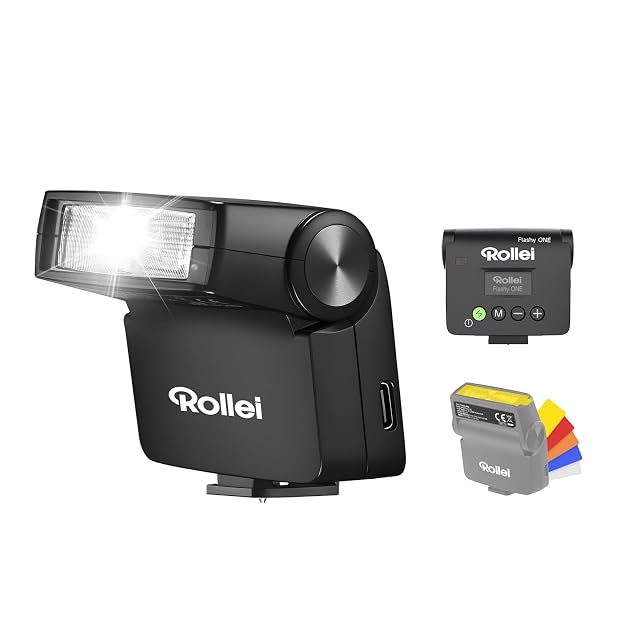
Single-pin hot shoe · GN16, no sensitivity or coverage stated · 16.8 Ws published · 1/128 to 1/1 in third-stop steps, seven stops · recycle 0.01 to 2.5 s · flash duration to 1/50,000 s · up to 500 flashes at full power · 1250 mAh cell · LCD display · no head movement published · no zoom · no metering support · no radio
The only flash of the five here to publish watt-seconds as well as a guide number — 16.8 Ws and GN16 — with seven stops in third-stop steps and a recycle time from 0.01 to 2.5 seconds, for 43 €.
Best for: Manual flash on any camera with a standard shoe, where third-stop control and a published flash duration matter more than automation.
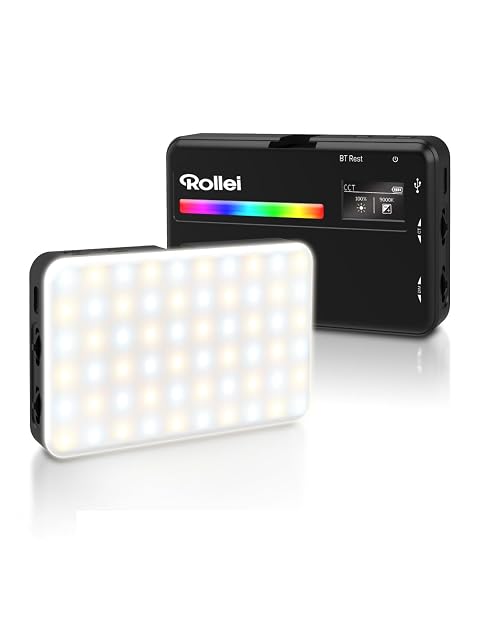
8 W · no output in lux and no distance published · 2500K to 9000K · 360 RGB colours and 13 effects · CRI and TLCI both 98 · stepless dimming from 0 to 100 per cent · internal cell, no runtime published · OLED screen and app control · 125 g · no mount published
A phone-sized panel at 24 € whose colour accuracy is published twice over — CRI and TLCI both 98, the highest figures of the four here — with no output in lux and no runtime.
Best for: A pocket light for faces and small objects where faithful colour matters more than power, and the light lives within arm’s reach of the subject.
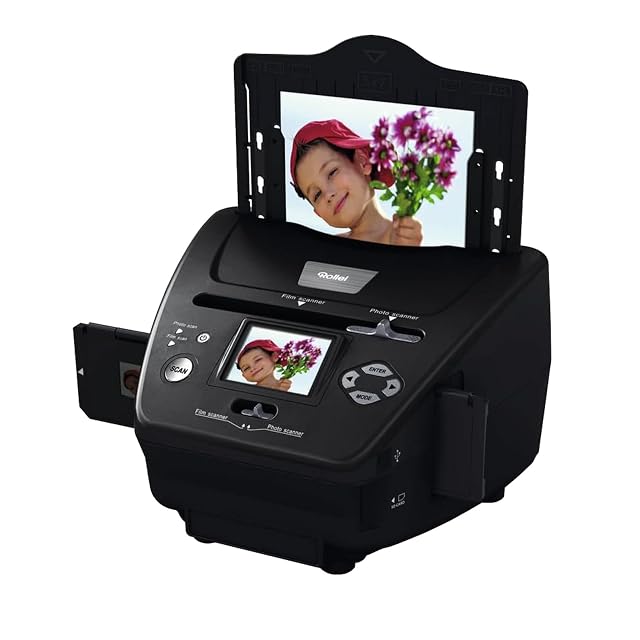
OPTICAL RESOLUTION 1800 dpi, INTERPOLATED to 2400 — and the page distinguishes the two · photos, negatives, slides AND business cards · holders not itemised · bit depth NOT published · NO dust removal described · JPEG to SD, SDHC or MMC, or over USB to a PC or Mac · scan speed described as "seconds" without a figure · a 2.4-inch TFT colour screen on the body · automatic exposure with manual adjustment, plus automatic colour correction
The only scanner here that separates its optical resolution from its interpolated one — 1800 dpi against 2400 — with a screen on the body and card slots for three formats.
Best for: A mixed box — loose prints, slides and negative strips — digitised on the kitchen table without a computer.
Sixty-nine euros for a 99 Wh grip that powers a light rather than a camera — and the figure is 99 because 100 is where airlines stop.
Bodies named
NO CAMERA. The first bullet names the Rollei LUX lights, and that is the whole compatibility statement — this grip powers a lighting fixture, not a body. It sits on this shelf because it publishes what the shelf compares: cells, thread and outputs
Cells carried and reporting
99 Wh AND 6600 mAh, both in the second bullet — the only watt-hour figure on this shelf and the only cell here published in both units. Ninety-nine watt-hours is not a round number by accident: it is one below the 100 Wh threshold above which airlines require approval, which the fourth bullet then states outright
Duplicated controls
NONE. Like the three other power handles on this shelf, it carries energy and no buttons. Two products here duplicate a shutter release; this is not one of them
Sealing claims
None
Tripod thread position
A quarter-inch connector, in the fifth bullet, with an integrated battery for freedom of movement. On a light rather than a camera, the thread is how the whole assembly goes on a stand
Published weight
None — on a 99 Wh battery, which by chemistry alone is around half a kilogram
Amazon reference
B0D1MVJ992 (same reference on 6 Amazon marketplaces)
EAN
4048805201761
Ninety-nine watt-hours and 6600 mAh, both published
D-Tap and USB-C outputs, so it powers cinema gear and phones alike
It powers lights, not cameras — no body is named
Best for: A Rollei LUX light on a stand, on a shoot that flies — where 99 Wh goes in hand luggage and a D-Tap feeds the fixture.
Thirty-nine euros for the only intervalometer here: an OLED display, 50 metres, exposures to 99 hours and two setups stored — for Nikon.
Connection type
RADIO, wireless, with an ILLUMINATED OLED DISPLAY and illuminated buttons, in the second bullet — which makes the point that matters for the work this does: a timer is programmed in the dark, at the start of a night exposure, and a lit screen is the difference between setting it correctly and guessing
Sockets and bodies named
NIKON DSLM AND DSLR, in the title, with no individual model named anywhere in nine bullets. It is the vaguest compatibility on this shelf — the 35 € PROfezzion names more than forty bodies — and Nikon uses several different release sockets, so the exact plug has to be confirmed elsewhere
Half-press support
Not stated
Intervalometer functions
THE ONLY ONE ON THIS SHELF, and the fullest specification here: INTERVAL SHOOTING for time-lapse sequences; a TIMED RELEASE PROGRAMMABLE UP TO 100 HOURS IN ADVANCE; UNLIMITED BURST; and MANUAL LONG EXPOSURE adjustable from ONE SECOND to 99 HOURS 59 MINUTES 59 SECONDS. Four functions, each in its own bullet
Stated range
50 METRES, in the third bullet, for both remote release and interval work — matching the 35 € PROfezzion and five times the 10 m of the 8 € phone remote
Power source
NOT PUBLISHED, in nine bullets — which on a device meant to run a hundred-hour timer is the specification most worth knowing. A remote whose cell dies at hour ninety has taken no photograph at all
Amazon reference
B097TQ3432 (same reference on 2 Amazon marketplaces)
EAN
4048805281190
The only intervalometer here: time-lapse, timer, bulb to 99 hours, unlimited burst
An illuminated OLED display and lit buttons, for programming in the dark
No power source published, on a device that runs hundred-hour programmes
Best for: Star trails, time-lapse and any exposure measured in hours, on a Nikon body whose release socket has been confirmed.
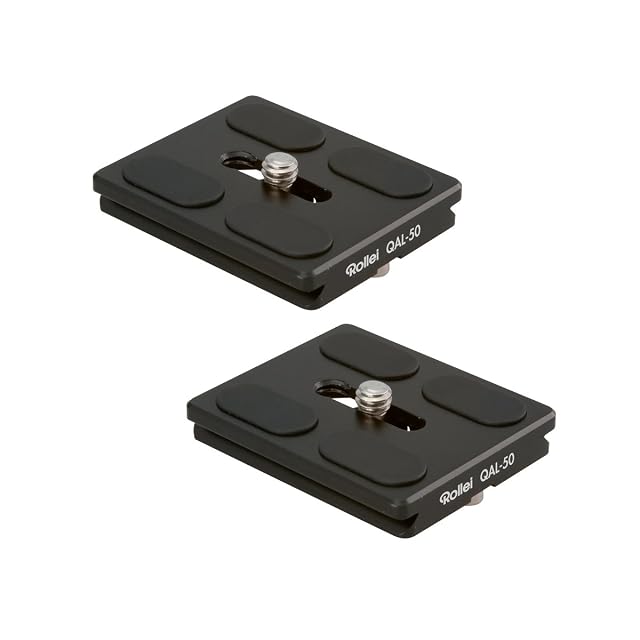
Two Arca-compatible plates for 14 €, each 49 by 41 by 10 mm and 45 g — the only page on this shelf to publish all three dimensions and a weight.
Profile
Arca Swiss compatible, named in the title. The hub above is careful about what that means: the dovetail associated with Arca is cut by many makers to broadly compatible dimensions and published as a standard by none of them, so two plates of the same nominal type can sit differently in the same clamp. Naming it is still what makes a plate interoperable, and only two pages on this shelf do
Length
49 mm, with the full block published in the third bullet: 49 by 41 by 10 mm. Short, which is what it is — this is a plate for a camera base, not a long rail for balancing a telephoto
Screw type and drive
A 1/4 inch tripod thread, in the second bullet, and the drive is never named. The buying advice for this shelf is to take a plate with a folding D-ring, because a coin-slot plate needs a coin at the moment one is never to hand — and this page does not say which it is
Anti-twist provision
Not described. No lip, no rubber pad and no body-specific shaping appears, so what stops the plate rotating under a long lens is unstated. On a 49 mm plate with a single screw, that is the question
Stated clamp compatibility
All cameras with a 1/4 inch tripod thread, in the second bullet, plus the Arca compatibility in the title. Two statements covering both halves: what it screws into, and what it slides into
Material
Aluminium, in the third bullet, alongside the dimensions and the weight
Published weight
45 g each, in the third bullet. It is the lightest figure on this shelf, and the fourth bullet confirms two plates are supplied
Amazon reference
B008AH6X3I (same reference on 6 Amazon marketplaces)
EAN
4048805208685
Two plates for 14 €, so a second body is covered by the same purchase
All three dimensions and the weight published — 49 by 41 by 10 mm at 45 g
The screw drive is never named, so whether it needs a coin or a D-ring is unknown
Best for: A second and third plate for cameras that stay on Arca clamps, where the price per plate matters more than the fittings.
Each amount in a write-up is what the listing showed when that page was written. The figure next to the product is pulled in as you read, and it is the one that counts.