Macro, prime, telephoto, standard zoom and wide-angle lenses, and a teleconverter. The floor is 339 €.
The independent position
Sigma makes lenses for mounts it does not own, which is why the same optical design appears for several systems. What that costs is the maker’s own guarantee of future firmware compatibility; what it buys is a specification at a price the mount’s owner rarely matches.
The teleconverter names no lens
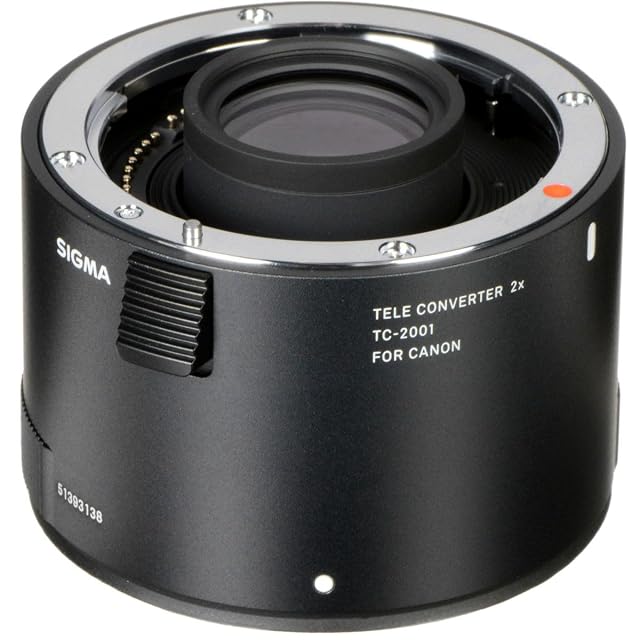
The TC-2001 publishes 2.0× magnification, SLD glass and dust and splash protection, and lists not one compatible lens in five bullets. On a converter that protrudes into the space behind the lens, the compatibility list is the central specification — and a page that gives only a mount is asking a buyer to try the fit with two expensive pieces of glass.
SLD, and what it is for
Special Low Dispersion elements bring the different wavelengths of light to focus closer together, which suppresses the purple and green fringes at high-contrast edges. On a converter, which magnifies whatever the lens already shows, that matters more rather than less.
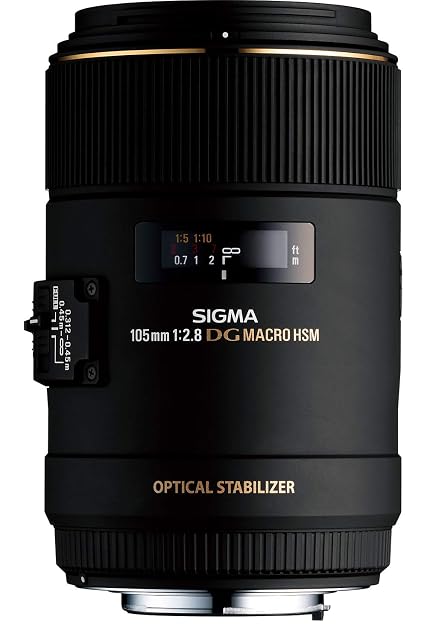
Canon EF mount · full frame, from the DG designation · 105mm · F2.8 · 1:1 magnification · Hyper Sonic Motor · optical stabilisation in the product name only, no figure published · no working distance published · no internal focus stated · no filter thread published · no weight published
A 1:1 macro at 105mm whose page states the ratio and then four adjectives — with an optical stabiliser announced in the product name and described in none of the five bullets.
Best for: Life-size work on a Canon EF body at the longest focal length on this shelf, for a buyer who will find the specification somewhere other than the listing.
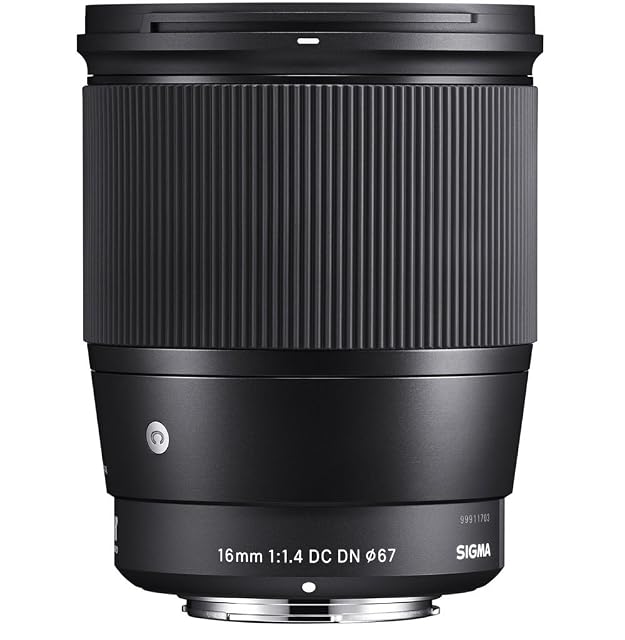
Sony E mount · APS-C · 16mm · F1.4 · dust and splash protection at the mount, stated for the mount alone · quiet autofocus · no filter provision published · no distortion type stated · no minimum focus published · no weight published
The widest aperture on this shelf at F1.4 for 385 €, with a dust and splash-proof mount stated precisely as the mount — and five phrases of copy that answer none of the other seven lines this shelf compares.
Best for: Available light on a Sony APS-C body, where F1.4 at 16mm is the whole reason and the rest will be discovered after purchase.
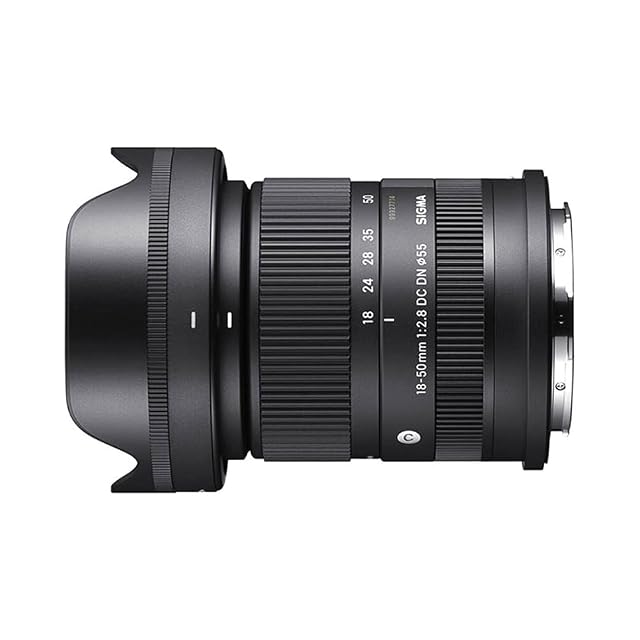
Sony E mount · APS-C, from the DC designation and stated twice in the bullets · 18-50mm · F2.8 held across the range · no stabilisation named · no filter thread published · no minimum focus published · no sealing claimed · no weight published · multi-layer coating claimed
The widest constant aperture on this shelf, F2.8 across 18-50mm, and the dearest lens here at 503 € — sold on five phrases of marketing copy that answer none of the nine things this shelf is compared on.
Best for: An APS-C E-mount body indoors, where F2.8 at every focal length is worth giving up both range and published specification for.
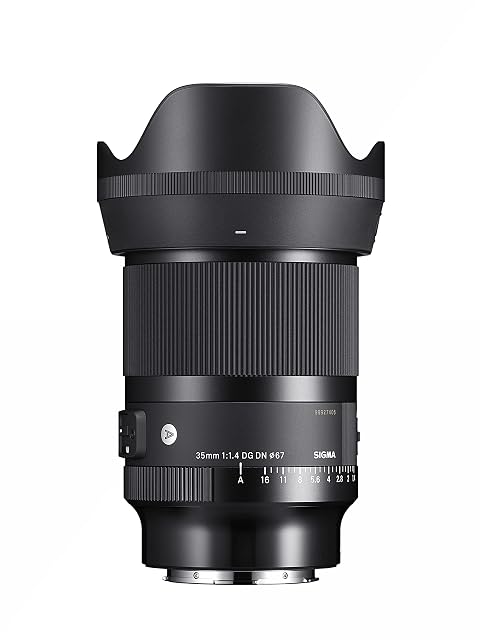
Sony E mount · full frame, from the DG designation · 35mm · F1.4 · Super Multi-Layer coating against flare and ghosting · autofocus described as fast and quiet, motor not named · no blade count published · no minimum focus published · no filter thread published · no sealing claimed · no weight published
The dearest lens of the eight here at 879 €, a full-frame 35mm at F1.4 from Sigma’s Art line — sold on five phrases that publish the aperture and nothing else measurable.
Best for: Full-frame reportage where F1.4 at 35mm is the requirement and the specification sheet will be found somewhere other than the listing.
Three hundred and forty-nine euros for a sealed 2× converter with Special Low Dispersion glass — and five bullets that name no lens, no stop and no gram.
Magnification
2.0×, in the second bullet. A 300 mm becomes a 600 mm, and the maximum aperture moves two stops with it
Lenses named as compatible
NONE — and on a 2× converter that is the gap that matters most. The title gives the Canon EF mount and the five bullets give nothing: no list, no range, not even a phrase like "L-series above 135 mm". The intro above is explicit that makers publish a list rather than a mount specification because a converter protrudes, and that fitting one to an unlisted lens can mean contact with the rear element. The 169 € Viltrox on this shelf names five lenses and puts "only" in front of them
Light loss in stops
Not published. Two stops, by the arithmetic the intro above gives for every 2×: an f/2.8 lens works at f/5.6, an f/4 at f/8. The page does not mention it, and at 349 € that is a considerable omission
Autofocus limits stated
Autofocus is not mentioned at all, in any bullet — neither claimed nor qualified. On a 2× that turns f/4 into f/8 this is the specification a buyer most needs, and the page is silent
Added length
Not published. The fifth bullet says compact and light and gives no millimetres, where the 323 € OM SYSTEM publishes 15 mm
Sealing
Dust- and splash-protected, in the fourth bullet. One of three converters on this shelf to claim it
Published weight
Not published — on a bullet that calls it light. As on all six converters here
Amazon reference
B00NIHBM9U (same reference on 6 Amazon marketplaces)
EAN
0085126870546
Special Low Dispersion elements, named as a material rather than as a coating
Dust and splash protection, at the price level where this shelf starts claiming it
Not one compatible lens named, in five bullets, on a converter that protrudes
Best for: A buyer who has already confirmed elsewhere that their lens accepts this converter, and who wants Special Low Dispersion glass in the joint.
Each amount in a write-up is what the listing showed when that page was written. The figure next to the product is pulled in as you read, and it is the one that counts.