The lens that stays on the camera, and its aperture tells you how it was built · review
Sigma 18-50mm F2.8 DC DN Contemporary for Sony E review
The widest constant aperture on this shelf, F2.8 across 18-50mm, and the dearest lens here at 503 € — sold on five phrases of marketing copy that answer none of the nine things this shelf is compared on.
The bottom line F2.8 at every focal length on an APS-C body is a real reason to choose this over either lens beside it, and the listing gives no other. Five marketing phrases, no thread, no distance, no weight, no stabilisation statement: the dearest page on this shelf is also the emptiest, and everything here rests on one figure in the product name.
On the listing
Five phrases, and that is the whole page: a compact APS-C zoom lens; for mirrorless APS-C cameras; superb image quality; highest flexibility; high-grade coating. Twenty-one words, no figure among them. The focal range and the aperture are in the product name, not in the description.
One stop and a third, which is what the money buys
F2.8 from 18mm to 50mm is the widest constant aperture here. Against the 18-105mm F4 beside it that is a stop and a third more light at every focal length; against the long end of the 430 € Canon it is nearer two and a half stops. Indoors, and for separating a subject from its background, that difference is the reason this shelf has a top tier at all.
The range it gives back
Under three times the short end, where the lens below covers nearly six times and the 18-150mm Canon eight. The hub above frames the choice as indoors or not; this lens answers indoors and hands back the reach.
The dearest page is the emptiest
Twenty-one words for 503 €. No thread diameter, no close-focus distance, no weight, no length, no sealing claim, no stabilisation statement, no blade count. The 18-105mm beside it counts its ED elements and its aperture blades for 450 €.
Coating is not sealing. The last bullet is about glass surfaces and flare. Nothing on this page says the barrel keeps dust or water out, and a compact lens sold for everyday carry is exactly where that claim would matter.
Availability
Between 503 € and 564 € on the German, French, Italian and Spanish Amazon stores when this page was last checked.
The American and British Amazon stores carry it too, priced in local currency. Those amounts are deliberately absent from the range above, which reads euro stores only.
Everything in this section is the figure Keepa carried on the day of the last update to this page. Availability and prices shift without notice.
Prices quoted in this text were read on 13 September 2026. The live price is at the top of the page.
What it does well, and what it gives up
Strengths
F2.8 held across the whole range, the widest constant aperture on this shelf
The shortest barrel here, described as a compact APS-C zoom, on the same mount as the 18-105mm alternative
A multi-layer coating claimed in the fifth bullet, the one optical statement the page makes
Compromises
Five bullets, 21 words in total, and not one of the nine figures this shelf is compared on
The dearest lens here at 503 €, and the least documented page of the three by a wide margin
No stabilisation named at all, where both cheaper lenses here put a stabiliser in the title
Specifications
Mount
Sony E, stated in the title as the bayonet the lens is built for. It is the same mount as the 18-105mm above it, so the two are direct alternatives on one body
Format
APS-C. The DC in the product name is Sigma’s designation for it, and the first two bullets confirm it in words: a compact APS-C zoom, for mirrorless APS-C cameras
Focal range
18-50mm, in the title. Under three times the short end — the shortest span on this shelf, and the price of holding F2.8 across it
Maximum aperture at both ends
F2.8 at both, a single figure in the title. It is a stop and a third wider than the F4 lens below it and around two and a half stops wider than the F6.3 long end of the 430 € Canon on this shelf. None of the five bullets mentions the aperture at all
Stabilisation
None named on the listing, and no stop figure anywhere. On an E-mount body that is not automatically a gap — many Sony bodies stabilise the sensor — but the page makes no claim either way, and the other two lenses here both put stabilisation in their titles
Filter thread
Not published on the listing. Five bullets, none of them a measurement
Minimum focus
Not published on the listing, and no magnification ratio. The fourth bullet says highest flexibility, which is not a distance
Sealing
Not claimed. The fifth bullet gives a high-grade coating, which is applied to glass to control flare and is a different thing from a seal against dust and water. The two are easy to confuse on a page this short
Weight
Not published in grams. The first bullet calls the lens compact, which is the only physical description on the page
Amazon reference
B09JVBB36L (same reference on 6 Amazon marketplaces)
EAN
0085126585655
What people ask before they commit
What does DC DN mean?
They are Sigma’s own designations, and the page confirms both in words rather than explaining the letters. DC marks a lens computed for APS-C rather than full frame, which the first two bullets restate. DN marks a design for mirrorless cameras, where the shorter distance from mount to sensor allows a different optical layout. Neither letter is a measurement.
Why is the range so much shorter than the other two lenses here?
Because of the aperture. Holding F2.8 from 18mm to 50mm already requires large elements; holding it to 105mm or 150mm would require a lens of a different size and class altogether. The trade this shelf keeps making is range against aperture, and this lens is the extreme of one end: the least range, the most light, the highest price.
Is the coating mentioned in the last bullet a form of weather sealing?
No, and the distinction is worth making because the words sit close together. A coating is applied to glass surfaces to cut reflections, flare and ghosting. Sealing is gaskets at the mount, the rings and the switches to keep dust and moisture out of the barrel. This page claims the first and says nothing about the second.
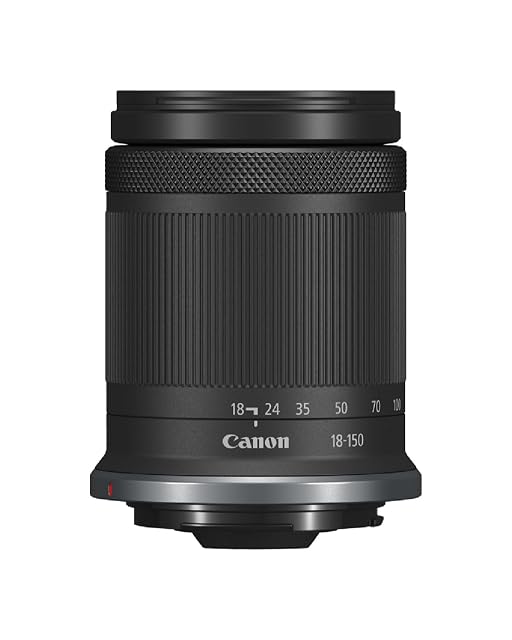
RF-S mount · APS-C · 18-150mm · F3.5 at the short end, F6.3 at the long one · 4.5 stops of stabilisation claimed · STM focus · no filter thread published · no minimum focus published · no sealing claimed · no weight published
The variable-aperture side of this three-lens shelf at 430 €, with eight and a half times the range of its own short end and a 4.5-stop stabiliser in the title, and six of the nine lines this shelf is compared on left blank.
Best for: One lens on an EOS R APS-C body for travel, where the range matters more than the aperture and the stabiliser carries the long end.
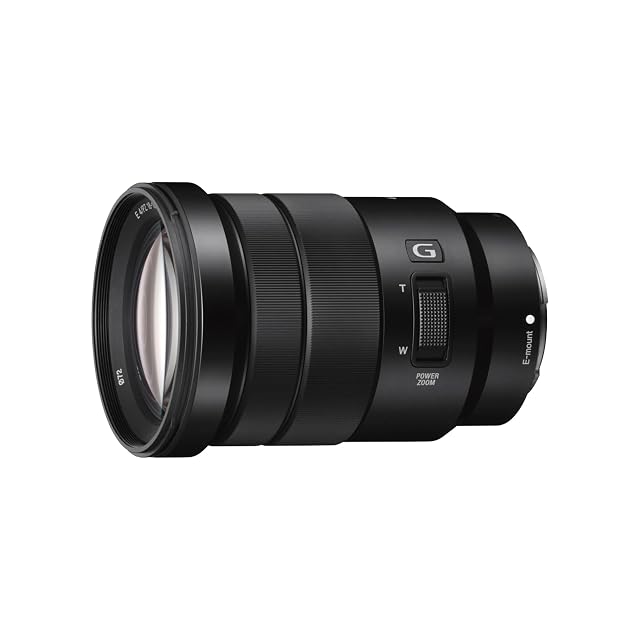
E-mount · APS-C · 18-105mm · F4 held across the range · Optical SteadyShot in the lens, no stop figure · powered stepless zoom · length constant while zooming and focusing · 7-blade circular aperture · two ED and three aspherical elements · no filter thread published · no minimum focus published · no sealing claimed · no weight published
A constant F4 across 18-105mm with a powered stepless zoom and a barrel that never changes length, at 450 € — the video lens of this shelf, and it publishes five optical details while leaving every practical measurement out.
Best for: Video on an APS-C E-mount body, where the constant aperture, the powered zoom and the fixed barrel length matter more than the last stop of light.
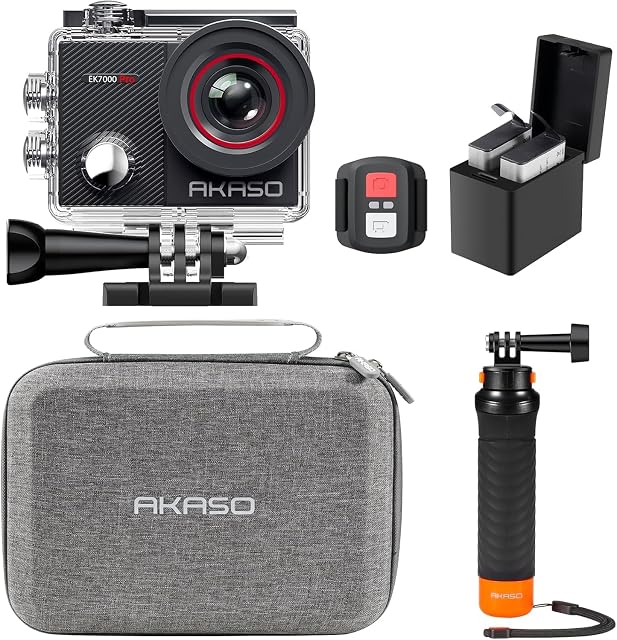
40 m waterproof housing · 4K 30, 2.7K 30, 1080p 60 · 20 MP stills · EIS stated · four selectable view angles: super wide, wide, medium, narrow · 2 inch IPS touchscreen · floating hand grip and bag supplied · no field of view in degrees
An established name at ninety-three euros, selling a touchscreen, three video modes and four selectable view angles — described by name rather than in degrees — with a floating grip in the box.
Best for: Water use where the floating grip and the touchscreen earn their keep, by someone who will buy a spare battery blind.