Skip to content

Torjim TJ-RGB, two lights with stands review

One of two sets here that come with stands of their own — and among four lights on this shelf with no battery at all.

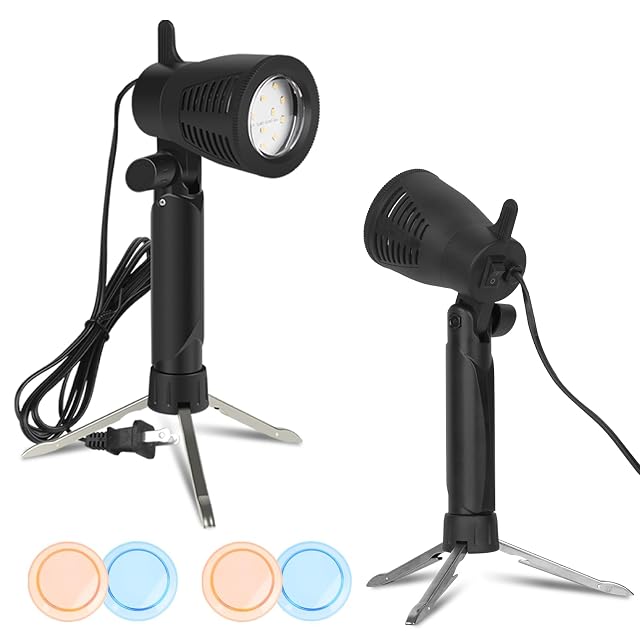
What it comes to One of two sets on this shelf that stand on the floor, alongside the NiceVeedi pair: two panels, two tripods to 57 inches with ball heads, a wired backlit controller and sixteen colors, for thirty-five dollars. Two lights from two directions is the geometry a face needs, and no pocket panel here can offer it. The compromises are real — CRI 90+ is the weakest index on the shelf, there is no battery, and no output figure of any kind.

What the maker commits to in print

  • Two lights, each on an adjustable tripod stand extending to 57 in and folding to 26 in, with enhanced legs for stability and a 360-degree rotating head
  • Seventy LEDs of high performance per light, with brightness set from 10 to 100 per cent in ten levels, “conveniently controlled by wires”, the controls made with background lights “so you can operate the lights even in a dark environment”
  • 3000K to 6000K color temperatures and a high color rendering index of 90+, plus sixteen extra colors beyond the cool and warm whites
  • “Recommended power sources are USB wall chargers (5V, 2A) and power banks. Computers and laptops can also support the lights in any emergency”
  • Twelve months of replacement service

NO lux. NO lumens. NO wattage. NO battery. Nothing about flicker.

Two lights on two stands, alone on this shelf

Every other light here is a cold shoe, a clip or a desk clamp.

Fifty-seven inches — 145 cm — puts a panel above a seated subject and at chest height on a standing one. Twenty-six inches folded means the pair travels.

And two lights is the geometry a face needs. One light makes one shadow, and the shape of that shadow is the whole look; a second fills it, controls its depth and stops the subject looking like a passport photograph.

Seventy LEDs per panel at 145 cm (57.1 in) is not a lot of light, so it suits a small room and a close subject.

What thirty-five dollars buys is the arrangement, not the output.

A wired controller, which is the right choice at this height

Buttons on the panel are fine on a camera shoe and useless at the top of a 145 cm (57.1 in) stand.

“Conveniently controlled by wires” means the adjustment happens where you are standing.

And the controller is BACKLIT — “so you can operate the lights even in a dark environment”, which is the condition a video light is used in and which no other page on this shelf mentions.

No battery, which costs less here than it would elsewhere

Five volts, two amps, from a wall charger or a power bank. A standard phone charger.

A pocket panel without a cell is useless on a hike. A floor stand lives within a cable’s reach of a socket, never dies mid-session and never needs charging the night before.

The cost is two cables across a floor and a supply per light.

Three lights on this shelf have no internal cell: this pair, the EMART spotlights and the published ULANZI K20.

CRI 90+, which is the weakest figure here

Four lights on this shelf publish 95. Two publish 97. One publishes 98.

“Read the color accuracy index before the output figure. A dim light with faithful color is easier to work with than a bright one that turns skin green.”

The error in a 90-CRI white LED sits mostly in deep red — which is where skin tone lives. Faces come out slightly flat and slightly orange, and the fix is a selective hue adjustment on every clip rather than a white balance.

For product work on neutral objects, or a colored background wash, 90 is fine.

Sixteen colors, which is not RGB

Sixteen fixed shades, chosen from a list.

The NEEWER SL90C and the ULANZI VL49 RGB on this shelf mix any hue across 360 degrees and set saturation as well.

Sixteen covers a background wash. It will not match an existing colored source.

Availability

About $35 on the American Amazon store when this page was last checked.

Everything in this section is the figure Keepa carried on the day of the last update to this page. Availability and prices shift without notice.

Prices quoted in this text were read on 8 October 2026. The live price is at the top of the page.
What it does well, and what it gives up

Strengths

  • Two lights and two stands, the only floor-standing set here
  • Fifty-seven inches of height, folding to twenty-six
  • A 360-degree ball head on each stand
  • A wired controller, operated from where you stand
  • Backlit controls for a dark room
  • Sixteen colors as well as cool and warm

Compromises

  • CRI 90+, the weakest index on this shelf
  • No battery at all: a socket or a power bank per light
  • No output figure of any kind
  • Sixteen fixed colors rather than 360 degrees of hue
  • Nothing about flicker
  • Seventy LEDs per light on a 145 cm (57.1 in) stand

Specifications

Output in lux with its distanceNEITHER PUBLISHED. No lux, no lumens, no distance, no wattage — only "70 LEDs of high performance" per light. This shelf's introduction makes output the first figure, and on a pair of lights sold as a studio set rather than a pocket fill the omission matters more: a panel on a 57-inch stand is two meters from the subject, where illuminance is a quarter of what it is at a meter
Color temperature range3000K TO 6000K, stated, plus 16 EXTRA Colors beyond the cool and warm whites. Three thousand kelvin is warm tungsten and six thousand is a cool daylight, a 3,000 K span — narrower than everything else adjustable on this shelf except the published NEEWER pair. Sixteen fixed colors is not the same as an RGB panel’s 360 degrees of hue: the NEEWER SL90C and the ULANZI VL49 RGB here mix any shade
Accuracy indicesCRI 90+, stated — the WEAKEST index published on this shelf, level with the EMART spotlights and the ULANZI K20 and behind the 95 of five lights, the 96 of the published NEEWER pair, the 97 of the SL90C and the ALTSON and the 98 of the published Rollei. This shelf's buying tip says to read the index before the output, and above 90 is usable rather than good: the error in a 90-CRI white LED sits mostly in deep red, which is where skin lives
DimmingTEN BRIGHTNESS LEVELS from 10 TO 100 PER CENT, "conveniently controlled by wires" — a WIRED IN-LINE CONTROLLER rather than buttons on the panel, which on a light at the top of a 57-inch stand is the right arrangement: you adjust it from where you are standing. And the controller is BACKLIT, "so you can operate the lights even in a dark environment", which no other page on this shelf mentions
FlickerNOT MENTIONED
Power optionsUSB ONLY, AND NO BATTERY: "Recommended power sources are USB wall chargers (5V, 2A) and power banks. Computers and laptops can also support the lights in any emergency." Three lights on this shelf have no internal cell — this pair, the EMART spotlights and the published ULANZI K20 — and for a floor-standing studio light that is a defensible choice, because it never runs out mid-session. What it needs is a socket or a power bank per light, and a cable run from each stand
MountA TRIPOD STAND PER LIGHT, extending to 57 IN and folding to 26 IN, with ENHANCED LEGS for stability and a 360-DEGREE BALL HEAD. That is the only floor-standing arrangement on this shelf: every other light here is a cold shoe, a clip or a desk clamp. Fifty-seven inches is 145 cm (57.1 in), which puts a light above a seated subject and at chest height on a standing one — and the stands fold to 26 inches, so the pair travels
Amazon referenceB0BVDGLWL4
EAN0739437902297

What people ask before they commit

Is CRI 90+ good enough?

Usable, and the weakest claim on this shelf. The index runs to 100 and the error in a 90-CRI white LED is concentrated in deep red, which is where skin tone lives: faces come out slightly flat and slightly orange, and the correction is not a white balance but a selective hue adjustment on every clip. For product work on neutral objects, or for a background wash in one of the sixteen colors, 90 is fine. For a face as the subject, four lights on this shelf publish 95, two publish 97 and one publishes 98 — and this shelf's buying tip says to read this figure before the output.

Why does the lack of a battery matter less here?

Because the light stands on the floor and stays there. A pocket panel without a battery is useless on a hike; a 145 cm (57.1 in) studio stand lives within a cable’s reach of a socket, and mains power means it never dies mid-session and never needs charging the night before. The cost is two cables across a floor and a USB supply per light — and the page specifies it exactly: 5 V 2 A, which is a standard phone charger rather than anything special. A power bank works too, which puts the pair on a tabletop at a trade stand.

Are two lights better than one brighter one?

For anything with a face in it, yes, and this is one of two sets on this shelf that give you two. One light produces one shadow, and the shape of that shadow is the whole look of a portrait; a second light fills it, controls how deep it is and keeps the subject from looking like a passport photograph. Two 70-LED panels at 145 cm (57.1 in) is not a lot of light, so it suits a small room and a close subject. What you are buying is the geometry — key and fill from two directions — rather than the output, and nothing else here offers it in one box.

Where this one places on its bench

At $35, it is the 7 cheapest of the 11 models in this category published here.

  • Cheapest on the bench$10
  • Median$30
  • Dearest on the bench$52

This one against the other photo equipment

photo equipment from the same category, at nearby prices. Only what all of them publish is shown: a column with holes compares nothing.

Model Price Output in lux with its distanceColor temperature rangeAccuracy indicesDimming
Torjim TJ-RGB, two lights with stands $35 NEITHER PUBLISHED. No lux, no lumens, no distance, no wattage — only "70 LEDs of high performance" per light. This shelf's introduction makes output the first figure, and on a pair of lights sold as a studio set rather than a pocket fill the omission matters more: a panel on a 57-inch stand is two meters from the subject, where illuminance is a quarter of what it is at a meter3000K TO 6000K, stated, plus 16 EXTRA Colors beyond the cool and warm whites. Three thousand kelvin is warm tungsten and six thousand is a cool daylight, a 3,000 K span — narrower than everything else adjustable on this shelf except the published NEEWER pair. Sixteen fixed colors is not the same as an RGB panel’s 360 degrees of hue: the NEEWER SL90C and the ULANZI VL49 RGB here mix any shadeCRI 90+, stated — the WEAKEST index published on this shelf, level with the EMART spotlights and the ULANZI K20 and behind the 95 of five lights, the 96 of the published NEEWER pair, the 97 of the SL90C and the ALTSON and the 98 of the published Rollei. This shelf's buying tip says to read the index before the output, and above 90 is usable rather than good: the error in a 90-CRI white LED sits mostly in deep red, which is where skin livesTEN BRIGHTNESS LEVELS from 10 TO 100 PER CENT, "conveniently controlled by wires" — a WIRED IN-LINE CONTROLLER rather than buttons on the panel, which on a light at the top of a 57-inch stand is the right arrangement: you adjust it from where you are standing. And the controller is BACKLIT, "so you can operate the lights even in a dark environment", which no other page on this shelf mentions
ENEGON Bi-color panel, 2500–9900 K, 20 hours $39 NEITHER PUBLISHED. No lux, no lumens, no distance, no wattage — in five bullets. What appears instead is "180 high lumens LED lamp beads", which uses the word lumens as an adjective for a bead rather than as a measurement of the fixture. This shelf's introduction makes output the first of three published figures a continuous light is compared on; this page gives none of it, and five of the ten American lights on this shelf share that gap2500K TO 9900K IN 100 K INCREMENTS — the WIDEST range on this shelf, a 7,400 K span, against 2500–9000K on the ULANZI VL49 RGB and the published Rollei and 3200–5600K on the published NEEWER pair. And the increment is published, which almost nothing here does: 100 K steps means 75 positions across the range, fine enough to match a tungsten bulb or an overcast sky by eye. This shelf's introduction warns that a mixed panel peaks in the middle; with no output figure at all, there is no peak to be lower thanNONE PUBLISHED. No CRI, no TLCI, no index of any kind, and this is the ONLY page on this shelf to omit it entirely — the published RaLeno gives CRI 95 or better in its fifth bullet, and the twelve other pages here all publish a figure. This shelf's buying tip is unambiguous: "read the color accuracy index before the output figure. A dim light with faithful color is easier to work with than a bright one that turns skin green." On a bi-color panel mixing warm and cool emitters, the index is also where the mixing shows — a cheap mix can be visibly green at the middle of its range, which is exactly where it will be used1 TO 100 PER CENT IN 5 PER CENT INCREMENTS, stated — twenty steps, and the increment is published where most of this shelf says only "dimmable". Five per cent steps are fine enough for practical work and are not stepless: the NEEWER SL90C and the published Rollei dim continuously, and a stepped dimmer cannot be faded on camera
EMART EM-7W-LTL, two spotlights, 600 lm each $30 600 LUMENS PER LIGHT — and lumens are not lux. Lumens measure the total light LEAVING a fixture; lux measures how much ARRIVES on a surface, which is why this shelf's introduction asks for lux with a distance. The two cannot be converted without knowing the beam angle, and no beam angle is published here. Six hundred lumens from a 12-LED spotlight is a narrow, concentrated beam rather than a panel wash, so the lux at half a meter could be high and the coverage small. This and the published ULANZI K20 are the two pages on this shelf that publish a flux instead of an illuminance5500 K, FIXED, described as a "perfect daylight temperature" — and then the mechanism that moves it: TWO WHITE, TWO ORANGE and TWO BLUE GEL FILTERS, two color gel filters, stated to change the kelvin temperature for cooler or warmer photos. That is color temperature by subtraction rather than by mixing: an orange gel in front of a 5,500 K source makes it warmer and dimmer, where a bi-color panel fades between emitters and loses nothing. The ULANZI VL49 on this shelf is the only other fixed-temperature light here, and it has no gelsCRI 90+, stated — the JOINT WEAKEST index on this shelf with the Torjim pair and the ULANZI K20, behind the 95 of five lights, the 96, the three at 97 and the 98 above them. On a spotlight intended for tabletop product work the index matters as much as on a portrait light: a 90-CRI source renders a red product slightly brown, and a product photograph that needs its color corrected is a product photograph that will be returnedNOT PUBLISHED AT ALL — no range, no steps, no mention. This is the ONLY light on this shelf with no dimming described, which on a 600-lumen spotlight means the only ways to reduce it are distance, a gel and switching one of the pair off. This shelf's introduction lists dimming among the things it compares; this page lists a swivel, a bracket, a temperature and a warranty
NEEWER SL90C, 1090 lux at 0.5 m (1.6 ft), CRI 97 $40 1090 LUX AT 0.5 M, stated — and the distance is the point. This shelf's introduction says the distance is part of the measurement and a figure without it cannot be compared with anything; of the nine American lights on this shelf, only this and the ULANZI VL49 RGB publish both. Eleven hundred lux at half a meter is a quarter of the published NEEWER 660 pair’s 3300 lux at 1 m (3 ft) once both are scaled to the same distance, which is what the scaling is for2700K to 7500K in CCT mode, stated, a 4800K span. Narrower at both ends than the ENEGON’s 2500–9900K and the ULANZI VL49 RGB’s 2500–9000K on this shelf, and wider than the published NEEWER 660 pair’s 3200–5600K. This shelf's introduction notes that a light mixing warm and cool emitters usually reaches its highest output in the MIDDLE of the range rather than at the ends, and this one has 45 warm and 45 cool beads to mixCRI 97, stated in the title — the JOINT HIGHEST on this shelf among the American lights, level with the ALTSON D6 and the NiceVeedi pair, and behind only the published Rollei’s 98. This shelf's buying tip says to read the accuracy index before the output figure, and 97 is the figure that makes a skin tone usable as recorded. NO TLCI: the published Rollei is the only page on this shelf to give oneSTEPLESS from 0 to 100 PER CENT in CCT mode, stated. Stepless rather than stepped is the better arrangement and not all of this shelf has it — the ULANZI VL49 offers five fixed levels and the ALTSON ten. A true zero means the panel can be faded out rather than switched off, which matters when it is the fill rather than the key

What sets the models apart, in photo equipment

  • If price decides: EMART EM-7W-LTL, two spotlights, 600 lm each, at $30.
  • Highest Color temperature range in the table: EMART EM-7W-LTL, two spotlights, 600 lm each (5500 K, FIXED, described as a "perfect daylight temperature" — and then the mechanism that moves it: TWO WHITE, TWO ORANGE and TWO BLUE GEL FILTERS, two color gel filters, stated to change the kelvin temperature for cooler or warmer photos. That is color temperature by subtraction rather than by mixing: an orange gel in front of a 5,500 K source makes it warmer and dimmer, where a bi-color panel fades between emitters and loses nothing. The ULANZI VL49 on this shelf is the only other fixed-temperature light here, and it has no gels).

Where the price stands, among photo equipment

Details checked on October 8, 2026.

What use this one answers, among photo equipment

A two-point setup at a desk or in a small room, where height and a pair of stands matter more than the color index

What buyers actually choose

Amazon reports what buyers took in the month before this page was last checked: at least 500.

The figure is a floor, rounded by Amazon, and read through Keepa — it says what buyers picked, not what a maker claims.

Sources

Specifications: the manufacturer sheet for photo equipment and the matching Amazon product page. Prices and availability: Keepa. Every figure on this page names its source.

What we judge this photo equipment on