Take-off weight decides which rules apply to you, before anything else · review
YIKKEON C20, three-axis gimbal, 4K, under 249 g, 3000 m range review
The only aircraft under two hundred euros here with a three-axis gimbal and a screen built into its controller, whose 90 minutes is three batteries added together rather than one flight.
The bottom line A three-axis gimbal, a controller with its own screen and three batteries at just over two hundred euros, described more honestly than most of this shelf: the 90 minutes is stated as a total. The gaps are obstacle sensing, absent entirely, and a real mass behind the 249 g threshold.
On the listing
4K footage with three-axis gimbal stability, described as shake-free; a stated 3000 m control range with a live feed to a 4.5 inch HD screen on the controller; 90 minutes of total flight time across three supplied batteries; beginner-friendly features named as automatic return, an intelligent follow-me mode and brushless motors; and a folding design under 249 g, with the bullet explaining that below that weight the aircraft needs no registration in most cases.
The gimbal is what separates it from the shelf below
Three axes, mechanical. The two cheaper aircraft here tilt their cameras on a mount and call it adjustable; this one has a gimbal that corrects while the aircraft moves. On footage the difference is not subtle — it is the difference between video that can be watched and video that rolls with every gust.
The honest sentence about the batteries
The third bullet says total flight time, in those words, and names the three cells in the same breath. Every other aircraft here either omits the figure or leaves the reader to assume it belongs to one charge.
Divided out, it is around thirty minutes a battery. The page does not do that division, and a buyer should.
Under 249 grams is a rule, not a weight
The fifth bullet is precise about why the figure is there: below that threshold, registration is generally not required. That is a regulatory position the maker is claiming, and it is not the same as publishing what the aircraft weighs — which never appears. The DJI further up this shelf gives both, 135 g and a class marking, which is how the claim looks when it is complete.
No sensor looks outward
No obstacle sensing, in any direction, named nowhere in five bullets. GPS, auto return and follow-me are flight aids, not sensors: an aircraft following a subject through trees will follow it into one.
Availability
About 204 € on the German Amazon store when this page was last checked.
Nothing came back from the American, British, French, Italian and Spanish Amazon stores at all, so the button for those countries runs a search instead of opening an entry that is not there.
Everything in this section is the figure Keepa carried on the day of the last update to this page. Availability and prices shift without notice.
Prices quoted in this text were read on 13 September 2026. The live price is at the top of the page.
What it does well, and what it gives up
Strengths
A three-axis mechanical gimbal, which no other aircraft here under two hundred euros offers
States plainly that its 90 minutes is a total across three batteries, rather than implying one flight
A 4.5 inch screen in the controller and 3000 m of stated range, so no phone is needed to fly it
Compromises
The under 249 g figure is a registration threshold, not the aircraft’s measured mass, which is never given
No obstacle sensing of any kind, at a price where it begins to be expected
Listed in the German catalogue only, with no offer elsewhere the day this page was checked
Specifications
Take-off weight and class
Under 249 g, stated in the title and the fifth bullet as a THRESHOLD rather than a measurement: the bullet explains that below that figure the aircraft needs no registration in most cases. The actual mass is never given, and no European class marking is published either. The DJI on this shelf states both halves; this states one, and that one is a limit the maker places itself beneath
Sensor
Not published on the listing — the first bullet gives 4K footage from a three-axis gimbal and names no sensor type or size
Video modes
4K, stated in the title and the first bullet as shake-free through the gimbal. No frame rate is published
Flight time claimed
90 minutes TOTAL across three supplied batteries — the third bullet says so in those terms, Gesamtflugzeit. Per charge that is around thirty minutes, which the page never writes. It is the clearest of the four aircraft here about what its figure counts
Transmission range
3000 m, stated in the title and the second bullet, with a real-time feed to the 4.5 inch screen on the controller
Obstacle sensing directions
Not published on the listing — five bullets name GPS, auto return, follow me and brushless motors, and no obstacle sensing of any kind is claimed. Its absence is at least not dressed up
Gimbal axes
Three, stated in the title and described in the first bullet as a professional gimbal delivering shake-free 4K. It is the only aircraft under two hundred euros on this shelf to have one
Folded size
Not published in millimetres — the fifth bullet calls the folding design compact and gives no measurement
Amazon reference
B0GTZGL2C9 (same reference on 1 Amazon marketplace)
EAN
0718027503793
What people ask before they commit
What does under 249 g actually tell me?
It places the aircraft below the 250 g threshold that European rules use, and the fifth bullet gives that as the reason: below it, registration is not required in most cases. What it does not tell you is the mass — 249 g is a limit the maker is declaring itself under, not a measurement. Nor is a class marking published. What applies to a given pilot depends on the country and the use, and this page reports only what the maker states.
Is thirty minutes a flight, then?
That is the arithmetic, not a published figure: three batteries and 90 minutes of total flight time, stated as a total. The page never gives the per-charge number, which is the one that decides how far from the car you can fly. Three cells at around half an hour each is a good position for the price, and it means two landings rather than one long sortie.
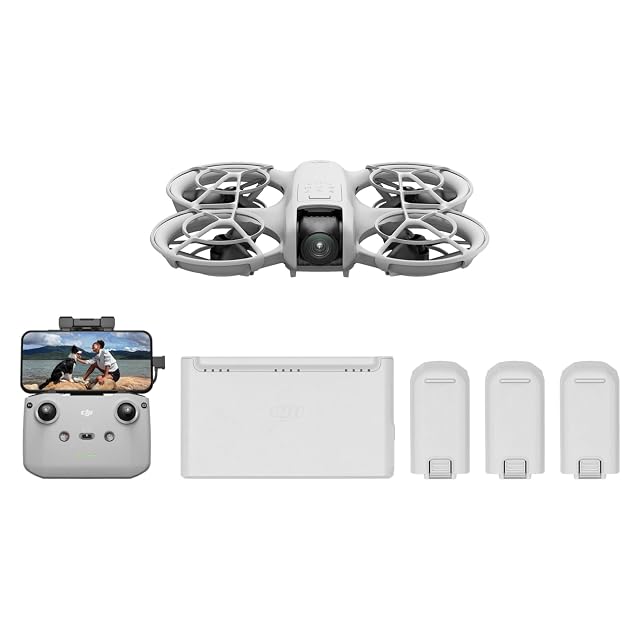
135 g published · class C0 stated, flyable in A1/A3 without examination · 4K UHD · palm launch, voice control, app or RC-N3 controller · eight QuickShot modes, Smart Follow · wind resistance level 4 · integrated propeller guards · three batteries in the combo · no gimbal axis count published
The only aircraft of the four here to publish both halves of the regulatory claim — 135 g and class C0 — and the only one that launches from the palm with no controller at all.
Best for: Flying without paperwork and without a controller — a barbecue, a walk, a family picnic — where 135 g and class C0 are the specification that matters.
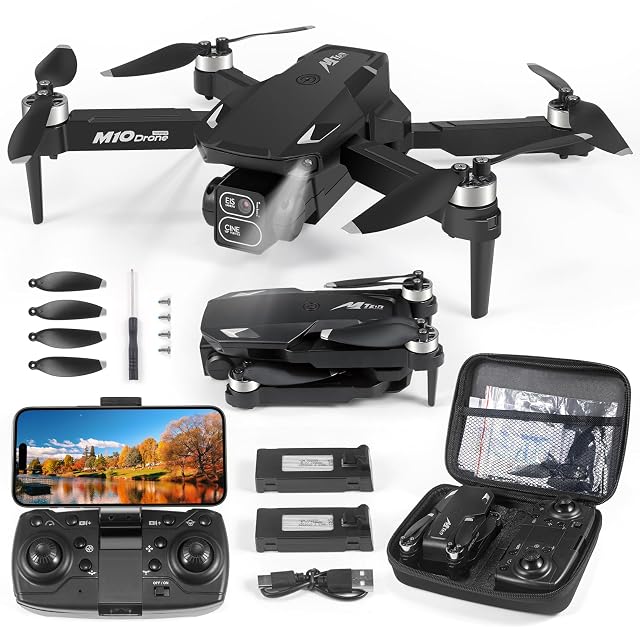
No take-off weight published · no class stated · 4K claimed · motorised 90 degree camera mount · two cameras, front and downward, switchable · brushless motors · two batteries, flight time not stated per charge · obstacle avoidance claimed without directions · carry case · German market only
A folding 4K aircraft with a motorised camera mount and a second downward camera, whose obstacle avoidance is claimed in a feature list and never described, and which no store outside Germany was offering.
Best for: Someone in Germany who wants a motorised tilt and a downward camera for fifty euros and will discover the flight time by flying it.
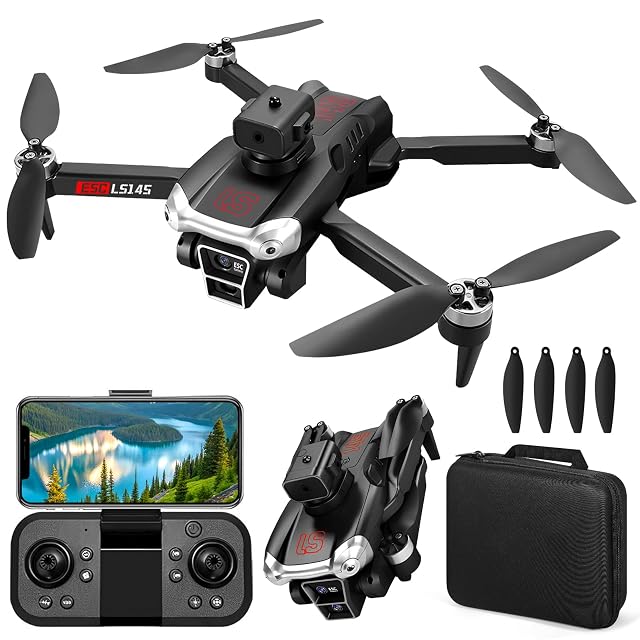
No take-off weight published · no class stated · 1080p · 120 degree wide angle · camera tilts through 90 degrees · brushless motors · optical flow positioning · altitude hold, headless mode, one-key launch · folding arms · no flight time published
The cheapest of the four aircraft here at 31 €, sold on brushless motors and a camera that tilts, with no take-off weight and no flight time published anywhere.
Best for: A first flight indoors or in a garden, for a child or a beginner, where the brushless motors are the part that lasts.